Om den här boken

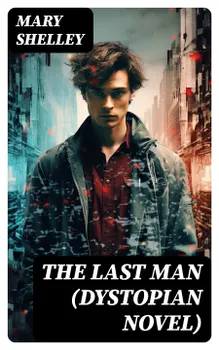
In "The Last Man," Mary Shelley crafts a poignant dystopian narrative set in the late 21st century, exploring themes of isolation, mortality, and the fragility of civilization. The novel is distinguished by its rich, introspective prose and philosophical depth, drawing on the Romantic literary tradition that foregrounds individual experience against the backdrop of society and nature. Shelley deftly interweaves elements of science fiction with a tragic vision of humanity's demise, portraying a world ravaged by plague and societal collapse. The historical context of the work, published in 1826, invites readers to reflect on the anxieties of the post-Napoleonic era and early industrialization, highlighting the tension between progress and human vulnerability. Mary Shelley, often heralded as the mother of science fiction, was profoundly influenced by her life experiences, including the loss of loved ones and her revolutionary upbringing. These elements shaped her existential and social philosophical explorations, culminating in "The Last Man." As an author who witnessed both the glories and horrors of her age, Shelley adopts a cautionary tone, warning of humanity's self-destructive tendencies and the inevitable consequences of hubris. Readers seeking a profound and unsettling contemplation of humanity's future will find "The Last Man" not only a compelling narrative but also a significant commentary on the human condition. Shelley's masterful blending of personal grief and speculative fiction beckons to those who appreciate literature that does more than entertain; it challenges our perceptions and beckons us to confront uncomfortable truths about our existence.

Kom igång med den här boken idag för 0 kr

  • Få full tillgång till alla böcker i appen under provperioden
  • Ingen bindningstid, avsluta när du vill
Prova gratis nu
Mer än 52 000 personer har gett Nextory 5 stjärnor i App Store och på Google Play.

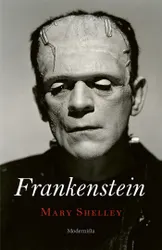
  1. 4.0

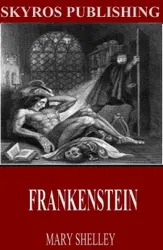
    Frankenstein

    Mary Shelley

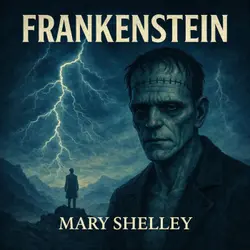
  2. 3.5

    Frankenstein

    Mary Shelley

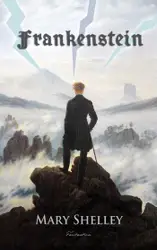
  3. 3.1

    Frankenstein

    Mary Shelley

  4. 50 Masterpieces you have to read before you die

    Frances Hodgson Burnett, Homer, Charles Dickens, Lyman Frank Baum, Nathaniel Hawthorne, Thomas Hardy, Robert Louis Stevenson, Henry Haggard, Wilkie Collins, H.G. Wells, Sir Walter Scott, Lucy Maud Montgomery, Louisa May Alcott, Henry Fielding, Mary Shelley, Arthur Conan Doyle, Leo Tolstoy, Euripides, Fyodor Dostoevsky, Alexander Pushkin, James Fenimore Cooper, Daniel Defoe, Joseph Conrad, Jonathan Swift, William Shakespeare, Oscar Wilde, John Bunyan, Charles Darwin, Alfred Tennyson, Bram Stoker, James Joyce, Dante Alighieri, Howard Pyle, Jane Austen, Emily Bronte, Giovanni Boccaccio, Rudyard Kipling

  5. Frankenstein

    Mary Shelley

  6. 3.9

    Frankenstein

    Mary Shelley

  7. 3.5

    Frankenstein (lättläst)

    Mary Shelley

  8. 3.9
    #1

    Frankenstein

    Mary Shelley

  9. 3.0

    50 Masterpieces you have to read before you die vol: 1 (2020 Edition) : Included: Little Women, The Richest Man in Babylon Emma, The Call Of The Wild ....

    Louisa May Alcott, Dante Alighieri, Marcus Aurelius, Jane Austen, L. Frank Baum, Charlotte Brontë, Emily Brontë, Anne Brontë, Miguel de Cervantes, Agatha Christie, George S. Clason, Arthur Conan Doyle, Joseph Conrad, Charles Dickens, Fyodor Dostoyevsky, Alexandre Dumas, George Eliot, G.K. Chesterton, G.K. Chesterton, Zane Grey, Nathaniel Hawthorne, Napoleon Hill, Homer, Victor Hugo, Frances Hodgson Burnett, Washington Irving, Henry James, Franz Kafka, Rudyard Kipling, Jack London, Leo Tolstoy, H.P. Lovecraft, Lucy Maud Montgomery, Joseph Murphy, Robert Louis Stevenson, Edgar Allan Poe, Marcel Proust, Publius, Mary Shelley, Bram Stoker, Mark Twain, Sun Tzu, Lew Wallace, Wallace D. Wattles, H.G. Wells

  10. 3.9

    Frankenstein

    Mary Shelley

  11. 4.1

    Frankenstein

    Mary Shelley

  12. 3.9
    #8

    Frankenstein

    Mary Shelley