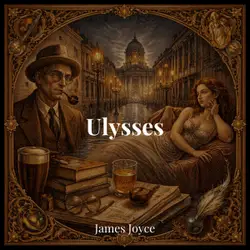
ULYSSES

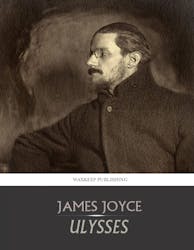
In the past, Ulysses has been labeled dirty, blasphemous, and even unreadable. None of these adjectives, however, do the slightest justice to the novel. To this day it remains the modernist masterpiece, in which the author takes both Celtic lyricism and vulgarity to splendid extremes. It is funny, sorrowful, and even (in a close-focus sort of way) suspenseful. And despite the exegetical industry that has sprung up in the last 75 years, Ulysses is also a compulsively readable book.

William Blake saw the universe in a grain of sand. Joyce saw it in Dublin, Ireland, on June 16, 1904, a day distinguished by its utter normality. Two characters, Stephen Dedalus and Leopold Bloom, go about their separate business, crossing paths with a gallery of indelible Dubliners. We watch them teach, eat, stroll the streets, argue, and (in Bloom's case) masturbate. And thanks to the book's stream-of-consciousness technique — which suggests no mere stream but an impossibly deep, swift-running river — we're privy to their thoughts, emotions, and memories. The result? Almost every variety of human experience is crammed into the accordian folds of a single day, which makes Ulysses not just an experimental work but the very last word in realism.

I hold this book to be the most important expression which the present age has found; it is a book to which we are all indebted, and from which none of us can escape. —T. S. Eliot

What is so staggering about "Ulysses" is the fact that behind a thousand veils nothing lies hidden; that it turns neither toward the mind nor toward the world, but, as cold as the moon looking on from cosmic space, allows the drama of growth, being, and decay to pursue its course. —Carl Jung

The greatest novel of the 20th century. —Anthony Burgess

"Ulysses" is extraordinarily interesting to those who have patience (and they need it). —John Middleton Murry

It is difficult not to acclaim a masterpiece. —Virginia Woolf
Om den här boken

In the past, Ulysses has been labeled dirty, blasphemous, and even unreadable. None of these adjectives, however, do the slightest justice to the novel. To this day it remains the modernist masterpiece, in which the author takes both Celtic lyricism and vulgarity to splendid extremes. It is funny, sorrowful, and even (in a close-focus sort of way) suspenseful. And despite the exegetical industry that has sprung up in the last 75 years, Ulysses is also a compulsively readable book.

William Blake saw the universe in a grain of sand. Joyce saw it in Dublin, Ireland, on June 16, 1904, a day distinguished by its utter normality. Two characters, Stephen Dedalus and Leopold Bloom, go about their separate business, crossing paths with a gallery of indelible Dubliners. We watch them teach, eat, stroll the streets, argue, and (in Bloom's case) masturbate. And thanks to the book's stream-of-consciousness technique — which suggests no mere stream but an impossibly deep, swift-running river — we're privy to their thoughts, emotions, and memories. The result? Almost every variety of human experience is crammed into the accordian folds of a single day, which makes Ulysses not just an experimental work but the very last word in realism.

I hold this book to be the most important expression which the present age has found; it is a book to which we are all indebted, and from which none of us can escape. —T. S. Eliot

What is so staggering about "Ulysses" is the fact that behind a thousand veils nothing lies hidden; that it turns neither toward the mind nor toward the world, but, as cold as the moon looking on from cosmic space, allows the drama of growth, being, and decay to pursue its course. —Carl Jung

The greatest novel of the 20th century. —Anthony Burgess

"Ulysses" is extraordinarily interesting to those who have patience (and they need it). —John Middleton Murry

It is difficult not to acclaim a masterpiece. —Virginia Woolf
Kom igång med den här boken idag för 0 kr

  • Få full tillgång till alla böcker i appen under provperioden
  • Ingen bindningstid, avsluta när du vill
Prova gratis nu
Mer än 52 000 personer har gett Nextory 5 stjärnor i App Store och på Google Play.

  1. 50 Masterpieces you have to read before you die

    Frances Hodgson Burnett, Homer, Charles Dickens, Lyman Frank Baum, Nathaniel Hawthorne, Thomas Hardy, Robert Louis Stevenson, Henry Haggard, Wilkie Collins, H.G. Wells, Sir Walter Scott, Lucy Maud Montgomery, Louisa May Alcott, Henry Fielding, Mary Shelley, Arthur Conan Doyle, Leo Tolstoy, Euripides, Fyodor Dostoevsky, Alexander Pushkin, James Fenimore Cooper, Daniel Defoe, Joseph Conrad, Jonathan Swift, William Shakespeare, Oscar Wilde, John Bunyan, Charles Darwin, Alfred Tennyson, Bram Stoker, James Joyce, Dante Alighieri, Howard Pyle, Jane Austen, Emily Bronte, Giovanni Boccaccio, Rudyard Kipling

  2. 3.6

    Ulysses

    James Joyce

  3. 3.0

    Ulysses

    James Joyce

  4. Odysseus

    James Joyce

  5. 3.6

    Dublinbor

    James Joyce

  6. 3.0

    Ulysses

    James Joyce

  7. 2.0

    The Dead

    James Joyce

  8. Ulysses

    James Joyce

  9. 50 Masterpieces you need to read

    Louisa May Alcott, Jane Austen, Joseph Conrad, D. H. Lawrence, George Eliot, Leo Tolstoy, James Joyce, Charles Dickens, Bram Stoker, Oscar Wilde, Honoré de Balzac, Edgar Rice Burroughs, Anne Brontë, Charlotte Brontë, Emily Brontë, Lewis Carroll, Willa Cather, Miguel de Cervantes, E. Cummings, Fyodor Dostoyevsky, Daniel Defoe, Arthur Conan Doyle, Alexandre Dumas, Gustave Flaubert, Henry James, Victor Hugo

  10. 3.0

    Ulysses

    James Joyce

  11. Dubliners

    James Joyce

  12. 50 Masterpieces You Have to Read Before You Die – Volume 2

    Jerome K Jerome, Charles Kingsley, James Joyce, Rudyard Kipling, D. H. Lawrence, Sheridan Le Fanu, Oscar Wilde, H.G. Wells, Lewis Carroll, Zenith Horizon Publishing


Relaterade kategorier