World Brain (Annotated) : Enriched Edition. Essays on Universal Knowledge Access, Collective Intelligence, and a Global Information Network for Peace

In World Brain, H. G. Wells gathers essays and lectures from the late 1930s proposing a "Permanent World Encyclopaedia": a coordinated, continually revised repository of human knowledge accessible to all. Written in Wells's lucid, argumentative prose, the book belongs to the interwar tradition of scientific humanism and utopian planning, yet it anticipates modern information networks with striking clarity. Its style is polemical rather than fictional, combining social criticism, educational theory, and technological speculation. Wells, already renowned for The Time Machine and The War of the Worlds, was not merely a novelist but a public intellectual deeply concerned with civilization's survival. His background in science, his Fabian sympathies, and his disillusionment after the First World War shaped his conviction that ignorance, nationalism, and fragmented expertise endangered humanity. World Brain reflects his lifelong attempt to place knowledge at the service of democratic world order. This book is recommended to readers interested in the history of information, encyclopedism, global governance, and the intellectual prehistory of the internet. Though some proposals are dated, Wells's central question—how knowledge might be organized for peace and collective intelligence—remains urgent and provocative.

This enriched edition has been carefully crafted to add value to your reading experience.

- A succinct Introduction situates the work's timeless appeal and themes.

- The Synopsis outlines the central plot, highlighting key developments without spoiling critical twists.

- A detailed Historical Context immerses you in the era's events and influences that shaped the writing.

- An Author Biography reveals milestones in the author's life, illuminating the personal insights behind the text.

- A thorough Analysis dissects symbols, motifs, and character arcs to unearth underlying meanings.

- Reflection questions prompt you to engage personally with the work's messages, connecting them to modern life.

- Hand‐picked Memorable Quotes shine a spotlight on moments of literary brilliance.
Om den här boken

In World Brain, H. G. Wells gathers essays and lectures from the late 1930s proposing a "Permanent World Encyclopaedia": a coordinated, continually revised repository of human knowledge accessible to all. Written in Wells's lucid, argumentative prose, the book belongs to the interwar tradition of scientific humanism and utopian planning, yet it anticipates modern information networks with striking clarity. Its style is polemical rather than fictional, combining social criticism, educational theory, and technological speculation. Wells, already renowned for The Time Machine and The War of the Worlds, was not merely a novelist but a public intellectual deeply concerned with civilization's survival. His background in science, his Fabian sympathies, and his disillusionment after the First World War shaped his conviction that ignorance, nationalism, and fragmented expertise endangered humanity. World Brain reflects his lifelong attempt to place knowledge at the service of democratic world order. This book is recommended to readers interested in the history of information, encyclopedism, global governance, and the intellectual prehistory of the internet. Though some proposals are dated, Wells's central question—how knowledge might be organized for peace and collective intelligence—remains urgent and provocative.

This enriched edition has been carefully crafted to add value to your reading experience.

- A succinct Introduction situates the work's timeless appeal and themes.

- The Synopsis outlines the central plot, highlighting key developments without spoiling critical twists.

- A detailed Historical Context immerses you in the era's events and influences that shaped the writing.

- An Author Biography reveals milestones in the author's life, illuminating the personal insights behind the text.

- A thorough Analysis dissects symbols, motifs, and character arcs to unearth underlying meanings.

- Reflection questions prompt you to engage personally with the work's messages, connecting them to modern life.

- Hand‐picked Memorable Quotes shine a spotlight on moments of literary brilliance.

Kom igång med den här boken idag för 0 kr

  • Få full tillgång till alla böcker i appen under provperioden
  • Ingen bindningstid, avsluta när du vill
Prova gratis nu
Mer än 52 000 personer har gett Nextory 5 stjärnor i App Store och på Google Play.

  1. 3.6
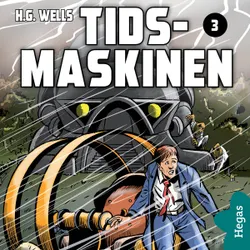
    #3

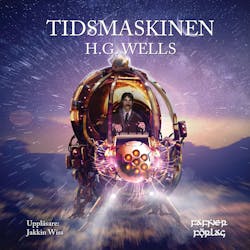
    Tidsmaskinen

    H.G. Wells

  2. Fallen Worlds : Timeless Stories of Survival, Collapse, and Hope

    Ben Bova, Frederik Pohl, Robert Abernathy, Alan E. Nourse, Jack Sharkey, Philip K Dick, Herbert D. Kastle, Alfred Bester, G. Peyton Wertenbaker, Harlan Ellison, William F. Nolan, Lynn Venable, Edward W. Ludwig, Miguel Hidalgo, Robert Sheckley, H.G. Wells, Dean Evans, Donald E. Westlake, William Oberfield, Fritz Leiber, E. M. Forster, William Brittain, Robert Silverberg, Paul Macnamara, Morrison Colladay, Frank Lillie Pollock, John W. Campbell, Lester del Rey

  3. 50 Masterpieces you have to read before you die

    Frances Hodgson Burnett, Homer, Charles Dickens, Lyman Frank Baum, Nathaniel Hawthorne, Thomas Hardy, Robert Louis Stevenson, Henry Haggard, Wilkie Collins, H.G. Wells, Sir Walter Scott, Lucy Maud Montgomery, Louisa May Alcott, Henry Fielding, Mary Shelley, Arthur Conan Doyle, Leo Tolstoy, Euripides, Fyodor Dostoevsky, Alexander Pushkin, James Fenimore Cooper, Daniel Defoe, Joseph Conrad, Jonathan Swift, William Shakespeare, Oscar Wilde, John Bunyan, Charles Darwin, Alfred Tennyson, Bram Stoker, James Joyce, Dante Alighieri, Howard Pyle, Jane Austen, Emily Bronte, Giovanni Boccaccio, Rudyard Kipling

  4. 4.6
    #6

    Stjärnan

  5. 3.0

    50 Masterpieces you have to read before you die vol: 1 (2020 Edition) : Included: Little Women, The Richest Man in Babylon Emma, The Call Of The Wild ....

    Louisa May Alcott, Dante Alighieri, Marcus Aurelius, Jane Austen, L. Frank Baum, Charlotte Brontë, Emily Brontë, Anne Brontë, Miguel de Cervantes, Agatha Christie, George S. Clason, Arthur Conan Doyle, Joseph Conrad, Charles Dickens, Fyodor Dostoyevsky, Alexandre Dumas, George Eliot, G.K. Chesterton, G.K. Chesterton, Zane Grey, Nathaniel Hawthorne, Napoleon Hill, Homer, Victor Hugo, Frances Hodgson Burnett, Washington Irving, Henry James, Franz Kafka, Rudyard Kipling, Jack London, Leo Tolstoy, H.P. Lovecraft, Lucy Maud Montgomery, Joseph Murphy, Robert Louis Stevenson, Edgar Allan Poe, Marcel Proust, Publius, Mary Shelley, Bram Stoker, Mark Twain, Sun Tzu, Lew Wallace, Wallace D. Wattles, H.G. Wells

  6. 3.4

    Världarnas krig (lättläst)

    H.G. Wells

  7. 3.4
    #1

    Världarnas krig

    H.G. Wells

  8. Brave New World Time Machine Anthem : A Dystopian Trilogy

    H.G. Wells, Ayn Rand, Aldous Huxley

  9. 3.8
    #4

    Doktor Moreaus ö

    H.G. Wells

  10. 3.4
    #1

    Världarnas krig

    H.G. Wells

  11. 3.6
    #2

    Den osynlige mannen

    H.G. Wells

  12. 3.6
    #3

    Tidsmaskinen

    H.G. Wells