Über dieses Buch

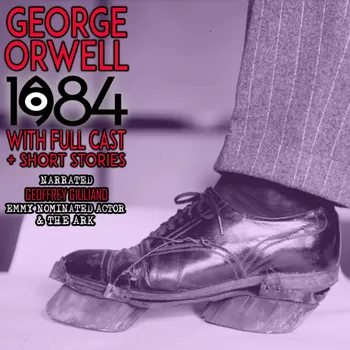
George Orwell's novel "1984," published in 1949, stands as a profound and chilling exploration of dystopian society and totalitarianism. Set in a nightmarish future, the story depicts a world dominated by the all-seeing, all-controlling Party led by the enigmatic Big Brother. Orwell's stark portrayal of a society devoid of privacy, individuality, and truth has resonated deeply with readers for decades, making "1984" a timeless work of literature that continues to influence discussions about government control, surveillance, and the nature of truth.

In the aftermath of World War II, Orwell's "1984" emerged as a powerful cautionary tale, drawing upon the author's own experiences with authoritarian regimes and his concerns about the erosion of individual freedoms. The novel's protagonist, Winston Smith, becomes a symbol of the struggle for independent thought in a world where historical facts are constantly manipulated to serve the Party's narrative. The creation of the Newspeak language, designed to limit freedom of expression, underscores the insidious ways in which totalitarian governments seek to control the minds of their citizens. The harrowing depiction of psychological manipulation, surveillance, and the eradication of dissenting voices paints a stark warning about the dangers of unchecked power.

The significance of "1984" extends beyond its portrayal of a nightmarish future; it serves as a stark reminder of the fragility of democracy and the importance of safeguarding individual liberties. Orwell's themes of truth, memory, and language resonate with ongoing debates about the role of media, the spread of misinformation, and the erosion of civil liberties in the modern world. As technology continues to advance, the novel's warnings about the potential for mass surveillance and government control remain alarmingly relevant.
Starte noch heute mit diesem Buch für € 0

  • Hole dir während der Testphase vollen Zugriff auf alle Bücher in der App
  • Keine Verpflichtungen, jederzeit kündbar
Jetzt kostenlos testen
Mehr als 52 000 Menschen haben Nextory im App Store und auf Google Play 5 Sterne gegeben.

  1. 3.5

    Nineteen Eighty-Four

    George Orwell

  2. 5.0

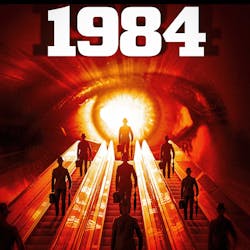
    1984

    George Orwell

  3. 8. Juli
    4.2

    1984

    George Orwell

  4. 100 Meisterwerke der englischen Literatur - Klassiker, die man kennen muss (Kommentiert) : Erweiterte Ausgabe. Hamlet, 1984, Ulysses...

    George Orwell, Charles Dickens, Jane Austen, Katherine Mansfield, H.P. Lovecraft, William Wordsworth, John Keats, Percy Bysshe Shelley, Robert Burns, John Milton, William Shakespeare, Christopher Marlowe, Geoffrey Chaucer, Laurence Sterne, Henry Fielding, Mary Shelley, Emily Brontë, Charlotte Brontë, Anne Brontë, William Makepeace Thackeray, George Eliot, D. H. Lawrence, Herman Melville, Thomas Wolfe, Virginia Woolf, Joseph Conrad, Sinclair Lewis, Walt Whitman, Edgar Allan Poe, Oscar Wilde, Jerome K Jerome, Washington Irving, Bram Stoker, H.G. Wells, Daniel Defoe, Lew Wallace, James Fenimore Cooper, Jonathan Swift, Robert Louis Stevenson, Mark Twain, Lewis Carrol, Edward Bulwer-Lytton, F. Scott Fitzgerald, Arthur Conan Doyle, Jack London, Henry David Thoreau, G.K. Chesterton, Edith Wharton, Henry James, Thomas Hardy, Margaret Mitchell, Kate Chopin, Willa Cather, Charlotte Perkins Gilman, James Joyce, John Galsworthy, Francis Hodgson Burnett, Lucy Maud Montgomery, Louisa May Alcott, Rudyard Kipling

  5. 4.7

    1984 : Der dystopische Klassiker und Bestseller

    George Orwell

  6. 4.2

    1984

    George Orwell

  7. 8. Juli
    4.5

    Farm der Tiere

    George Orwell

  8. 8. Juli

    Die Gedanken sind frei : Die wichtigsten Essays

    George Orwell

  9. 11. Dez.

    Essays 25 : Freiheit des Parks, Die Zukunft eines zerstörten Deutschlands, Gute schlechte Bücher, Antisemitismus in Britannien.

    George Orwell

  10. 20. Nov.

    Essays 24 : Raffless und Miss Blandish

    George Orwell

  11. 6. Nov.

    Essays 23 : Salvador Dali

    George Orwell

  12. 23. Okt.

    Essays 22 : W B Yeats, Arthur Koestler.

    George Orwell