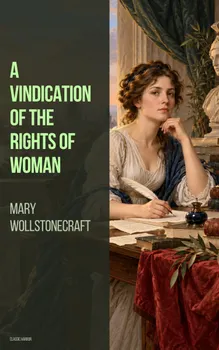
Über dieses Buch

What changes when women are given the same opportunity to develop their minds, independence, and judgment?

In A Vindication of the Rights of Woman, Mary Wollstonecraft challenges the social conventions that restricted women's education and independence in eighteenth-century society. With forceful reasoning and uncompromising clarity, she argues that women should be treated as rational human beings capable of education, virtue, responsibility, and intellectual development.

Wollstonecraft examines marriage, parenting, social expectations, morality, education, and the consequences of raising women primarily to seek approval rather than cultivate reason and character.

First published in 1792, the work became an important text in the history of arguments for women's education and equality. Its themes continue to be studied in philosophy, political thought, gender studies, and literary history.

Read one of Mary Wollstonecraft's most influential works and encounter the arguments that helped shape later debates about education and equality.

Starte noch heute mit diesem Buch für € 0

  • Hole dir während der Testphase vollen Zugriff auf alle Bücher in der App
  • Keine Verpflichtungen, jederzeit kündbar
Jetzt kostenlos testen
Mehr als 52 000 Menschen haben Nextory im App Store und auf Google Play 5 Sterne gegeben.

Mehr von Mary Wollstonecraft

  1. Neu
    2.7

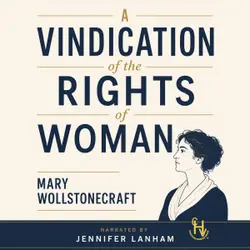
    A Vindication of the Rights of Woman

    Mary Wollstonecraft

  2. Neu

    Una doble vindicación : Textos seleccionados

    Mary Wollstonecraft

  3. 4.0

    Mary (Nórdica Clásicos)

    Mary Wollstonecraft

  4. Maria : or, The Wrongs of Woman

    Mary Wollstonecraft

  5. 2.7

    A Vindication of the Rights of Woman

    Mary Wollstonecraft

  6. A Vindication of the Rights of Woman : The 1792 Argument That Women Deserve an Education, Not Just Admiration

    Mary Wollstonecraft

  7. 2.7

    A Vindication of the Rights of Woman

    Mary Wollstonecraft

  8. 2.0

    A Vindication of the Rights of Woman

    Mary Wollstonecraft

  9. 100 Obras Maestras Que Debes Leer Antes De Morir

    Francis Scott Fitzgerald, Mary Shelley, Lyman Frank Baum, Edith Nesbit, Dante Alighieri, Jane Austen, Ambrose Bierce, Emily Brontë, Edgar Rice Burroughs, Lewis Carroll, Wilkie Collins, René Descartes, Charles Dickens, Emily Dickinson, Alexandre Dumas, Gustave Flaubert, Benito Pérez Galdós, Johann Wolfgang von Goethe, Thomas Hardy, E T A Hoffmann, Washington Irving, Henry James, James Joyce, Franz Kafka, Gaston Leroux, Federico García Lorca, H.P. Lovecraft, Publio Virgilio Marón, Lucy Maud Montgomery, John William Polidori, Marco Polo, Antoine de Saint-Exupéry, Emilio Salgari, Walter Scott, Mark Twain, Jules Verne, H.G. Wells, Edith Wharton, Mary Wollstonecraft, Fernando de Rojas

  10. 100 Clásicos de la Literatura Universal

    Francis Scott Fitzgerald, Mary Shelley, Lyman Frank Baum, Louisa May Alcott, Dante Alighieri, Jane Austen, Ambrose Bierce, Emily Brontë, Edgar Rice Burroughs, Lewis Carroll, Wilkie Collins, René Descartes, Charles Dickens, Emily Dickinson, Alexandre Dumas, Gustave Flaubert, Benito Pérez Galdós, Johann Wolfgang von Goethe, Thomas Hardy, E T A Hoffmann, Washington Irving, Henry James, James Joyce, Franz Kafka, Gaston Leroux, Federico García Lorca, H.P. Lovecraft, Publio Virgilio Marón, Lucy Maud Montgomery, John William Polidori, Marco Polo, Antoine de Saint-Exupéry, Emilio Salgari, Walter Scott, Mark Twain, Jules Verne, Julio Verne, H.G. Wells, Edith Wharton, Mary Wollstonecraft, Stefan Zweig, Sun Tzu, Bram Stoker, - Aristoteles, George Bernard Shaw, Henryk Sienkiewicz, Concepción Arenal, Charlotte Brontë, Miguel de Cervantes, G.K. Chesterton, Daniel Defoe, Fyodor Mikhailovich Dostoyevsky, Arthur Conan Doyle, Sigmund Freud, H. Rider Haggard, Homero, Immanuel Kant, Rudyard Kipling, Molière, Friedrich Nietzsche, Fernando de Rojas, Sófocles, William Makepeace Thackeray, León Tolstói, Voltaire, Ramón María del Valle-Inclán, Oscar Wilde, Virginia Woolf

  11. Letters Written During A Short Residence In Sweden Norway And Denmark

    Mary Wollstonecraft