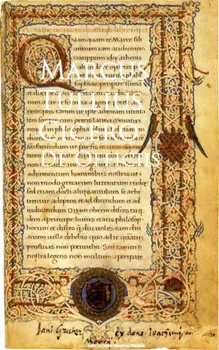
Über dieses Buch

In the de Officiis we have, save for the latter Philippics, the great orator's last contribution to literature. The last, sad, troubled years of his busy life could not be given to his profession; and he turned his never-resting thoughts to the second love of his student days and made Greek philosophy a possibility for Roman readers. The senate had been abolished; the courts had been closed. His occupation was gone; but Cicero could not surrender himself to idleness. In those days of distraction (46-43 b.c.) he produced for publication almost as much as in all his years of active life.

The liberators had been able to remove the tyrant, but they could not restore the republic. Cicero's own life was in danger from the fury of mad Antony and he left Rome about the end of March, 44 b.c. He dared not even stop permanently in any one of his various country estates, but, wretched, wandered from one of his villas to another nearly all the summer and autumn through. He would not suffer himself to become a prey to his overwhelming sorrow at the death of the republic and the final crushing of the hopes that had risen with Caesar's downfall, but worked at the highest tension on his philosophical studies.

The Romans were not philosophical. In 161 b.c. the senate passed a decree excluding all philosophers and teachers of rhetoric from the city. They had no taste for philosophical speculation, in which the Greeks were the world's masters. They were intensely, narrowly practical. And Cicero was thoroughly [x] Roman. As a student in a Greek university he had had to study philosophy. His mind was broad enough and his soul great enough to give him a joy in following after the mighty masters, Socrates, Plato, Zeno, Cleanthes, Aristotle, Theophrastus, and the rest. But he pursued his study of it, like a Roman, from a "practical" motive—to promote thereby his power as an orator and to augment his success and happiness in life.
Starte noch heute mit diesem Buch für € 0

  • Hole dir während der Testphase vollen Zugriff auf alle Bücher in der App
  • Keine Verpflichtungen, jederzeit kündbar
Jetzt kostenlos testen
Mehr als 52 000 Menschen haben Nextory im App Store und auf Google Play 5 Sterne gegeben.

Ähnliche Bücher

  1. 50 Römische Klassiker - Meisterwerke, die man kennen muss : Aeneis, Gallischer Krieg, Selbstbetrachtungen, Ab Urbe Condita, Vom glückseligen Leben, Der goldene Esel, Jüdischer Krieg, Metamorphosen...

    Marcus Aurelius, Seneca, Tacitus, Plutarch, Marcus Tullius Cicero, Gaius Iulius Caesar, Titus Livius, Polybios, Flavius Josephus, Vergil, Ovid, Petronius, Arrian, Sueton, Epiktet, Lukian, Apuleius, Longos von Lesbos, Epikur, Diogenes Laërtios, Eusebius, Kaiser Augustus, Ignatius von Antiochien, Tertullian, Origenes, Augustinus von Hippo

  2. Harvard Classics : The Five-Foot Shelf of Books

    Aesop, Dante Alighieri, Hans Christian Andersen, Augustine of Hippo, Marcus Aurelius, Jane Austen, Francis Bacon, Honoré de Balzac, Francis Beaumont, Bjørnstjerne Bjørnson, Thomas Browne, Robert Browning, John Bunyan, EDMUND BURKE, Robert Burns, Lord Byron, Thomas Carlyle, Benvenuto Cellini, Miguel de Cervantes, Marcus Tullius Cicero, Richard Henry Jr., Charles Darwin, Alphonse Daudet, Thomas Dekker, Charles Dickens, Fyodor Dostoevsky, John Dryden, Charles W. Eliot, George Eliot, Ralph Waldo Emerson, Epictetus, John Fletcher, Theodor Fontane, Benjamin Franklin, Johann Wolfgang Goethe, Oliver Goldsmith, Jacob Grimm, Edward Everett Hale, Bret Harte, Nathaniel Hawthorne, Homer, Victor Hugo, Washington Irving, Henry James, Ben Jonson, Gottfried Keller, Thomas à Kempis, Alexander L. Kielland, Martin Luther, Niccolò Machiavelli, Alessandro Manzoni, Christopher Marlowe, Philip Massinger, Guy De Maupassant, John Stuart Mill, John Milton, Thomas More, William Morris, Alfred de Musset, William Allan Neilson, William Penn, Plato, Pliny the Younger, Plutarch, George Sand, Percy Bysshe Shelley, Richard Brinsley Sheridan, Adam Smith, Laurence Sterne, Theodor Storm, William Makepeace Thackeray, Leo Tolstoy, Ivan Turgenev, Mark Twain, Juan Valera, Virgil, Izaak Walton, John Webster, John Woolman

  3. 5.0

    Marcus Tullius Cicero: Paradoxe der Stoiker : Ein Grundlagentext der Philosophie

    Marcus Tullius Cicero

  4. History's Great Speeches : The Definitive Collection: 161 speeches from Athens 431BCE to Beijing, 1926 by 62 orators in 40h

    Demosthenes, Pericles, Dinarchus, Alexander the Great, Gaius Marius, Gaius Memmius, Catiline, Marcus Tullius Cicero, Cato The Younger, Julius Caesar, Mark Antony, Muhammad, Pope Urban, Girolamo Savonarola, Giovanni Pico Della Mirandola, Martin Luther, Huldrych Zwingli, John Calvin, Elizabeth I, Philip Melanchthon, William Pitt the Elder, Patrick Henry, EDMUND BURKE, John Philpot Curran, George Washington, William Wilberforce, John Milton, Maximilien Robespierre, Napoleon Bonaparte, Robert Emmet, Red Jacket, Daniel O'Connell, Lajos Kossuth, William Lloyd Garrison, Abraham Lincoln, Alexander Martin Sullivan, Wendell Phillips, Susan B. Anthony, George Graham Vest, Otto von Bismarck, Albert Apponyi, Emilio Castelar, Léon Gambetta, Peter Kropotkin, Joseph, Annie Besant, Swami Vivekananda, William Morris, Edward Carpenter, Eduard Bernstein, Pierre Joseph Proudhon, Mikhail Bakunin, Mark Twain, Frederick Douglass, Louis Lingg, Ricardo Flores Magón, William C. Owen, Eugene V. Debs, Sun Yat-sen, Jose Rizal, Mahatma Gandhi, Mao Tse-Tung/Zedong (毛泽东)

  5. Die Kunst der Staatsführung : Politische Philosophie, Realpolitik und strategische Führung von der Antike bis zur Moderne

    Niccolò Machiavelli, Platon, Marcus Aurelius, Marcus Tullius Cicero, Carl von Clausewitz, Friedrich der Große, Benjamin Franklin, Otto von Bismarck, Friedrich Christoph Dahlmann, Karel Čapek, Hans Delbrück

  6. Leitfaden für weise Herrscher : Staatskunst zwischen Macht, Ethik, Strategie und republikanischer Freiheit

    Carl von Clausewitz, Friedrich der Große, Benjamin Franklin, Otto von Bismarck, Niccolò Machiavelli, Platon, Marcus Aurelius, Marcus Tullius Cicero, Friedrich Christoph Dahlmann, Karel Čapek, Hans Delbrück

  7. 50 Meisterwerke der Philosophie : Metaphysik, Das Gastmahl, Bhagavadgita, Tractatus logico-philosophicus, Kritik der reinen Vernunft, Also sprach Zarathustra, Selbstbetrachtungen von Marcus Aurelius

    Ludwig Wittgenstein, Edmund Husserl, Karl Marx, Søren Kierkegaard, Friedrich Nietzsche, Ralph Waldo Emerson, John Stuart Mill, Georg Wilhelm Hegel, Friedrich Schelling, Johann Gottlieb Fichte, Immanuel Kant, John Locke, Montesquieu, Jean-Jacques Rousseau, David Hume, Gottfried Wilhelm Leibniz, Baruch Spinoza, - Konfuzius, Lao Tse, Platon, Xenophon, - Aristoteles, Marcus Tullius Cicero, Seneca, Epiktet, Marc Aurel, Plotin, Thomas von Aquin, Nicolaus von Cues, - Erasmus von Rotterdam, Niccolò Machiavelli, Tommaso Campanella, Martin Luther, Giordano Bruno, Samuel von Pufendorf, Abbé Castel Saint-Pierre, Michel de Montaigne, René Descartes, Francis Bacon, Blaise Pascal

  8. Essenzielle Klassiker der politischen Philosophie : Grundtexte zu Staatsphilosophie, Freiheit, Gewaltenteilung, Revolution und Anarchismus

    Niccolò Machiavelli, Montesquieu, Friedrich der Große, Platon, - Aristoteles, Marcus Tullius Cicero, Tommaso Campanella, Thomas Morus, Samuel von Pufendorf, Abbé Castel Saint-Pierre, Jean-Jacques Rousseau, Immanuel Kant, Johann Gottlieb Fichte, Karl Marx, Friedrich Engels, Wilhelm von Humboldt, Friedrich Christoph Dahlmann, Franz Mehring, Johann Most, John Henry Mackay, Rosa Luxemburg, Erich Mühsam

  9. Grundwerke der politischen Philosophie : Texte zu Staat, Freiheit, Gerechtigkeit und Widerstand von der Antike bis zur Moderne

    Platon, - Aristoteles, Marcus Tullius Cicero, Niccolò Machiavelli, Tommaso Campanella, Thomas Morus, Samuel von Pufendorf, Abbé Castel Saint-Pierre, Jean-Jacques Rousseau, Montesquieu, Immanuel Kant, Friedrich der Große, Johann Gottlieb Fichte, Karl Marx, Friedrich Engels, Wilhelm von Humboldt, Friedrich Christoph Dahlmann, Franz Mehring, Johann Most, John Henry Mackay, Rosa Luxemburg, Erich Mühsam

  10. Die Geschichte des Römischen Reiches : Erweiterte Ausgabe. Römische Geschichte von Theodor Mommsen; Kaiserbiographien; Klassiker der römischen Literatur

    Theodor Mommsen, Mark Aurel, Longos von Lesbos, Apuleius, Petronius, Lukian, Vergil, Marcus Tullius Cicero, Ovid, Titus Livius, Sueton, Tacitus, Epiktet, Seneca, Ludwig Preller

  11. Handbücher der Geschichte : Erweiterte Ausgabe. Vom Redner, Ab urbe condita libri, Der goldene Esel, Kaiserbiographien, Metamorphosen, Die Germania, Aeneis

    Marcus Tullius Cicero, Mark Aurel, Longos von Lesbos, Apuleius, Petronius, Lukian, Vergil, Ovid, Titus Livius, Sueton, Tacitus, Theodor Mommsen, Seneca, Epiktet, Ludwig Preller

  12. Gesammelte Werke : Bereicherte Ausgabe. Meisterwerke antiker Philosophie und Rhetorik

    Marcus Tullius Cicero