Divine Comedy (Volume II) : Illustrated Hell

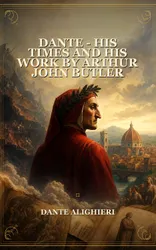
The Divine Comedy describes Dante's journey through Hell (Inferno), Purgatory (Purgatorio), and Paradise (Paradiso), guided first by the Roman poet Virgil and then by Beatrice, the subject of his love and of another of his works, La Vita Nuova. While the vision of Hell, the Inferno, is vivid for modern readers, the theological niceties presented in the other books require a certain amount of patience and knowledge to appreciate. Purgatorio, the most lyrical and human of the three, also has the most poets in it; Paradiso, the most heavily theological, has the most beautiful and ecstatic mystic passages in which Dante tries to describe what he confesses he is unable to convey (e.g., when Dante looks into the face of God: "all'alta fantasia qui mancò possa" — "at this high moment, ability failed my capacity to describe," Paradiso, XXXIII, 142).

"IN the midway of this our mortal life, I found me in a gloomy wood, astray Gone from the path direct: and e'en to tell It were no easy task, how savage wild That forest, how robust and rough its growth, Which to remember only, my dismay Renews, in bitterness not far from death.." (Dante)

IN the midway of this our mortal life,

I found me in a gloomy wood, astray

Gone from the path direct: and e'en to tell

It were no easy task, how savage wild

That forest, how robust and rough its growth,

Which to remember only, my dismay

Renews, in bitterness not far from death.

Yet to discourse of what there good befell,

All else will I relate discover'd there.

How first I enter'd it I scarce can say,

Such sleepy dullness in that instant weigh'd

My senses down, when the true path I left,

But when a mountain's foot I reach'd, where clos'd

The valley, that had pierc'd my heart with dread,

I look'd aloft, and saw his shoulders broad

Already vested with that planet's beam,

Who leads all wanderers safe through every way.

Then was a little respite to the fear,

That in my heart's recesses deep had lain,

All of that night, so pitifully pass'd:

And as a man, with difficult short breath,

Forespent with toiling, 'scap'd from sea to shore,

Turns to the perilous wide waste, and stands

At gaze; e'en so my spirit, that yet fail'd

Struggling with terror, turn'd to view the straits,

That none hath pass'd and liv'd. My weary frame

After short pause recomforted, again

I journey'd on over that lonely steep,

The hinder foot still firmer. Scarce the ascent

Began, when, lo! a panther, nimble, light,

And cover'd with a speckled skin, appear'd,

Nor, when it saw me, vanish'd, rather strove

To check my onward going; that ofttimes

With purpose to retrace my steps I turn'd.

About Dante:

Durante degli Alighieri, simply referred to as Dante (1265–1321), was a major Italian poet of the Middle Ages. His Divine Comedy, originally called La Comedia and later called Divina by Boccaccio, is widely considered the greatest literary work composed in the Italian language and a masterpiece of world literature.

In Italy he is known as il Sommo Poeta ("the Supreme Poet") or just il Poeta. He, Petrarch and Boccaccio are also known as "the three fountains" or "the three crowns". Dante is also called the "Father of the Italian language".
Über dieses Buch

The Divine Comedy describes Dante's journey through Hell (Inferno), Purgatory (Purgatorio), and Paradise (Paradiso), guided first by the Roman poet Virgil and then by Beatrice, the subject of his love and of another of his works, La Vita Nuova. While the vision of Hell, the Inferno, is vivid for modern readers, the theological niceties presented in the other books require a certain amount of patience and knowledge to appreciate. Purgatorio, the most lyrical and human of the three, also has the most poets in it; Paradiso, the most heavily theological, has the most beautiful and ecstatic mystic passages in which Dante tries to describe what he confesses he is unable to convey (e.g., when Dante looks into the face of God: "all'alta fantasia qui mancò possa" — "at this high moment, ability failed my capacity to describe," Paradiso, XXXIII, 142).

"IN the midway of this our mortal life, I found me in a gloomy wood, astray Gone from the path direct: and e'en to tell It were no easy task, how savage wild That forest, how robust and rough its growth, Which to remember only, my dismay Renews, in bitterness not far from death.." (Dante)

IN the midway of this our mortal life,

I found me in a gloomy wood, astray

Gone from the path direct: and e'en to tell

It were no easy task, how savage wild

That forest, how robust and rough its growth,

Which to remember only, my dismay

Renews, in bitterness not far from death.

Yet to discourse of what there good befell,

All else will I relate discover'd there.

How first I enter'd it I scarce can say,

Such sleepy dullness in that instant weigh'd

My senses down, when the true path I left,

But when a mountain's foot I reach'd, where clos'd

The valley, that had pierc'd my heart with dread,

I look'd aloft, and saw his shoulders broad

Already vested with that planet's beam,

Who leads all wanderers safe through every way.

Then was a little respite to the fear,

That in my heart's recesses deep had lain,

All of that night, so pitifully pass'd:

And as a man, with difficult short breath,

Forespent with toiling, 'scap'd from sea to shore,

Turns to the perilous wide waste, and stands

At gaze; e'en so my spirit, that yet fail'd

Struggling with terror, turn'd to view the straits,

That none hath pass'd and liv'd. My weary frame

After short pause recomforted, again

I journey'd on over that lonely steep,

The hinder foot still firmer. Scarce the ascent

Began, when, lo! a panther, nimble, light,

And cover'd with a speckled skin, appear'd,

Nor, when it saw me, vanish'd, rather strove

To check my onward going; that ofttimes

With purpose to retrace my steps I turn'd.

About Dante:

Durante degli Alighieri, simply referred to as Dante (1265–1321), was a major Italian poet of the Middle Ages. His Divine Comedy, originally called La Comedia and later called Divina by Boccaccio, is widely considered the greatest literary work composed in the Italian language and a masterpiece of world literature.

In Italy he is known as il Sommo Poeta ("the Supreme Poet") or just il Poeta. He, Petrarch and Boccaccio are also known as "the three fountains" or "the three crowns". Dante is also called the "Father of the Italian language".
Starten Sie noch heute mit diesem Buch für € 0

  • Hol dir während der Testphase vollen Zugriff auf alle Bücher in der App
  • Keine Verpflichtungen, jederzeit kündbar
Jetzt kostenlos testen
Mehr als 52 000 Menschen haben Nextory im App Store und auf Google Play 5 Sterne gegeben.

  1. The Divine Comedy - Audiobook

    Dante Alighieri, Classic Audiobooks

  2. Göttliche Komödie - Hörbuch Klassiker

    Dante Alighieri, Hörbuch Klassiker

  3. 10 Masterpieces You Have to Read Before You Die, Vol.5 : The Odyssey, The Republic, Meditations, The Divine Comedy, Faust and others

    Homer, Plato, Aristotle, Marcus Aurelius, Niccolo Machiavelli, Dante Alighieri, Johann Wolfgang von Goethe, Leo Tolstoy

  4. #1

    La Divina Commedia : Inferno

    Dante Alighieri

  5. 100 Meisterwerke der Weltliteratur - Klassiker die man kennen muss

    Franz Kafka, Fjodor Michailowitsch Dostojewski, Rumi, Platon, Tacitus, Homer, Sigmund Freud, Friedrich Nietzsche, Oswald Spengler, Alfred Adler, Marcus Aurelius, Arthur Schopenhauer, Walt Whitman, Joseph Conrad, Robert Louis Stevenson, Karl May, Alexandre Dumas, James Fenimore Cooper, Arthur Conan Doyle, Edgar Allan Poe, Mary Shelley, O.Henry, Stefan Zweig, Charles Dickens, Jacob Grimm, Wilhelm Grimm, Hans Christian Andersen, Joseph von Eichendorff, Klaus Mann, Johann Wolfgang von Goethe, Jane Austen, Emily Brontë, Charlotte Brontë, Else Lasker-Schüler, Heinrich Heine, Herman Melville, Iwan Sergejewitsch Turgenew, Gustav Freytag, Thomas Wolfe, Jonathan Swift, Walter Scott, Nathaniel Hawthorne, Gustave Flaubert, Rainer Maria Rilke, John Galsworthy, Iwan Alexandrowitsch Gontscharow, Oscar Wilde, Lew Wallace, Voltaire, Lewis Carroll, Johanna Spyri, Mark Twain, Selma Lagerlöf, Rudyard Kipling, Jules Verne, Jack London, Miguel de Cervantes, Honoré de Balzac, Emile Zola, Guy De Maupassant, Moliere, Theodor Fontane, Nikolai Gogol, Leo Tolstoi, Anton Pawlowitsch Tschechow, Dante Alighieri, Joseph Roth, Robert Musil, E. T. Hoffmann, Heinrich Mann, Kurt Tucholsky, Heinrich von Kleist, Annette von Droste-Hülshoff, Gottfried Keller, Sophie von La Roche, Theodor Storm, William Shakespeare

  6. The Divine Comedy - PURGATORIO

    Dante Alighieri

  7. 4.5
    #2

    Purgatorio

    Dante Alighieri

  8. Paradiso

    Dante Alighieri

  9. 29. Sep.

    The Divine Comedy

    Dante Alighieri

  10. Neu

    Inferno (lättläst)

    Dante Alighieri

  11. Neu

    Inferno. Canto III :

    Dante Alighieri

  12. Neu

    Inferno. Canto II :

    Dante Alighieri