Über dieses Buch

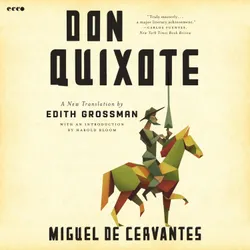
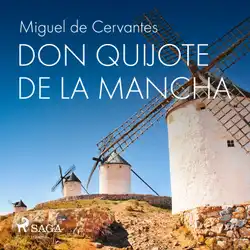
Don Quixote is a Spanish novel by Miguel de Cervantes. It was originally published in two parts, in 1605 and 1615. A founding work of Western literature, it is often labeled as the first modern novel and one of the greatest ever written. Don Quixote is also one of the most-translated books in the world. The plot revolves around the adventures of a member of the lowest nobility, an hidalgo ("Son of Someone"), from La Mancha named Alonso Quixano, who reads so many chivalric romances that he either loses or pretends to have lost his mind in order to become a knight-errant (caballero andante) to revive chivalry and serve his nation, under the name Don Quixote de la Mancha. He recruits a simple farmer, Sancho Panza, as his squire, who often employs a unique, earthy wit in dealing with Don Quixote's rhetorical monologues on knighthood, already considered old-fashioned at the time, and representing the most vivid realism in contrast to his master's idealism. In the first part of the book, Don Quixote does not see the world for what it is and prefers to imagine that he is living out a knightly story. When first published, Don Quixote was usually interpreted as a comic novel. After the French Revolution, it was better known for its central ethic that individuals can be right while society is quite wrong and was seen as a story of disenchantment. In the 19th century, it was seen as social commentary, but no one could easily tell "whose side Cervantes was on". Many critics came to view the work as a tragedy in which Don Quixote's idealism and nobility are viewed by the post-chivalric world as insane, and are defeated and rendered useless by common reality. By the 20th century, the novel had come to occupy a canonical space as one of the foundations of modern literature.

Starte noch heute mit diesem Buch für € 0

  • Hole dir während der Testphase vollen Zugriff auf alle Bücher in der App
  • Keine Verpflichtungen, jederzeit kündbar
Jetzt kostenlos testen
Mehr als 52 000 Menschen haben Nextory im App Store und auf Google Play 5 Sterne gegeben.

Mehr von Miguel de Cervantes

  1. 3.8

    10 Meisterwerke musst du dir anhören, bevor du stirbst: Vol. 1

    Mary Shelley, Franz Kafka, Charles Dickens, Miguel de Cervantes, Lewis Carroll, Gustave Flaubert, Victor Hugo, Oscar Wilde, Friedrich Nietzsche, Mark Twain

  2. 15. Jän.

    Novelas Ejemplares

    Miguel de Cervantes

  3. 15. Sep.

    El Casamiento Engañoso y el Coloquio de los Perros : De Novelas Ejemplares

    Miguel de Cervantes

  4. 27. Apr.

    Don Quixote

    Miguel de Cervantes, Edith Grossman

  5. 15. Apr.
    3.0

    La Señora Cornelia : de Novelas Ejemplares

    Miguel de Cervantes

  6. 1. Feb.

    La Ilustre Fregona : de Novelas Ejemplares

    Miguel de Cervantes

  7. 16. Jän.
    2.0

    Las Dos Doncellas : de Novelas Ejemplares

    Miguel de Cervantes

  8. 5. Jän.
    4.8

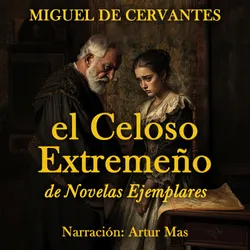
    El Celoso Extremeño : de Novelas Ejemplares

    Miguel de Cervantes

  9. Neu

    50 Masterpieces you have to read before you die vol: 1

    Louisa May Alcott, Jane Austen, Honoré de Balzac, Henri Barbusse, Anne Brontë, Charlotte Brontë, Emily Brontë, Edgar Rice Burroughs, Samuel Butler, Lewis Carroll, Willa Cather, Miguel de Cervantes, Kate Chopin, John Cleland, Wilkie Collins, Joseph Conrad, Charles Dickens, Fyodor Dostoevsky, Alexandre Dumas, George Eliot, Ralph Waldo Emerson, Gustave Flaubert, E. M. Forster, H. Rider Haggard, Thomas Hardy, Nathaniel Hawthorne, Robert Heinlein, Victor Hugo, Aldous Huxley, Henry James, D. H. Lawrence, H.P. Lovecraft, Herman Melville, John Milton, Robert Musil, Vladimir Nabokov, George Orwell, Edgar Allan Poe, Marcel Proust, William Shakespeare, Mary Shelley, Leo Tolstoy

  10. 4.6

    El ingenioso hidalgo Don Quijote de la Mancha

    Miguel de Cervantes

  11. Neu

    50 Masterpieces you have to read before you die vol: 1

    Louisa May Alcott, Jane Austen, Honoré de Balzac, Henri Barbusse, Anne Brontë, Charlotte Brontë, Emily Brontë, Edgar Rice Burroughs, Samuel Butler, Lewis Carroll, Willa Cather, Miguel de Cervantes, Kate Chopin, John Cleland, Wilkie Collins, Joseph Conrad, Charles Dickens, Fyodor Dostoevsky, Alexandre Dumas, George Eliot, Ralph Waldo Emerson, Gustave Flaubert, E. M. Forster, H. Rider Haggard, Thomas Hardy, Nathaniel Hawthorne, Robert Heinlein, Victor Hugo, Aldous Huxley, Henry James, D. H. Lawrence, H.P. Lovecraft, Herman Melville, John Milton, Robert Musil, Vladimir Nabokov, George Orwell, Edgar Allan Poe, Marcel Proust, William Shakespeare, Mary Shelley, Leo Tolstoy