King Lear

King Lear is a tragedy written by William Shakespeare. It depicts the gradual descent into madness of the title character, after he disposes of his kingdom giving bequests to two of his three daughters based on their flattery of him, bringing tragic consequences for all. Derived from the legend of Leir of Britain, a mythological pre-Roman Celtic king, the play has been widely adapted for the stage and motion pictures, with the title role coveted by many of the world's most accomplished actors. The first attribution to Shakespeare of this play, originally drafted in 1605 or 1606 at the latest with its first known performance on St. Stephen's Day in 1606, was a 1608 publication in a quarto of uncertain provenance; it may be an early draft or simply reflect the first performance text. The Tragedy of King Lear, a more theatrical revision, was included in the 1623 First Folio. Modern editors usually conflate the two, though some insist that each version has its own individual integrity that should be preserved. After the English Restoration, the play was often revised with a happy, non-tragic ending for audiences who disliked its dark and depressing tone, but since the 19th century Shakespeare's original version has been regarded as one of his supreme achievements. The tragedy is particularly noted for its probing observations on the nature of human suffering and kinship. George Bernard Shaw wrote, "No man will ever write a better tragedy than Lear."

Über dieses Buch

King Lear is a tragedy written by William Shakespeare. It depicts the gradual descent into madness of the title character, after he disposes of his kingdom giving bequests to two of his three daughters based on their flattery of him, bringing tragic consequences for all. Derived from the legend of Leir of Britain, a mythological pre-Roman Celtic king, the play has been widely adapted for the stage and motion pictures, with the title role coveted by many of the world's most accomplished actors. The first attribution to Shakespeare of this play, originally drafted in 1605 or 1606 at the latest with its first known performance on St. Stephen's Day in 1606, was a 1608 publication in a quarto of uncertain provenance; it may be an early draft or simply reflect the first performance text. The Tragedy of King Lear, a more theatrical revision, was included in the 1623 First Folio. Modern editors usually conflate the two, though some insist that each version has its own individual integrity that should be preserved. After the English Restoration, the play was often revised with a happy, non-tragic ending for audiences who disliked its dark and depressing tone, but since the 19th century Shakespeare's original version has been regarded as one of his supreme achievements. The tragedy is particularly noted for its probing observations on the nature of human suffering and kinship. George Bernard Shaw wrote, "No man will ever write a better tragedy than Lear."
Starte noch heute mit diesem Buch für € 0

  • Hole dir während der Testphase vollen Zugriff auf alle Bücher in der App
  • Keine Verpflichtungen, jederzeit kündbar
Jetzt kostenlos testen
Mehr als 52 000 Menschen haben Nextory im App Store und auf Google Play 5 Sterne gegeben.

  1. 13. Nov.

    Dramer II. Strö lycka, féer : Komiska förväxlingar, Så tuktas en argbigga, Två gentlemän från Verona, Kärleks möda är förgäves, En midsommarnattsdröm, Muntra fruarna i Windsor.

    William Shakespeare

  2. 10. Juli

    Hamlet

    William Shakespeare

  3. Neu

    Romeo and Juliet

    William Shakespeare

  4. Neu

    50 Clásicos que Debes Leer Antes de Morir : Un viaje literario por los tesoros de la literatura universal

    Dante Alighieri, Aristóteles, Jane Austen, Charles Baudelaire, Giovanni Boccaccio, Anne Brontë, C. Collodi, James Fenimore Cooper, Fedor Mikhaïlovitch Dostoïevski, Arthur Conan Doyle, Alexandre Dumas, José de Espronceda, Gustave Flaubert, Sigmund Freud, Benito Pérez Galdós, Kahlil Gibran, Johann Wolfgang Goethe, Johann Wolfgang von Goethe, Victor Hugo, Thomas Hardy, Nathaniel Hawthorne, Vicente Blasco Ibáñez, Washington Irving, James Joyce, Mariano José de Larra, Jack London, Federico García Lorca, H.P. Lovecraft, Antonio Machado, Gustav Meyrink, John Stuart Mill, Amado Nervo, Friedrich Nietzsche, Solomon Northup, Alexander Sergeyevich Pushkin, Francisco de Quevedo, Walter Scott, William Shakespeare, Robert Louis Stevenson, Harriet Beecher Stowe, Jonathan Swift, Mark Twain, Miguel De Unamuno, Ramón María del Valle-Inclán, Julio Verne, Virginia Woolf

  5. William Shakespeare: Meisterwerke der Erzählkunst : Klassiker der Weltliteratur: Dramen, Komödien und Sonette

    William Shakespeare

  6. The Big Book of Christmas

    Louisa May Alcott, O.Henry, Mark Twain, Beatrix Potter, Charles Dickens, William Shakespeare, Harriet Beecher Stowe, Emily Dickinson, Robert Louis Stevenson, Rudyard Kipling

  7. 4.5
    #10

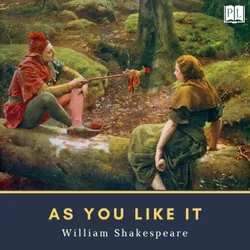
    As You Like It

    William Shakespeare

  8. 3.8

    The Tempest

    William Shakespeare

  9. 2.5

    Othello

    William Shakespeare

  10. 3.8

    Macbeth

    William Shakespeare

  11. A Midsummer Night's Dream

    William Shakespeare

  12. 3.3

    Romeo and Juliet

    William Shakespeare