Über dieses Buch

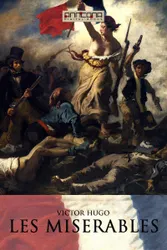
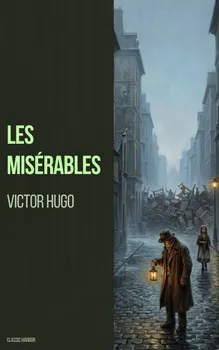
Can one act of kindness change the course of a life? In Les Misérables, Victor Hugo delivers a powerful and unforgettable story of suffering, compassion, justice, and the enduring strength of the human spirit.

Meet Jean Valjean, a former prisoner struggling to escape the shadow of his past and build a better future. When he encounters the harsh realities of poverty, prejudice, and social injustice, he must choose between the bitterness of his former life and the possibility of redemption. His journey becomes deeply connected with Fantine, a desperate mother seeking a better life for her daughter, Cosette, and Inspector Javert, a relentless pursuer who believes that the law must never be challenged.

Set against the turbulent streets of nineteenth-century France, this sweeping novel explores the lives of ordinary people caught between hope and despair, personal sacrifice and social inequality, love and duty. From intimate moments of tenderness to dramatic revolutionary struggles, Hugo creates a vivid portrait of a society in which even the smallest act of mercy can have extraordinary consequences.

Rich in emotion, memorable characters, and timeless moral questions, Les Misérables remains one of the greatest achievements of world literature. Discover a classic that challenges readers to look beyond appearances, question injustice, and believe in the possibility of change.

Whether you are revisiting this literary masterpiece or discovering it for the first time, Victor Hugo's unforgettable tale offers a moving reading experience that continues to resonate across generations.

Starte noch heute mit diesem Buch für € 0

  • Hole dir während der Testphase vollen Zugriff auf alle Bücher in der App
  • Keine Verpflichtungen, jederzeit kündbar
Jetzt kostenlos testen
Mehr als 52 000 Menschen haben Nextory im App Store und auf Google Play 5 Sterne gegeben.

Mehr von Victor Hugo

  1. Grundlegende Werke des Feminismus : Texte zur Frauenfrage, Geschlechterrollen und feministischen Ideengeschichte

    Virginia Woolf, George Sand, Louise Otto, Clara Zetkin, Rosa Luxemburg, Rosa Mayreder, Bertha Pappenheim, Grete Meisel-Heß, George Eliot, Luise Ahlborn, Adalbert Stifter, Jane Austen, Wilhelmine von Hillern, Charlotte Brontë, Nathaniel Hawthorne, Daniel Defoe, Victor Hugo, Anne Brontë, Henrik Ibsen, Hedwig Dohm, Sinclair Lewis

  2. 5.0

    Les Misérables - tome 1

    Victor Hugo

  3. 3.8

    10 Meisterwerke musst du dir anhören, bevor du stirbst: Vol. 1

    Mary Shelley, Franz Kafka, Charles Dickens, Miguel de Cervantes, Lewis Carroll, Gustave Flaubert, Victor Hugo, Oscar Wilde, Friedrich Nietzsche, Mark Twain

  4. 8. Feb.

    Der Glöckner von Notre-Dame B

    Victor Hugo

  5. 1. Feb.

    Der Glöckner von Notre-Dame A

    Victor Hugo

  6. 28. Dez.

    Erzählungen 10 : Quasimodo und sein Pflegevater, Phoebus Heirat, Quasimodos Heirat.

    Victor Hugo

  7. 7. Dez.

    Erzählungen 9 : Der kleine Schuh.

    Victor Hugo

  8. 16. Nov.

    Erzählungen 8 : Ludwig der Elfte in der Bastille.

    Victor Hugo

  9. 4.4

    Les Miserables

    Victor Hugo

  10. 4.2

    Les Misérables

    Victor Hugo

  11. Neu

    Die größten Klassiker der französischen Literatur

    Victor Hugo, Marcel Proust, Voltaire, George Sand, Émile Zola, Gustave Flaubert, Honoré de Balzac, Francois Rabelais, Alexandre Dumas, Charles Baudelaire, Stendhal, Denis Diderot, Jean-Jacques Rousseau, Madame de Fayette, Alphonse Daudet

  12. Neu

    50 Masterpieces you have to read before you die vol: 1

    Louisa May Alcott, Jane Austen, Honoré de Balzac, Henri Barbusse, Anne Brontë, Charlotte Brontë, Emily Brontë, Edgar Rice Burroughs, Samuel Butler, Lewis Carroll, Willa Cather, Miguel de Cervantes, Kate Chopin, John Cleland, Wilkie Collins, Joseph Conrad, Charles Dickens, Fyodor Dostoevsky, Alexandre Dumas, George Eliot, Ralph Waldo Emerson, Gustave Flaubert, E. M. Forster, H. Rider Haggard, Thomas Hardy, Nathaniel Hawthorne, Robert Heinlein, Victor Hugo, Aldous Huxley, Henry James, D. H. Lawrence, H.P. Lovecraft, Herman Melville, John Milton, Robert Musil, Vladimir Nabokov, George Orwell, Edgar Allan Poe, Marcel Proust, William Shakespeare, Mary Shelley, Leo Tolstoy