Maelzel's Chess-Player : Enriched edition.

In "Maelzel's Chess-Player," Edgar Allan Poe investigates the intersection of human intellect and mechanized innovation through a compelling narrative that critiques the nature of artificial intelligence and the role of the observer. Written in a style that amalgamates literary realism with philosophical discourse, the text examines a chess automaton designed by Johann Nepomuk Maelzel, revealing deeper themes of illusion, perception, and the boundaries of human cognition. Poe's work is situated in the early 19th century, a time when advances in science and technology provoked profound questions about what it means to think and feel. Edgar Allan Poe, an emblematic figure of American literature and an early pioneer of detective fiction, was profoundly influenced by the philosophical debates of his time regarding free will and determinism. His multifaceted background as a poet, critic, and short story writer infused this essay with a distinctive analytical fervor, driven by his fascination with human psychology and the mechanics of reasoning. The thematic exploration of human agency versus automation in this work reflects Poe's broader inquiries into the nature of reality and illusion. "Maelzel's Chess-Player" is recommended for readers interested in the early explorations of artificial intelligence and the philosophical implications of technology. With its rich prose and thought-provoking content, this work not only showcases Poe's exceptional literary prowess but also invites readers to ponder the critical questions of intellect and existence that resonate through time.

In this enriched edition, we have carefully created added value for your reading experience:

- A succinct Introduction situates the work's timeless appeal and themes.

- The Synopsis outlines the central plot, highlighting key developments without spoiling critical twists.

- A detailed Historical Context immerses you in the era's events and influences that shaped the writing.

- An Author Biography reveals milestones in the author's life, illuminating the personal insights behind the text.

- A thorough Analysis dissects symbols, motifs, and character arcs to unearth underlying meanings.

- Reflection questions prompt you to engage personally with the work's messages, connecting them to modern life.

- Hand‐picked Memorable Quotes shine a spotlight on moments of literary brilliance.

- Interactive footnotes clarify unusual references, historical allusions, and archaic phrases for an effortless, more informed read.
Starten Sie noch heute mit diesem Buch für € 0

  • Hol dir während der Testphase vollen Zugriff auf alle Bücher in der App
  • Keine Verpflichtungen, jederzeit kündbar
Jetzt kostenlos testen
Mehr als 52 000 Menschen haben Nextory im App Store und auf Google Play 5 Sterne gegeben.

  1. 5.0

    Novellen: Zehn Meisterwerke der Weltliteratur : Weiße Edition

    Edgar Allan Poe, Arthur Conan Doyle, Giovanni Boccaccio, Stefan Zweig, Honoré de Balzac, Anton Tschechow, Theodor Storm, Joseph Roth, Guy De Maupassant

  2. 100 Meisterwerke der Weltliteratur - Klassiker die man kennen muss

    Franz Kafka, Fjodor Michailowitsch Dostojewski, Rumi, Platon, Tacitus, Homer, Sigmund Freud, Friedrich Nietzsche, Oswald Spengler, Alfred Adler, Marcus Aurelius, Arthur Schopenhauer, Walt Whitman, Joseph Conrad, Robert Louis Stevenson, Karl May, Alexandre Dumas, James Fenimore Cooper, Arthur Conan Doyle, Edgar Allan Poe, Mary Shelley, O.Henry, Stefan Zweig, Charles Dickens, Jacob Grimm, Wilhelm Grimm, Hans Christian Andersen, Joseph von Eichendorff, Klaus Mann, Johann Wolfgang von Goethe, Jane Austen, Emily Brontë, Charlotte Brontë, Else Lasker-Schüler, Heinrich Heine, Herman Melville, Iwan Sergejewitsch Turgenew, Gustav Freytag, Thomas Wolfe, Jonathan Swift, Walter Scott, Nathaniel Hawthorne, Gustave Flaubert, Rainer Maria Rilke, John Galsworthy, Iwan Alexandrowitsch Gontscharow, Oscar Wilde, Lew Wallace, Voltaire, Lewis Carroll, Johanna Spyri, Mark Twain, Selma Lagerlöf, Rudyard Kipling, Jules Verne, Jack London, Miguel de Cervantes, Honoré de Balzac, Emile Zola, Guy De Maupassant, Moliere, Theodor Fontane, Nikolai Gogol, Leo Tolstoi, Anton Pawlowitsch Tschechow, Dante Alighieri, Joseph Roth, Robert Musil, E. T. Hoffmann, Heinrich Mann, Kurt Tucholsky, Heinrich von Kleist, Annette von Droste-Hülshoff, Gottfried Keller, Sophie von La Roche, Theodor Storm, William Shakespeare

  3. 19. März

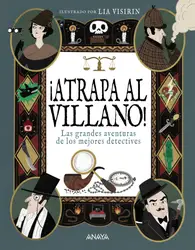
    ¡Atrapa al villano! : Las grandes aventuras de los mejores detectives

    Arthur Conan Doyle, Gilbert Keith Chesterton, Edgar Allan Poe, Wilkie Collins, Maurice Leblanc, Charles Dickens, S. S. van Dine, Earl Derr Biggers, Anna Katharine Green

  4. 19. März
    #5

    The Works of Edgar Allan Poe (Volume 5)

    Edgar Allan Poe

  5. 18. März
    #4

    The Works of Edgar Allan Poe (Volume 4)

    Edgar Allan Poe

  6. 17. März
    #3

    The Works of Edgar Allan Poe (Volume 3)

    Edgar Allan Poe

  7. 16. März
    #2

    The Works of Edgar Allan Poe (Volume 2)

    Edgar Allan Poe

  8. 15. März
    #1

    The Works of Edgar Allan Poe (Volume 1)

    Edgar Allan Poe

  9. 1. März

    Lyrikalische Bibliothek

    Heinrich Heine, Annette von Droste-Hülshoff, Charles Baudelaire, John Keats, Rainer Maria Rilke, Georg Heym, Wilhelm Busch, Arno Holz, Johann Wolfgang von Goethe, Christian Morgenstern, Joachim Ringelnatz, Georg Trakl, Ludwig Tieck, Stefan Zweig, Hugo von Hoffmannsthal, Edgar Allan Poe, Frank Wedekind, Franz Werfel, Wolfgang Borchert, Karl Kraus, Kurt Tucholsky, Friedrich Nietzsche, Else Lasker-Schüler, Ludwig Kalisch, Jakob van Hoddis, Joseph von Eichendorff, Gotthold Ephraim Lessing

  10. 23. Feb.

    Sämtliche Seltsame Geschichten 2 : William Wilson, Der gestohlene Brief, Der Untergang des Hauses Usher, Bericht über den Fall Valdemar, Metzengerstein, In der Tiefe des Maelstroms.

    Edgar Allan Poe

  11. 23. Feb.

    Der entwendete Brief (C. Auguste Dupin ermittelt)

    Edgar Allan Poe