Über dieses Buch

Resurrection, first published in 1899, was the last novel written by Leo Tolstoy. The book is the last of his major long fiction works published in his lifetime. Tolstoy intended the novel as an exposition of injustice of man-made laws and the hypocrisy of institutionalized church. It was first published serially in the popular weekly magazine Niva in an effort to raise funds for the resettlement of the Dukhobors.The story is about a nobleman named Dmitri Ivanovich Nekhlyudov, who seeks redemption for a sin committed years earlier. His brief affair with a maid had resulted in her being fired and ending up in prostitution. The book treats his attempts to help her out of her current misery, but also focuses on his personal mental and moral struggle.Framed for murder, the maid, Maslova, is convicted by mistake and sent to Siberia. Nekhlyudov goes to visit her in prison, meets other prisoners, hears their stories, and slowly comes to realize that all around his charmed and golden aristocratic world, yet invisible to it, is a much larger world of oppression, misery and barbarism. Story after story he hears and even sees people chained without cause, beaten without cause, immured in dungeons for life without cause, and a twelve-year-old boy sleeping in a lake of human dung from an overflowing latrine because there is no other place on the prison floor, but clinging in a vain search for love to the leg of the man next to him, until the book achieves the bizarre intensity of a horrific fever dream.The book was eagerly awaited. "How all of us rejoiced," one critic wrote on learning that Tolstoy had decided to make his first fiction in 25 years, not a short novella but a full-length novel. "May God grant that there will be more and more!" It outsold Anna Karenina and War and Peace. Despite its early success, today Resurrection is not as famous as the works that preceded it.Count Lev Nikolayevich Tolstoy; (1828-1910), also known as Leo Tolstoy, was a Russian writer who primarily wrote novels and short stories. Tolstoy was a master of realistic fiction and is widely considered one of the world's greatest novelists. He is best known for two long novels, War and Peace (1869) and Anna Karenina (1877). Tolstoy is one of the giants of Russian literature. His contemporaries paid him lofty tributes. Fyodor Dostoyevsky thought him the greatest of all living novelists. Later critics and novelists continue to bear testament to Tolstoy's art. Virginia Woolf declared him the greatest of all novelists. James Joyce noted that, "He is never dull, never stupid, never tired, never pedantic, never theatrical!". Thomas Mann wrote of Tolstoy's seemingly guileless artistry: "Seldom did art work so much like nature".

Starte noch heute mit diesem Buch für € 0

  • Hole dir während der Testphase vollen Zugriff auf alle Bücher in der App
  • Keine Verpflichtungen, jederzeit kündbar
Jetzt kostenlos testen
Mehr als 52 000 Menschen haben Nextory im App Store und auf Google Play 5 Sterne gegeben.

Mehr von Leo Tolstoy

  1. 5.0

    Krieg und Frieden Gesamtausgabe - Hörbuch

    Leo Tolstoy

  2. 4.3

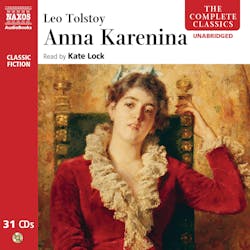
    Anna Karenina - Audiobook

    Leo Tolstoy, Classic Audiobooks

  3. 3.0
    #152025

    Krieg und Frieden

    Leo Tolstoy

  4. My Religion

    Leo Tolstoy

  5. #1

    Anna Karenina (Part 1)

    Leo Tolstoy

  6. 4.0

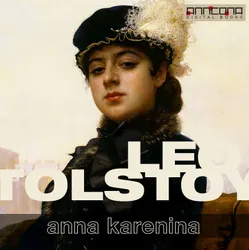
    Anna Karenina

    Leo Tolstoy

  7. 1. Nov.
    3.6

    War and Peace

    Leo Tolstoy

  8. 1. Nov.
    3.7

    Anna Karenina

    Leo Tolstoy

  9. Neu

    50 Masterpieces you have to read before you die vol: 2

    Joseph Sheridan Fanu, Madame de Fayette, Jerome K Jerome, James Joyce, Charles Kingsley, Rudyard Kipling, Pierre Choderlos Laclos, D. H. Lawrence, Matthew Gregory Lewis, Sinclair Lewis, Jack London, H.P. Lovecraft, Thomas Mann, W. Somerset Maugham, Guy De Maupassant, Herman Melville, Edgar Allan Poe, Marcel Proust, Ann Radcliffe, Samuel Richardson, George Sand, Walter Scott, Mary Shelley, Henryk Sienkiewicz, May Sinclair, Upton Sinclair, Stendhal, Laurence Sterne, Robert Louis Stevenson, Bram Stoker, Harriet Beecher Stowe, Jonathan Swift, Rabindranath Tagore, William Makepeace Thackeray, Leo Tolstoy, Anthony Troloppe, Ivan Turgenev, Mark Twain, Jules Verne, Lew Wallace, H.G. Wells, Rebecca West, Edith Wharton, Oscar Wilde, Cao Xueqin, Émile Zola

  10. Neu

    50 Masterpieces you have to read before you die vol: 1

    Louisa May Alcott, Jane Austen, Honoré de Balzac, Henri Barbusse, Anne Brontë, Charlotte Brontë, Emily Brontë, Edgar Rice Burroughs, Samuel Butler, Lewis Carroll, Willa Cather, Miguel de Cervantes, Kate Chopin, John Cleland, Wilkie Collins, Joseph Conrad, Charles Dickens, Fyodor Dostoevsky, Alexandre Dumas, George Eliot, Ralph Waldo Emerson, Gustave Flaubert, E. M. Forster, H. Rider Haggard, Thomas Hardy, Nathaniel Hawthorne, Robert Heinlein, Victor Hugo, Aldous Huxley, Henry James, D. H. Lawrence, H.P. Lovecraft, Herman Melville, John Milton, Robert Musil, Vladimir Nabokov, George Orwell, Edgar Allan Poe, Marcel Proust, William Shakespeare, Mary Shelley, Leo Tolstoy

  11. Neu

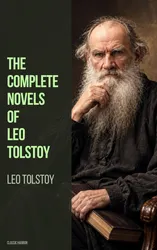
    The Complete Novels of Leo Tolstoy

    Leo Tolstoy

  12. Neu

    50 Masterpieces you have to read before you die vol: 2

    Joseph Sheridan Fanu, Madame de Fayette, Jerome K Jerome, James Joyce, Charles Kingsley, Rudyard Kipling, Pierre Choderlos Laclos, D. H. Lawrence, Matthew Gregory Lewis, Sinclair Lewis, Jack London, H.P. Lovecraft, Thomas Mann, W. Somerset Maugham, Guy De Maupassant, Herman Melville, Edgar Allan Poe, Marcel Proust, Ann Radcliffe, Samuel Richardson, George Sand, Walter Scott, Mary Shelley, Henryk Sienkiewicz, May Sinclair, Upton Sinclair, Stendhal, Laurence Sterne, Robert Louis Stevenson, Bram Stoker, Harriet Beecher Stowe, Jonathan Swift, Rabindranath Tagore, William Makepeace Thackeray, Leo Tolstoy, Anthony Troloppe, Ivan Turgenev, Mark Twain, Jules Verne, Lew Wallace, H.G. Wells, Rebecca West, Edith Wharton, Oscar Wilde, Cao Xueqin, Émile Zola