Über dieses Buch

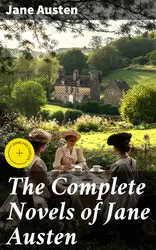
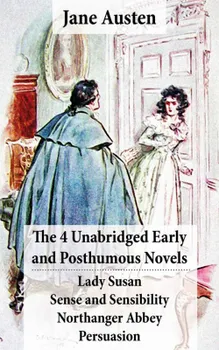
Gathering Lady Susan, Sense and Sensibility, Northanger Abbey, and Persuasion, this volume traces Jane Austen's art from youthful experiment to late mastery. The epistolary brilliance of Lady Susan, the moral and emotional architecture of Sense and Sensibility, the parodic Gothic intelligence of Northanger Abbey, and the autumnal restraint of Persuasion reveal a writer refining irony into ethical vision. Together, these unabridged novels illuminate Austen's place between eighteenth-century satire and the nineteenth-century novel of manners. Jane Austen, born in 1775 into a literate clerical family, wrote from within the social world she anatomized: provincial gentry, precarious inheritance, courtship, rank, and female dependence. Her sharp observation was shaped by wide reading, family theatricals, economic uncertainty, and a life spent negotiating the limits placed on unmarried women. The posthumous publication of Northanger Abbey and Persuasion underscores both her curtailed career and her astonishing artistic completion. This collection is especially recommended for readers seeking more than familiar romance. It offers a compact education in Austen's development, her comic discipline, and her profound understanding of judgment, self-knowledge, and social performance. Scholars, students, and devoted general readers alike will find here an indispensable portrait of one of English fiction's most exacting minds.

This enriched edition has been carefully crafted to add value to your reading experience.

- A comprehensive Introduction outlines these selected works' unifying features, themes, or stylistic evolutions.

- The Author Biography highlights personal milestones and literary influences that shape the entire body of writing.

- A Historical Context section situates the works in their broader era—social currents, cultural trends, and key events that underpin their creation.

- A concise Synopsis (Selection) offers an accessible overview of the included texts, helping readers navigate plotlines and main ideas without revealing critical twists.

- A unified Analysis examines recurring motifs and stylistic hallmarks across the collection, tying the stories together while spotlighting the different work's strengths.

- Reflection questions inspire deeper contemplation of the author's overarching message, inviting readers to draw connections among different texts and relate them to modern contexts.

- Lastly, our hand‐picked Memorable Quotes distill pivotal lines and turning points, serving as touchstones for the collection's central themes.

Starte noch heute mit diesem Buch für € 0

  • Hole dir während der Testphase vollen Zugriff auf alle Bücher in der App
  • Keine Verpflichtungen, jederzeit kündbar
Jetzt kostenlos testen
Mehr als 52 000 Menschen haben Nextory im App Store und auf Google Play 5 Sterne gegeben.

Ähnliche Bücher

Mehr von Jane Austen

  1. 4.1

    Northanger Abbey

    Jane Austen

  2. 4.5

    Pride and Prejudice

    Jane Austen

  3. 3.7
    #1

    Sense and Sensibility

    Jane Austen

  4. 100 Meisterwerke der englischen Literatur - Klassiker, die man kennen muss (Kommentiert) : Erweiterte Ausgabe. Hamlet, 1984, Ulysses...

    George Orwell, Charles Dickens, Jane Austen, Katherine Mansfield, H.P. Lovecraft, William Wordsworth, John Keats, Percy Bysshe Shelley, Robert Burns, John Milton, William Shakespeare, Christopher Marlowe, Geoffrey Chaucer, Laurence Sterne, Henry Fielding, Mary Shelley, Emily Brontë, Charlotte Brontë, Anne Brontë, William Makepeace Thackeray, George Eliot, D. H. Lawrence, Herman Melville, Thomas Wolfe, Virginia Woolf, Joseph Conrad, Sinclair Lewis, Walt Whitman, Edgar Allan Poe, Oscar Wilde, Jerome K Jerome, Washington Irving, Bram Stoker, H.G. Wells, Daniel Defoe, Lew Wallace, James Fenimore Cooper, Jonathan Swift, Robert Louis Stevenson, Mark Twain, Lewis Carrol, Edward Bulwer-Lytton, F. Scott Fitzgerald, Arthur Conan Doyle, Jack London, Henry David Thoreau, G.K. Chesterton, Edith Wharton, Henry James, Thomas Hardy, Margaret Mitchell, Kate Chopin, Willa Cather, Charlotte Perkins Gilman, James Joyce, John Galsworthy, Francis Hodgson Burnett, Lucy Maud Montgomery, Louisa May Alcott, Rudyard Kipling

  5. Die 50 besten Romane zu Weihnachten : Weihnachtsromane, Weihnachtsmärchen, Abenteuerromane, Krimis, Historische Romane und Liebesromane

    Jules Verne, Lewis Carroll, Selma Lagerlöf, Johanna Spyri, Charles Dickens, Theodor Fontane, Karl May, Adalbert Stifter, Mark Twain, Oscar Wilde, Eufemia von Adlersfeld-Ballestrem, Agnes Günther, Robert Louis Stevenson, Edgar Allan Poe, Charlotte Brontë, Jack London, Victor Hugo, Arthur Conan Doyle, Frances Hodgson Burnett, Jane Austen, Alexandre Dumas, Beatrix Potter, Voltaire, Lew Wallace, G.K. Chesterton, Hans Christian Andersen, Eugenie Marlitt, Fjodor Michailowitsch Dostojewski, Wilhelmine Heimburg, Kurt Tucholsky, Hermann Kurz, Brüder Grimm, O.Henry, Hedwig Courths-Mahler, ETA Hoffman, Nikolaj Gogol

  6. Romantik aus aller Welt

    Jane Austen, Nikolai Wassiljewitsch Gogol, Edgar Allan Poe

  7. 4.6

    Stolz und Vorurteil

    Jane Austen

  8. 4.1

    Sense and Sensibility

    Jane Austen

  9. 1. März
    4.5
    #1

    Orgullo y prejuicio

    Jane Austen

  10. 1. Nov.
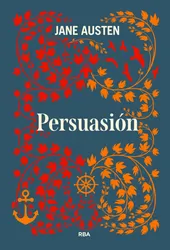
    3.9

    Persuasión

    Jane Austen

  11. Neu

    10 Masterpieces of Comedy

    Charles Dickens, Edwin Abbott Abbott, Jane Austen, Jerome Klapka Jerome, Jonathan Swift, Mark Twain

  12. Neu

    50 Masterpieces you have to read before you die vol: 1

    Louisa May Alcott, Jane Austen, Honoré de Balzac, Henri Barbusse, Anne Brontë, Charlotte Brontë, Emily Brontë, Edgar Rice Burroughs, Samuel Butler, Lewis Carroll, Willa Cather, Miguel de Cervantes, Kate Chopin, John Cleland, Wilkie Collins, Joseph Conrad, Charles Dickens, Fyodor Dostoevsky, Alexandre Dumas, George Eliot, Ralph Waldo Emerson, Gustave Flaubert, E. M. Forster, H. Rider Haggard, Thomas Hardy, Nathaniel Hawthorne, Robert Heinlein, Victor Hugo, Aldous Huxley, Henry James, D. H. Lawrence, H.P. Lovecraft, Herman Melville, John Milton, Robert Musil, Vladimir Nabokov, George Orwell, Edgar Allan Poe, Marcel Proust, William Shakespeare, Mary Shelley, Leo Tolstoy