oder

Finde dein nächstes Lieblingsbuch

  1. 27. Nov.
    #1

    Du bist der Mann

    Edgar Allan Poe

  2. Neu

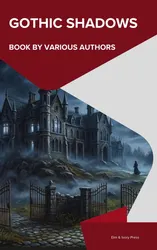
    Gothic Shadows : 15 Essential Tales of Horror and the Supernatural

    Washington Irving, Edgar Allan Poe, Charles Dickens, Oscar Wilde, Henry James, M. R. James, William Hope Hodgson, Arthur Machen, Ann Ward Radcliffe, Gaston Leroux

  3. Neu

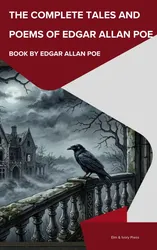
    The Complete Tales and Poems of Edgar Allan Poe

    Edgar Allan Poe

  4. Neu
    4.2

    The Fall of the House of Usher

    Edgar Allan Poe

  5. #5

    The Works of Edgar Allan Poe (Volume 5)

    Edgar Allan Poe

  6. Neu

    The Works of Edgar Allan Poe - Volume 2

    Edgar Allan Poe

  7. Neu

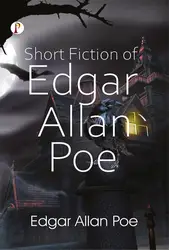
    Short Fiction of Edgar Allan Poe

    Edgar Allan Poe

  8. Neu

    The Works of Edgar Allan Poe - Volume 1

    Edgar Allan Poe

  9. Neu

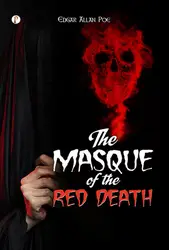
    The Masque of the Red Death

    Edgar Allan Poe

  10. Neu
    4.1

    The Raven

    Edgar Allan Poe

  11. Neu

    50 Masterpieces you have to read before you die vol: 2

    Joseph Sheridan Fanu, Madame de Fayette, Jerome K Jerome, James Joyce, Charles Kingsley, Rudyard Kipling, Pierre Choderlos Laclos, D. H. Lawrence, Matthew Gregory Lewis, Sinclair Lewis, Jack London, H.P. Lovecraft, Thomas Mann, W. Somerset Maugham, Guy De Maupassant, Herman Melville, Edgar Allan Poe, Marcel Proust, Ann Radcliffe, Samuel Richardson, George Sand, Walter Scott, Mary Shelley, Henryk Sienkiewicz, May Sinclair, Upton Sinclair, Stendhal, Laurence Sterne, Robert Louis Stevenson, Bram Stoker, Harriet Beecher Stowe, Jonathan Swift, Rabindranath Tagore, William Makepeace Thackeray, Leo Tolstoy, Anthony Troloppe, Ivan Turgenev, Mark Twain, Jules Verne, Lew Wallace, H.G. Wells, Rebecca West, Edith Wharton, Oscar Wilde, Cao Xueqin, Émile Zola

  12. Neu

    50 Masterpieces you have to read before you die vol: 1

    Louisa May Alcott, Jane Austen, Honoré de Balzac, Henri Barbusse, Anne Brontë, Charlotte Brontë, Emily Brontë, Edgar Rice Burroughs, Samuel Butler, Lewis Carroll, Willa Cather, Miguel de Cervantes, Kate Chopin, John Cleland, Wilkie Collins, Joseph Conrad, Charles Dickens, Fyodor Dostoevsky, Alexandre Dumas, George Eliot, Ralph Waldo Emerson, Gustave Flaubert, E. M. Forster, H. Rider Haggard, Thomas Hardy, Nathaniel Hawthorne, Robert Heinlein, Victor Hugo, Aldous Huxley, Henry James, D. H. Lawrence, H.P. Lovecraft, Herman Melville, John Milton, Robert Musil, Vladimir Nabokov, George Orwell, Edgar Allan Poe, Marcel Proust, William Shakespeare, Mary Shelley, Leo Tolstoy

Über dieses Buch

The Future of Darkness: 30+ Dystopias in One Edition unfolds as a riveting exploration of dystopian narratives spanning several centuries and literary movements. This anthology offers a profound examination of humanity's perennial fascination with the dark implications of possible futures. Through the lens of gothic, speculative, and science fiction, readers will encounter a panorama of styles, from the sombre and cerebral to the thrillingly apocalyptic, capturing the essence of speculative storytelling. Each tale, whether focusing on political, technological, or philosophical dystopias, contributes uniquely to the chilling theme, ensuring that this collection is both a reflective and immersive experience. The anthology is a convergence of literary brilliance featuring eminent authors like Edgar Allan Poe, H. G. Wells, Mary Shelley, and Ayn Rand, whose works collectively encapsulate the evolution of dystopian thought. These writers, along with others, have profoundly shaped the literary landscape by engaging with their contemporary socio-political and scientific concerns. The collection aligns with pivotal movements such as Romanticism, realism, and modern science fiction, offering a rich tapestry of voices that harness the power of dystopia to address the mutable human condition. The Future of Darkness is indispensable for anyone seeking a comprehensive understanding of dystopian literature's vast expanse. It provides an exceptional opportunity to explore myriad perspectives and styles within a single volume, facilitating a deeper appreciation of the thematic complexities these works navigate. Readers are invited into a dialogue that transcends time and genre, making this anthology a compelling addition to both academic study and personal reflection on the dystopian imagination.