Über dieses Buch

In 'The Greatest Works of Immanuel Kant,' readers are presented with a compendium of ideas that have profoundly shaped modern philosophy. This collection includes critical essays such as 'Critique of Pure Reason,' 'Critique of Practical Reason,' and 'Critique of Judgment,' showcasing Kant's groundbreaking inquiry into metaphysics, ethics, and aesthetics. His rigorous analytical style is marked by a meticulous approach to delineating the limits of human understanding and the nature of moral imperatives, set against the backdrop of Enlightenment thought, where reason was lauded as the primary source of authority. Kant's work invites readers on an intellectual journey that challenges preconceived notions of knowledge and morality, insisting that enlightenment is not merely an act of the mind but a moral obligation as well. Immanuel Kant, a central figure in Western philosophy, emerged from the intellectual milieu of 18th-century Prussia, where the intersection of rationalism and empiricism was fervently debated. His personal quest for knowledge, alongside his experiences as a scholar and a professor, led him to address the pressing philosophical questions of his time. Kant's emphasis on autonomy and reason not only reflects his own beliefs but also contributes significantly to the development of critical philosophy, influencing countless theorists across disciplines. Readers seeking a deeper understanding of the foundations of Western thought will find 'The Greatest Works of Immanuel Kant' indispensable. It serves not only as an introduction to Kant's pivotal ideas but also as a comprehensive reference for those wishing to engage with the rich tapestry of philosophical discourse. By immersing oneself in Kant's writings, one can appreciate not just the complexity of his arguments but also their enduring relevance in contemporary discussions on ethics, knowledge, and the human condition.

Starte noch heute mit diesem Buch für € 0

  • Hole dir während der Testphase vollen Zugriff auf alle Bücher in der App
  • Keine Verpflichtungen, jederzeit kündbar
Jetzt kostenlos testen
Mehr als 52 000 Menschen haben Nextory im App Store und auf Google Play 5 Sterne gegeben.

Mehr von Immanuel Kant

  1. 1. Nov.

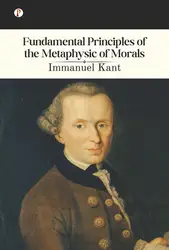
    Fundamental Principles of the Metaphysic of Morals

    Immanuel Kant

  2. 1. Nov.

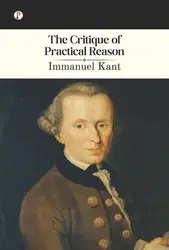
    The Critique of Practical Reason

    Immanuel Kant

  3. 1. Nov.

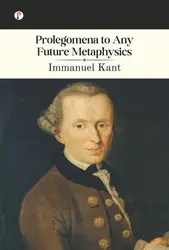
    Kant's Prolegomena to Any Future Metaphysics

    Immanuel Kant

  4. 1. Nov.

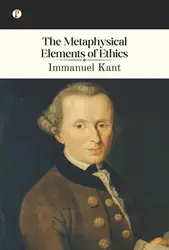
    The Metaphysical Elements of Ethics

    Immanuel Kant

  5. 1. Nov.

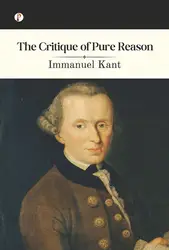
    The Critique of Pure Reason

    Immanuel Kant

  6. 1. Nov.

    Perpetual Peace: A Philosophical Essay

    Immanuel Kant

  7. 1. Nov.

    Of the Injustice of Counterfeiting Books

    Immanuel Kant

  8. Neu

    Kritik der reinen Vernunft - 1. Auflage

    Immanuel Kant

  9. Kritik der Urteilskraft

    Immanuel Kant

  10. Kritik der reinen Vernunft

    Immanuel Kant

  11. Lo Bello y Lo Sublime : Ensayo de Estética y Moral

    Immanuel Kant

  12. 100 Clásicos de la Literatura Universal

    Francis Scott Fitzgerald, Mary Shelley, Lyman Frank Baum, Louisa May Alcott, Dante Alighieri, Jane Austen, Ambrose Bierce, Emily Brontë, Edgar Rice Burroughs, Lewis Carroll, Wilkie Collins, René Descartes, Charles Dickens, Emily Dickinson, Alexandre Dumas, Gustave Flaubert, Benito Pérez Galdós, Johann Wolfgang von Goethe, Thomas Hardy, E T A Hoffmann, Washington Irving, Henry James, James Joyce, Franz Kafka, Gaston Leroux, Federico García Lorca, H.P. Lovecraft, Publio Virgilio Marón, Lucy Maud Montgomery, John William Polidori, Marco Polo, Antoine de Saint-Exupéry, Emilio Salgari, Walter Scott, Mark Twain, Jules Verne, Julio Verne, H.G. Wells, Edith Wharton, Mary Wollstonecraft, Stefan Zweig, Sun Tzu, Bram Stoker, - Aristoteles, George Bernard Shaw, Henryk Sienkiewicz, Concepción Arenal, Charlotte Brontë, Miguel de Cervantes, G.K. Chesterton, Daniel Defoe, Fyodor Mikhailovich Dostoyevsky, Arthur Conan Doyle, Sigmund Freud, H. Rider Haggard, Homero, Immanuel Kant, Rudyard Kipling, Molière, Friedrich Nietzsche, Fernando de Rojas, Sófocles, William Makepeace Thackeray, León Tolstói, Voltaire, Ramón María del Valle-Inclán, Oscar Wilde, Virginia Woolf