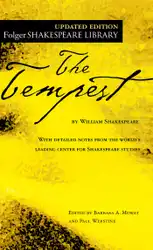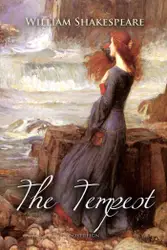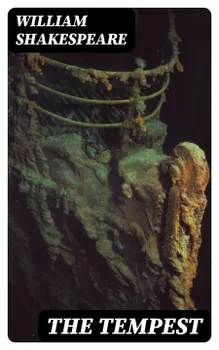
William Shakespeare's "The Tempest" stands as a quintessential exploration of themes such as power, betrayal, redemption, and the human capacity for forgiveness. Set on a remote island, the play weaves a rich tapestry of supernatural elements and intricate character dynamics, embodying Shakespeare's signature blend of poetic dialogue and profound insights into human nature. The narrative centers around Prospero, a wronged Duke who wields magic to navigate his quest for justice, encapsulating the transitional period of the early 17th century—marked by a burgeoning interest in exploration and the complexity of colonial encounters. Shakespeare, often hailed as the greatest playwright in the English language, drew from his own experiences and the contemporary socio-political landscape of England, influenced perhaps by the age's fascination with the New World and the nature of sovereignty. His intimate understanding of human psyche and societal structures enriches "The Tempest," allowing for multiple interpretations, from a post-colonial lens to a philosophical inquiry into agency and free will. Highly recommended for readers and scholars alike, "The Tempest" offers a deep philosophical reflection on the interplay between man and nature, as well as personal and collective transformation. Its layers of meaning ensure that it remains perpetually relevant, inviting the audience to engage with its enchanting narrative and the weighty moral questions it raises.

100 Meisterwerke der Weltliteratur - Klassiker die man kennen muss
Franz Kafka, Fjodor Michailowitsch Dostojewski, Rumi, Platon, Tacitus, Homer, Sigmund Freud, Friedrich Nietzsche, Oswald Spengler, Alfred Adler, Marcus Aurelius, Arthur Schopenhauer, Walt Whitman, Joseph Conrad, Robert Louis Stevenson, Karl May, Alexandre Dumas, James Fenimore Cooper, Arthur Conan Doyle, Edgar Allan Poe, Mary Shelley, O.Henry, Stefan Zweig, Charles Dickens, Jacob Grimm, Wilhelm Grimm, Hans Christian Andersen, Joseph von Eichendorff, Klaus Mann, Johann Wolfgang von Goethe, Jane Austen, Emily Brontë, Charlotte Brontë, Else Lasker-Schüler, Heinrich Heine, Herman Melville, Iwan Sergejewitsch Turgenew, Gustav Freytag, Thomas Wolfe, Jonathan Swift, Walter Scott, Nathaniel Hawthorne, Gustave Flaubert, Rainer Maria Rilke, John Galsworthy, Iwan Alexandrowitsch Gontscharow, Oscar Wilde, Lew Wallace, Voltaire, Lewis Carroll, Johanna Spyri, Mark Twain, Selma Lagerlöf, Rudyard Kipling, Jules Verne, Jack London, Miguel de Cervantes, Honoré de Balzac, Emile Zola, Guy De Maupassant, Moliere, Theodor Fontane, Nikolai Gogol, Leo Tolstoi, Anton Pawlowitsch Tschechow, Dante Alighieri, Joseph Roth, Robert Musil, E T A Hoffmann, Heinrich Mann, Kurt Tucholsky, Heinrich von Kleist, Annette von Droste-Hülshoff, Gottfried Keller, Sophie von La Roche, Theodor Storm, William Shakespeare