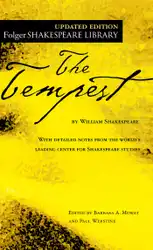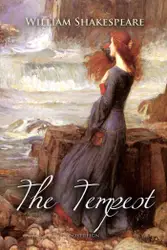
William Shakespeare's "The Tempest" stands as a quintessential exploration of themes such as power, betrayal, redemption, and the human capacity for forgiveness. Set on a remote island, the play weaves a rich tapestry of supernatural elements and intricate character dynamics, embodying Shakespeare's signature blend of poetic dialogue and profound insights into human nature. The narrative centers around Prospero, a wronged Duke who wields magic to navigate his quest for justice, encapsulating the transitional period of the early 17th century—marked by a burgeoning interest in exploration and the complexity of colonial encounters. Shakespeare, often hailed as the greatest playwright in the English language, drew from his own experiences and the contemporary socio-political landscape of England, influenced perhaps by the age's fascination with the New World and the nature of sovereignty. His intimate understanding of human psyche and societal structures enriches "The Tempest," allowing for multiple interpretations, from a post-colonial lens to a philosophical inquiry into agency and free will. Highly recommended for readers and scholars alike, "The Tempest" offers a deep philosophical reflection on the interplay between man and nature, as well as personal and collective transformation. Its layers of meaning ensure that it remains perpetually relevant, inviting the audience to engage with its enchanting narrative and the weighty moral questions it raises.

100 Klassiker der Romantik - Meisterwerke, die man kennen muss : Epische Liebesdramen und große Erwartungen in zeitlosen Geschichten
Jane Austen, Louisa May Alcott, D. H. Lawrence, Fjodor Dostojewski, William Shakespeare, Hedwig Courths-Mahler, Frances Burney, Charlotte Brontë, Alexandre Dumas, Margaret Mitchell, Charles Dickens, L.M. Montgomery, Eugenie Marlitt, Wilhelmine Heimburg, Elisabeth Bürstenbinder, Stendhal, Johann Wolfgang von Goethe, Walter Scott, Guy De Maupassant, Victor Hugo, George Sand, Leo Tolstoi, Gabriele D’Annunzio, Rudyard Kipling, Gustave Flaubert, Nathaniel Hawthorne, Jean-Jacques Rousseau, Bernardin de Saint-Pierre, F. Scott Fitzgerald, Prosper Mérimée, Edith Wharton, Lena Christ, François-René de Chateaubriand, Stefan Zweig, Alexander Sergejewitsch Puschkin, Ida Boy-Ed, Arthur Schnitzler, Anatole France, Johanna Spyri, George Eliot, Gaston Leroux, Nataly von Eschstruth, Gottfried von Straßburg, Sophie Mereau, Caroline von Wolzogen, Benedikte Naubert, Henry De Vere Stacpoole, Levin Schücking