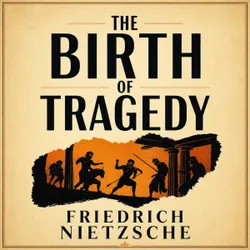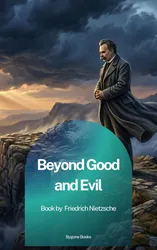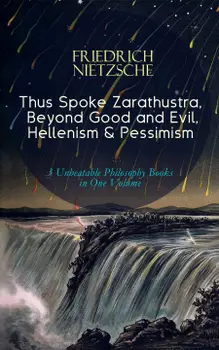
Thus Spoke Zarathustra, Beyond Good and Evil, Hellenism & Pessimism : 3 Unbeatable Philosophy Books in One Volume - The Birth of Tragedy

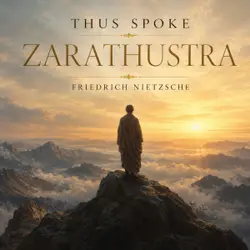
"Thus Spake Zarathustra: A Book for All and None" chronicles the fictitious travels and speeches of Zarathustra, the founder of Zoroastrianism. Zarathustra contains the famous dictum "God is dead" and the concept of the "Übermensch" (overman or superman).

In "Beyond Good and Evil" Nietzsche accuses past philosophers of lacking critical sense and blindly accepting dogmatic premises in their consideration of morality. The work moves into the realm "beyond good and evil" in the sense of leaving behind the traditional morality which Nietzsche subjects to a destructive critique in favour of what he regards as an affirmative approach.

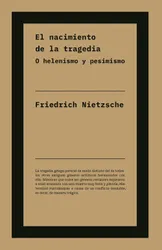
"The Birth of Tragedy or, Hellenism and Pessimism" is a work of dramatic theory which discusses the history of the tragic form and introduces an intellectual dichotomy between the Dionysian and the Apollonian. Nietzsche believed that in classical Athenian tragedy an art form that transcended the pessimism and nihilism of a fundamentally meaningless world.

Friedrich Nietzsche (1844–1900) was a German philosopher, cultural critic, poet, philologist, and Latin and Greek scholar whose work has exerted a profound influence on Western philosophy and modern intellectual history. Because of Nietzsche's evocative style and provocative ideas, his philosophy generates passionate reactions. His works remain controversial, due to varying interpretations and misinterpretations of his work. In the Western philosophy tradition, Nietzsche's writings have been described as the unique case of free revolutionary thought, that is, revolutionary in its structure and problems, although not tied to any revolutionary project
Starten Sie noch heute mit diesem Buch für € 0

  • Hol dir während der Testphase vollen Zugriff auf alle Bücher in der App
  • Keine Verpflichtungen, jederzeit kündbar
Jetzt kostenlos testen
Mehr als 52 000 Menschen haben Nextory im App Store und auf Google Play 5 Sterne gegeben.

  1. 100 Meisterwerke der Weltliteratur - Klassiker die man kennen muss

    Franz Kafka, Fjodor Michailowitsch Dostojewski, Rumi, Platon, Tacitus, Homer, Sigmund Freud, Friedrich Nietzsche, Oswald Spengler, Alfred Adler, Marcus Aurelius, Arthur Schopenhauer, Walt Whitman, Joseph Conrad, Robert Louis Stevenson, Karl May, Alexandre Dumas, James Fenimore Cooper, Arthur Conan Doyle, Edgar Allan Poe, Mary Shelley, O.Henry, Stefan Zweig, Charles Dickens, Jacob Grimm, Wilhelm Grimm, Hans Christian Andersen, Joseph von Eichendorff, Klaus Mann, Johann Wolfgang von Goethe, Jane Austen, Emily Brontë, Charlotte Brontë, Else Lasker-Schüler, Heinrich Heine, Herman Melville, Iwan Sergejewitsch Turgenew, Gustav Freytag, Thomas Wolfe, Jonathan Swift, Walter Scott, Nathaniel Hawthorne, Gustave Flaubert, Rainer Maria Rilke, John Galsworthy, Iwan Alexandrowitsch Gontscharow, Oscar Wilde, Lew Wallace, Voltaire, Lewis Carroll, Johanna Spyri, Mark Twain, Selma Lagerlöf, Rudyard Kipling, Jules Verne, Jack London, Miguel de Cervantes, Honoré de Balzac, Emile Zola, Guy De Maupassant, Moliere, Theodor Fontane, Nikolai Gogol, Leo Tolstoi, Anton Pawlowitsch Tschechow, Dante Alighieri, Joseph Roth, Robert Musil, E. T. Hoffmann, Heinrich Mann, Kurt Tucholsky, Heinrich von Kleist, Annette von Droste-Hülshoff, Gottfried Keller, Sophie von La Roche, Theodor Storm, William Shakespeare

  2. Der Antichrist

    Friedrich Nietzsche

  3. Gekürzt
    5.0

    Klaus Kinski

    Carry Thomas, Juan Julio Arrascaeta, Friedrich Nietzsche, Fjodor Michailowitsch Dostojewski, Janheinz Jahn, Basil Mcfarlane

  4. 15. Mai
    4.3

    Ecce Homo : Cómo se llega a ser lo que se es

    Friedrich Nietzsche

  5. 24. März

    Über Wahrheit und Lüge im außermoralischen Sinn. Ein philosophischer Essay. : Hörbuchzeit: Klassiker der Weltliteratur

    Hörbuchzeit, Friedrich Nietzsche

  6. 15. März

    Die Geburt der Tragödie aus dem Geiste der Musik. Versuch einer Selbstkritik und philosophisches Weltbild. : Hörbuchzeit: Klassiker der Weltliteratur

    Hörbuchzeit, Friedrich Nietzsche

  7. 1. März

    El nacimiento de la tragedia

    Friedrich Nietzsche

  8. 1. März

    Lyrikalische Bibliothek

    Heinrich Heine, Annette von Droste-Hülshoff, Charles Baudelaire, John Keats, Rainer Maria Rilke, Georg Heym, Wilhelm Busch, Arno Holz, Johann Wolfgang von Goethe, Christian Morgenstern, Joachim Ringelnatz, Georg Trakl, Ludwig Tieck, Stefan Zweig, Hugo von Hoffmannsthal, Edgar Allan Poe, Frank Wedekind, Franz Werfel, Wolfgang Borchert, Karl Kraus, Kurt Tucholsky, Friedrich Nietzsche, Else Lasker-Schüler, Ludwig Kalisch, Jakob van Hoddis, Joseph von Eichendorff, Gotthold Ephraim Lessing

  9. Neu

    Sobre mi vida (esbozos autobiográficos) y apuntes filosóficos de juventud temprana

    Friedrich Nietzsche

  10. La filosofía en la época trágica de los griegos : Homero y la Filología Clásica. Cinco prólogos a cinco libros no escritos.

    Friedrich Nietzsche

  11. Obras completas : Volumen III: Obras de madurez I

    Friedrich Nietzsche

  12. Crepúsculo de los ídolos

    Friedrich Nietzsche