Under Fire

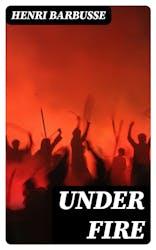
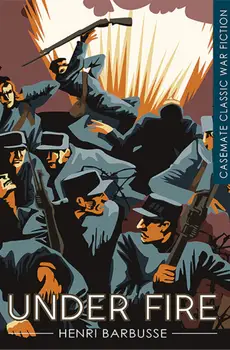
The original translation of one of the first World War I novels—at first criticized for its harsh realism but now celebrated as a classic.

Set in early 1916, Under Fire follows the point of view of an unnamed foot soldier in a squad of French volunteers on the western front. It combines soaring, poetic descriptions with the mundane, messy, human reality of soldiers living in their own filth. Gradually, names and features are given to the men who emerge from the mud, from the dignified leader, Corporal Bertrand, to the ebullient Volpatte and the obsessive Cocon.

Intermingled with details of how the men navigate daily life in the putrefied atmosphere of the trenches is a political, pacifist argument about this war and war more generally. Caught up in events they cannot control, the soldiers go through their daily routines: foraging for food, reading letters from wives and mothers, drinking, fighting in battle, and, in harrowing scenes for which the novel is noted, discovering dead bodies in advanced stages of decomposition. Through it all, they talk about the war, attempting to make sense of the altered world in which they find themselves.

Under Fire (originally published in French as Le Feu) drew criticism at the time of its publication for its brutal detail, but went on to win the Prix Goncourt, a prestigious literary award that Henri Barbusse—a World War I soldier who wrote from vivid, painful experience—shares with renowned authors such as Marcel Proust and Marguerite Duras. Here, the original translation by William Fitzwater Wray, which first appeared in 1917, captures both the intensity of the story and the essence of the era. A glossary is also provided.

Über dieses Buch

The original translation of one of the first World War I novels—at first criticized for its harsh realism but now celebrated as a classic.

Set in early 1916, Under Fire follows the point of view of an unnamed foot soldier in a squad of French volunteers on the western front. It combines soaring, poetic descriptions with the mundane, messy, human reality of soldiers living in their own filth. Gradually, names and features are given to the men who emerge from the mud, from the dignified leader, Corporal Bertrand, to the ebullient Volpatte and the obsessive Cocon.

Intermingled with details of how the men navigate daily life in the putrefied atmosphere of the trenches is a political, pacifist argument about this war and war more generally. Caught up in events they cannot control, the soldiers go through their daily routines: foraging for food, reading letters from wives and mothers, drinking, fighting in battle, and, in harrowing scenes for which the novel is noted, discovering dead bodies in advanced stages of decomposition. Through it all, they talk about the war, attempting to make sense of the altered world in which they find themselves.

Under Fire (originally published in French as Le Feu) drew criticism at the time of its publication for its brutal detail, but went on to win the Prix Goncourt, a prestigious literary award that Henri Barbusse—a World War I soldier who wrote from vivid, painful experience—shares with renowned authors such as Marcel Proust and Marguerite Duras. Here, the original translation by William Fitzwater Wray, which first appeared in 1917, captures both the intensity of the story and the essence of the era. A glossary is also provided.

Starte noch heute mit diesem Buch für € 0

  • Hole dir während der Testphase vollen Zugriff auf alle Bücher in der App
  • Keine Verpflichtungen, jederzeit kündbar
Jetzt kostenlos testen
Mehr als 52 000 Menschen haben Nextory im App Store und auf Google Play 5 Sterne gegeben.

  1. L’Enfer : Chef-d’œuvre Classique : L’intimité dévoilée des amants de la Belle Époque

    Henri Barbusse

  2. 5.0

    Le Feu, journal d'une escouade : Un témoignage bouleversant de la vie des soldats dans les tranchées pendant la Première Guerre mondiale

    Henri Barbusse

  3. Das Feuer : Bereicherte Ausgabe. Eine schonungslose Reise in die Schützengräben des Ersten Weltkriegs: Psychologische Grausamkeit und moralische Konflikte enthüllt

    Henri Barbusse

  4. Das Feuer : Bereicherte Ausgabe. Basierend auf wahren Begebenheiten

    Henri Barbusse

  5. Das Feuer: Tagebuch einer Korporalschaft

    Henri Barbusse

  6. Das Feuer : Bereicherte Ausgabe. Basierend auf wahren Begebenheiten

    Henri Barbusse

  7. Abenteuer hautnah : Memoiren von Garibaldi, Lawrence von Arabien, Heinrich Schliemann, Ida Pfeiffer, Robert Falcon Scott, Marco Polo

    T. E. Lawrence, Giuseppe Garibaldi, Robert Falcon Scott, Erwin Rosen, Francisco de Xerez, Gerhard Rohlfs, Heinrich Schliemann, Ernst Udet, Manfred von Richthofen, Henri Barbusse, Ida Pfeiffer, Marco Polo, Fjodor Dostojewski

  8. Das Leben schreibt Dramen : Memoiren von Robert Falcon Scott, Lawrence von Arabien, Heinrich Schliemann, Ida Pfeiffer, Marco Polo, Fjodor Dostojewski

    T. E. Lawrence, Giuseppe Garibaldi, Robert Falcon Scott, Erwin Rosen, Francisco de Xerez, Gerhard Rohlfs, Heinrich Schliemann, Manfred von Richthofen, Ernst Udet, Henri Barbusse, Ida Pfeiffer, Kurt Aram, Marco Polo, Fjodor Michailowitsch Dostojewski

  9. Vom Himmelshorizont bis in die Tiefe der Gräben : Lebensgeschichten aus dem Ersten Weltkrieg: Roter Baron, Lawrence von Arabien, Ernst Udet, Mata Hari, Henri Barbusse

    Manfred von Richthofen, Ernst Udet, Thomas Edward Lawrence, Henri Barbusse, Enrique Gómez Carrillom, Kurt Aram, Joseph Roth

  10. Die Lebensgeschichten von Kämpfern des Ersten Weltkriegs : Biographien und Memoiren von "Roter Baron" Manfred von Richthofen, Lawrence von Arabien, Ernst Udet, Mata Hari und Henri Barbusse

    Manfred von Richthofen, Ernst Udet, Thomas Edward Lawrence, Henri Barbusse, Enrique Gómez Carrillom, Kurt Aram, Joseph Roth

  11. Jésus

    Henri Barbusse

  12. Le feu (Journal d'une Escouade) : Édition enrichie.

    Henri Barbusse