Om denne bog

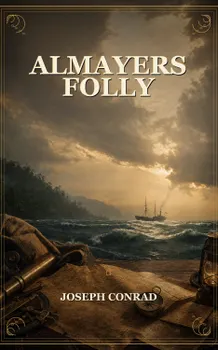
Kaspar Almayer is a Dutch trader whose career has stalled. He finds himself in a riverside village in the jungles of East Borneo with his estranged Malay wife, their beautiful daughter Nina, and a lavish but unfinished house the village has dubbed "Almayer's Folly." Kaspar dreams of becoming rich enough to free himself from the backwater village and take Nina to Europe. Rumors of gold deposits in the depths of the jungle delude him into thinking he's close to achieving that dream, and with the arrival of a rajah's son who's willing to join Kaspar in his get-rich-quick scheme, the plot is kicked into motion. Almayer's Folly is notable for being Joseph Conrad's first novel, published in 1895 after six years of casual writing and just one year after he ended his maritime career. For this book, Józef Konrad Korzeniowski adopted the pen name by which he would later be known as a master of the English language. The book is based on Conrad's experience as a seaman in the British merchant navy and his travels to Indonesia. Both the book's titular character and the riverside village have their counterparts in real-life. While critics argue that Almayer's Folly isn't as good as Conrad's more famous works, the book introduces themes which he often returns to in his writing career, including colonialism, the clash of East and West, and the dominant forces of Nature. Joseph Conrad (died 1924) was a major literary figure of the early 20th century. Their work has endured across generations and continues to be read and studied worldwide. As a work of classic literary fiction, Almayers Folly exemplifies the narrative craft and social insight that defined great storytelling of its era. Literary fiction of this period was characterized by careful attention to character psychology, social milieu, and the moral questions that animated public discourse.

Kom i gang med denne bog i dag for 0 kr.

  • Få fuld adgang til alle bøger i appen i prøveperioden
  • Ingen forpligtelser, opsiges når som helst
Prøv gratis nu
Mere end 52.000 mennesker har givet Nextory fem stjerner i App Store og Google Play.

Mere af Joseph Conrad

  1. Ny
    3.3

    Heart of Darkness

    Joseph Conrad

  2. The Nature of a Crime

    Joseph Conrad, Ford Madox Ford

  3. DEEP, DARK & UNSETTLING: 100+ Gothic Classics in One Edition

    Charles Dickens, Friedrich Schiller, Oscar Wilde, Robert Louis Stevenson, Edgar Allan Poe, William Hope Hodgson, Joseph Sheridan Fanu, George MacDonald, Percy Bysshe Shelley, Bram Stoker, Charlotte Brontë, Emily Brontë, William Godwin, Henry James, Victor Hugo, Théophile Gautier, Arthur Conan Doyle, Joseph Conrad, Guy Boothby, Jane Austen, Mayne Reid, John Meade Falkner, Guy De Maupassant, George Eliot, Samuel Taylor Coleridge, Robert Hugh Benson, Horace Walpole, Frederick Marryat, Thomas love Peacock, Washington Irving, Nathaniel Hawthorne, Gaston Leroux, Grant Allen, Arthur Machen, Wilkie Collins, Thomas Peckett Prest, James Malcolm Rymer, Robert Browning, Walter Hubbell, Marie Corelli, Charles Brockden Brown, James Hogg, William Blake, Charlotte Perkins Gilman, John Keats, Richard Marsh, Clara Reeve, Charles Robert Maturin, John William Polidori, Lord Byron, W. W. Jacobs, E F Benson, M. R. James, E. T. Hoffmann, George W. Reynolds, William Thomas Beckford, Christina Rossetti, Tobias Smollett, Nikolai Gogol, Mary Shelley, Edward Bulwer-Lytton, Ann Radcliffe, Matthew Gregory Lewis, Eliza Parsons, Eleanor Sleath, Émile Erckmann, Alexandre Chatrian

  4. The Aftermath of Napoleonic Wars : Twenty Historical Novels of Exile, Restoration, Intrigue, and Post-Waterloo Europe

    Alexandre Dumas, Arthur Conan Doyle, Joseph Conrad, L. Mühlbach, Eleanor C. Price, Émile Erckmann, Alexandre Chatrian, Leo Tolstoy, Frederick Whishaw, Max Pemberton, Henry Seton Merriman, G. A Henty, James Grant, Charles Downer Hazen, Warwick Deeping

  5. 50 Masterpieces you have to read before you die

    Frances Hodgson Burnett, Homer, Charles Dickens, Lyman Frank Baum, Nathaniel Hawthorne, Thomas Hardy, Robert Louis Stevenson, Henry Haggard, Wilkie Collins, H.G. Wells, Sir Walter Scott, Lucy Maud Montgomery, Louisa May Alcott, Henry Fielding, Mary Shelley, Arthur Conan Doyle, Leo Tolstoy, Euripides, Fyodor Dostoevsky, Alexander Pushkin, James Fenimore Cooper, Daniel Defoe, Joseph Conrad, Jonathan Swift, William Shakespeare, Oscar Wilde, John Bunyan, Charles Darwin, Alfred Tennyson, Bram Stoker, James Joyce, Dante Alighieri, Howard Pyle, Jane Austen, Emily Bronte, Giovanni Boccaccio, Rudyard Kipling

  6. Tales of Unrest

    Joseph Conrad

  7. 50 Masterpieces you need to read

    Louisa May Alcott, Jane Austen, Joseph Conrad, D. H. Lawrence, George Eliot, Leo Tolstoy, James Joyce, Charles Dickens, Bram Stoker, Oscar Wilde, Honoré de Balzac, Edgar Rice Burroughs, Anne Brontë, Charlotte Brontë, Emily Brontë, Lewis Carroll, Willa Cather, Miguel de Cervantes, E. Cummings, Fyodor Dostoyevsky, Daniel Defoe, Arthur Conan Doyle, Alexandre Dumas, Gustave Flaubert, Henry James, Victor Hugo

  8. 50 Masterpieces you have to read

    Louisa May Alcott, Jane Austen, Joseph Conrad, D. H. Lawrence, George Eliot, Leo Tolstoy, James Joyce, Charles Dickens, Bram Stoker, Oscar Wilde, Honoré de Balzac, Edgar Rice Burroughs, Anne Brontë, Charlotte Brontë, Emily Brontë, Lewis Carroll, Willa Cather, Miguel de Cervantes, E. Cummings, Fyodor Dostoyevsky, Daniel Defoe, Arthur Conan Doyle, Alexandre Dumas, Gustave Flaubert, Henry James, Victor Hugo

  9. The Nigger of the 'Narcissus'

    Joseph Conrad, Golden Deer Classics

  10. Nostromo

    Joseph Conrad

  11. Classics Authors Super Set Series 2 (Golden Deer Classics)

    Oscar Wilde, H.G. Wells, Mary Shelley, Edgar Allan Poe, H.P. Lovecraft, Victor Hugo, Robert Louis Stevenson, Rudyard Kipling, Nathaniel Hawthorne, Thomas Hardy, Elizabeth Cleghorn Gaskell, Charles Dickens, Jane Austen, Joseph Conrad, Golden Deer Classics

  12. The Secret Agent: Ultimate Spy Collection (77 Books in One Volume)

    E. Philips Oppenheim, Arthur Conan Doyle, John Buchan, Erskine Childers, Joseph Conrad, William Le Queux, Fred M. White, Robert W. Chambers, Talbot Mundy, James Fenimore Cooper, John R. Coryell, George Barton, Robert Baden-Powell