Om denne bog

In "An Ideal Husband," Oscar Wilde masterfully weaves a tale that explores themes of political ambition, moral integrity, and the complexities of marriage in Victorian society. Set against the backdrop of London's elite, the play employs Wilde's signature wit and epigrammatic style to critique social conventions and hypocrisy. Through the character of Sir Robert Chiltern, Wilde challenges the audience to consider the conflicts between public persona and private ethics, ultimately posing significant questions about the nature of trust and fidelity. The interplay of scandal, deception, and redemption creates a poignant narrative that resonates with the intricacies of human relationships. Oscar Wilde, an iconic figure of the late 19th century, was known for his flamboyant lifestyle and sharp intellect. His own experiences with societal rejection, as well as his keen observations of the upper classes, profoundly informed the intricate characterizations and moral dilemmas within this play. Having faced personal tribulations surrounding reputation and identity, Wilde's exploration of these themes in "An Ideal Husband" reflects his critical stance on social mores and the sometimes superficial nature of public life. A compelling exploration of morality and love, "An Ideal Husband" is recommended for readers who appreciate sharp dialogue and layered storytelling. Wilde's incisive critiques of society, combined with his gift for humor, create a timeless piece that challenges readers to reflect on their own ideals and the nature of personal integrity.

Kom i gang med denne bog i dag for 0 kr.

  • Få fuld adgang til alle bøger i appen i prøveperioden
  • Ingen forpligtelser, opsiges når som helst
Prøv gratis nu
Mere end 52.000 mennesker har givet Nextory fem stjerner i App Store og Google Play.

Mere af Oscar Wilde

  1. 4.2

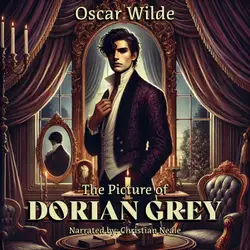
    The Picture of Dorian Gray

    Oscar Wilde

  2. 4.2

    Billedet af Dorian Gray

    Oscar Wilde

  3. 50 Masterpieces You Have to Read : Volume Two - A Second Library of World Literature

    Joseph Sheridan Fanu, Madame de Fayette, Jerome K Jerome, James Joyce, Charles Kingsley, Rudyard Kipling, Pierre Choderlos Laclos, D. H. Lawrence, Matthew Gregory Lewis, Sinclair Lewis, Jack London, H.P. Lovecraft, Thomas Mann, W. Somerset Maugham, Guy De Maupassant, Herman Melville, Edgar Allan Poe, Marcel Proust, Ann Radcliffe, Samuel Richardson, George Sand, Walter Scott, Mary Shelley, Henryk Sienkiewicz, May Sinclair, Upton Sinclair, Stendhal, Laurence Sterne, Robert Louis Stevenson, Bram Stoker, Harriet Beecher Stowe, Jonathan Swift, Rabindranath Tagore, William Makepeace Thackeray, Leo Tolstoy, Anthony Trollope, Ivan Turgenev, Mark Twain, Jules Verne, Lew Wallace, H.G. Wells, Rebecca West, Edith Wharton, Oscar Wilde, Cao Xueqin, Émile Zola

  4. 2.0

    The Picture of Dorian Grey

    Oscar Wilde

  5. The Best Fairy Tales : Brothers Grimm, Charles Perrault, Hans Christian Andersen, Oscar Wilde, Rudyard Kipling, Joseph Jacobs, Russian Folk Fairy Tales

    Brothers Grimm, Charles Perrault, Hans Christian Andersen, Oscar Wilde, Rudyard Kipling, Joseph Jacobs, Alexander Afanasyev

  6. Oscar Wilde 3 Iconic Audiobooks : An Ideal Husband, The Happy Prince & Other Stories, Lady Windermere's Fan

    Oscar Wilde

  7. Something Wicked : The Call of Cthulhu, Frankenstein, Dracula, The Murders in the Rue Morgue, Dr Jekyll & Mr Hyde…

    Wilhelm Hauff, Charles Dickens, Mark Twain, Harriet Beecher Stowe, Adelbert von Chamisso, Oscar Wilde, Robert Louis Stevenson, Edgar Allan Poe, William Hope Hodgson, Joseph Sheridan Fanu, John Buchan, Louis Tracy, Bram Stoker, Anatole France, Charlotte Brontë, Emily Brontë, Jack London, Henry James, Théophile Gautier, Arthur Conan Doyle, Richard Le Gallienne, Jane Austen, Ralph Adams Cram, Thomas De Quincey, John Meade Falkner, Guy De Maupassant, Thomas Hardy, William Archer, Daniel Defoe, John Kendrick Bangs, Cleveland Moffett, Brander Matthews, Marie Belloc Lowndes, Horace Walpole, Rudyard Kipling, Lafcadio Hearn, Hugh Walpole, Ambrose Bierce, Frederick Marryat, Ellis Parker Butler, Washington Irving, Leonid Andreyev, David Lindsay, Nathaniel Hawthorne, Grant Allen, Arthur Machen, Wilkie Collins, Saki, William Makepeace Thackeray, Thomas Peckett Prest, James Malcolm Rymer, Fergus Hume, Edward Bellamy, Walter Hubbell, Charlotte Perkins Gilman, Leopold Kompert, Richard Marsh, Florence Marryat, Catherine Crowe, Vincent O'Sullivan, H.G. Wells, Robert W. Chambers, W. W. Jacobs, M.P. Shiel, E F Benson, Jerome K Jerome, M. R. James, E. T. Hoffmann, Stanley G. Weinbaum, George W. Reynolds, H.P. Lovecraft, Robert E. Howard, Edith Nesbit, Sabine Baring-Gould, William Thomas Beckford, Francis Marion Crawford, Lucy Maud Montgomery, Mary Elizabeth Braddon, Mary Louisa Molesworth, Mary E. Freeman, Nikolai Gogol, Mary Shelley, Elizabeth Gaskell, Edward Bulwer-Lytton, Frank R. Stockton, A. T. Quiller-Couch, Ann Radcliffe, Louisa M. Alcott, Amelia B. Edwards, Leonard Kip, Matthew Gregory Lewis, Fitz-James O’Brien, Katherine Rickford, Bithia Mary Croker, Catherine L. Pirkis, Émile Erckmann, Alexandre Chatrian, Pedro De Alarçon, Pliny the Younger, Helena Blavatsky, Villiers de Adam, William F. Harvey, Fiona Macleod, William T. Stead, Gambier Bolton, Andrew Jackson Davis, Nizida, Walter F. Prince, Chester Bailey Fernando, William Polidori, H. H. Munro

  8. 50 Masterpieces you have to read before you die

    Frances Hodgson Burnett, Homer, Charles Dickens, Lyman Frank Baum, Nathaniel Hawthorne, Thomas Hardy, Robert Louis Stevenson, Henry Haggard, Wilkie Collins, H.G. Wells, Sir Walter Scott, Lucy Maud Montgomery, Louisa May Alcott, Henry Fielding, Mary Shelley, Arthur Conan Doyle, Leo Tolstoy, Euripides, Fyodor Dostoevsky, Alexander Pushkin, James Fenimore Cooper, Daniel Defoe, Joseph Conrad, Jonathan Swift, William Shakespeare, Oscar Wilde, John Bunyan, Charles Darwin, Alfred Tennyson, Bram Stoker, James Joyce, Dante Alighieri, Howard Pyle, Jane Austen, Emily Bronte, Giovanni Boccaccio, Rudyard Kipling

  9. 50 Masterpieces you have to read

    Louisa May Alcott, Jane Austen, Joseph Conrad, D. H. Lawrence, George Eliot, Leo Tolstoy, James Joyce, Charles Dickens, Bram Stoker, Oscar Wilde, Honoré de Balzac, Edgar Rice Burroughs, Anne Brontë, Charlotte Brontë, Emily Brontë, Lewis Carroll, Willa Cather, Miguel de Cervantes, E. Cummings, Fyodor Dostoyevsky, Daniel Defoe, Arthur Conan Doyle, Alexandre Dumas, Gustave Flaubert, Henry James, Victor Hugo

  10. The Importance of Being Earnest : A Trivia Comedy for Serious People

    Oscar Wilde

  11. 3.3

    The Soul of Man

    Oscar Wilde

  12. 4.0

    Lady Windermere's Fan

    Oscar Wilde