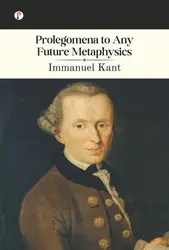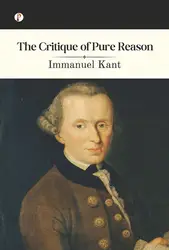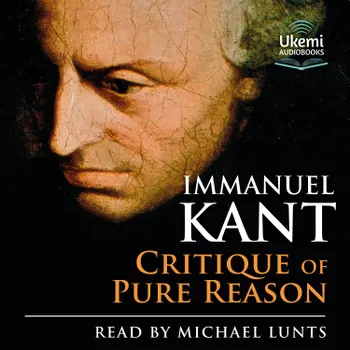

Immanuel Kant’s Critique of Pure Reason can lay claim to being the most important single work of modern philosophy, a work whose methodology, if not necessarily always its conclusions, has had a profound influence on almost all subsequent philosophical discourse. In this work Kant addresses, in a groundbreaking elucidation of the nature of reason, the age-old question of philosophy: “How do we know what we know?” and the limits of what it is that we can know with certainty.
Immanuel Kant (1724 to 1804) lived his long life against the background of the Enlightenment and shared in that movement’s growing confidence in the ability of human reason, in the sciences, mathematics and, Kant was to argue, in philosophy too, to explain matters that had previously been the preserve of purely speculative thought and of metaphysics. The Critique of Pure Reason is exactly that, a critique of what ‘pure’ reason, that is to say reason independent of empirical evidence, could claim as truth, particularly with regard to such questions as freedom, causality, and the existence of a Supreme Being. As well as challenging what he saw as the contradictory metaphysical traditions of past philosophers, Kant critiqued both rationalism and empiricism, the alternative schools of philosophical thought dominant at the time, which argued, respectively, for either reason or experience as being the key to our understanding. In the Critique Kant turns these opposing schools on their head and expounds what Kant himself called a revolutionary and all-encompassing ‘Transcendental Idealism’. Instead of an objective reality which we can somehow ‘know’ through either reason or experience, Kant proposes that our knowledge of empirical objects depends upon our subjective reasoning of them (“objects must conform to our knowledge”) and not, as was usually assumed, the other way around. Kant’s exhaustively thorough and ‘scientific’ working out of this central thesis meant that all philosophers who came after him were set a benchmark against which to propound their own arguments with equal thoroughness. Indeed, Kant himself thought that, so comprehensive had his work been in its analysis both of the nature of reason itself and of the shortcomings of all previous thinkers on the subject, that his Critique of Pure Reason might be considered ‘the last word’.
While this was not to be the case, this seminal work still maintains its power to challenge the way we think of ourselves in relation to the world around us and, if we really engage with Kant’s arguments and insights, to change our very understanding of what it means to be a ‘rational’ human being.
This reading uses Kant’s heavily revised Second Edition of the Critique of Pure Reason, published in 1787.
It is read by Michael Lunts who has also recorded Kant’s two subsequent Critiques, Critique of Practical Reason and Critique of Judgement for Ukemi Audiobooks. Translator: Norman Kemp Smith. All the main footnotes included.