De Officiis

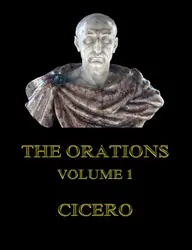
In the de Officiis we have, save for the latter Philippics, the great orator's last contribution to literature. The last, sad, troubled years of his busy life could not be given to his profession; and he turned his never-resting thoughts to the second love of his student days and made Greek philosophy a possibility for Roman readers. The senate had been abolished; the courts had been closed. His occupation was gone; but Cicero could not surrender himself to idleness. In those days of distraction (46-43 b.c.) he produced for publication almost as much as in all his years of active life.

The liberators had been able to remove the tyrant, but they could not restore the republic. Cicero's own life was in danger from the fury of mad Antony and he left Rome about the end of March, 44 b.c. He dared not even stop permanently in any one of his various country estates, but, wretched, wandered from one of his villas to another nearly all the summer and autumn through. He would not suffer himself to become a prey to his overwhelming sorrow at the death of the republic and the final crushing of the hopes that had risen with Caesar's downfall, but worked at the highest tension on his philosophical studies.

The Romans were not philosophical. In 161 b.c. the senate passed a decree excluding all philosophers and teachers of rhetoric from the city. They had no taste for philosophical speculation, in which the Greeks were the world's masters. They were intensely, narrowly practical. And Cicero was thoroughly [x] Roman. As a student in a Greek university he had had to study philosophy. His mind was broad enough and his soul great enough to give him a joy in following after the mighty masters, Socrates, Plato, Zeno, Cleanthes, Aristotle, Theophrastus, and the rest. But he pursued his study of it, like a Roman, from a "practical" motive—to promote thereby his power as an orator and to augment his success and happiness in life.
Om denne bog

In the de Officiis we have, save for the latter Philippics, the great orator's last contribution to literature. The last, sad, troubled years of his busy life could not be given to his profession; and he turned his never-resting thoughts to the second love of his student days and made Greek philosophy a possibility for Roman readers. The senate had been abolished; the courts had been closed. His occupation was gone; but Cicero could not surrender himself to idleness. In those days of distraction (46-43 b.c.) he produced for publication almost as much as in all his years of active life.

The liberators had been able to remove the tyrant, but they could not restore the republic. Cicero's own life was in danger from the fury of mad Antony and he left Rome about the end of March, 44 b.c. He dared not even stop permanently in any one of his various country estates, but, wretched, wandered from one of his villas to another nearly all the summer and autumn through. He would not suffer himself to become a prey to his overwhelming sorrow at the death of the republic and the final crushing of the hopes that had risen with Caesar's downfall, but worked at the highest tension on his philosophical studies.

The Romans were not philosophical. In 161 b.c. the senate passed a decree excluding all philosophers and teachers of rhetoric from the city. They had no taste for philosophical speculation, in which the Greeks were the world's masters. They were intensely, narrowly practical. And Cicero was thoroughly [x] Roman. As a student in a Greek university he had had to study philosophy. His mind was broad enough and his soul great enough to give him a joy in following after the mighty masters, Socrates, Plato, Zeno, Cleanthes, Aristotle, Theophrastus, and the rest. But he pursued his study of it, like a Roman, from a "practical" motive—to promote thereby his power as an orator and to augment his success and happiness in life.
Kom i gang med denne bog i dag for 0 kr.

  • Få fuld adgang til alle bøger i appen i prøveperioden
  • Ingen forpligtelser, opsiges når som helst
Prøv gratis nu
Mere end 52.000 mennesker har givet Nextory fem stjerner i App Store og Google Play.

Andre læsere kunne også lide

Spring listen over
  1. Tao Te Ching (Daodejing)

    Lao Tzu

  2. Oedipus the King

    Sophocles Sophocles

  3. Plays of Sophocles: Oedipus the King; Oedipus at Colonus; Antigone

    Sophocles

  4. Oedipus the King

    Sophocles

  5. Emile

    Jean-Jacques Rousseau

  6. Into Eternal Darkness: 100+ Gothic Classics in One Edition : Novels, Tales and Poems: The Mysteries of Udolpho, The Tell-Tale Heart, Sweeney Todd…

    Charles Dickens, Friedrich Schiller, Oscar Wilde, Robert Louis Stevenson, Edgar Allan Poe, William Hope Hodgson, Joseph Sheridan Le Fanu, George MacDonald, Percy Bysshe Shelley, Bram Stoker, Charlotte Brontë, Emily Brontë, William Godwin, Henry James, Victor Hugo, Théophile Gautier, Arthur Conan Doyle, Joseph Conrad, Guy Boothby, Jane Austen, Mayne Reid, John Meade Falkner, Guy De Maupassant, George Eliot, Samuel Taylor Coleridge, Robert Hugh Benson, Horace Walpole, Frederick Marryat, Thomas love Peacock, Washington Irving, Nathaniel Hawthorne, Gaston Leroux, Grant Allen, Arthur Machen, Wilkie Collins, Thomas Peckett Prest, James Malcolm Rymer, Robert Browning, Walter Hubbell, Marie Corelli, Charles Brockden Brown, James Hogg, William Blake, Charlotte Perkins Gilman, John Keats, Richard Marsh, Clara Reeve, Charles Robert Maturin, John William Polidori, Lord Byron, W. Jacobs, E F Benson, M. R. James, E T A Hoffmann, George W. M. Reynolds, William Thomas Beckford, Christina Rossetti, Tobias Smollett, Nikolai Gogol, Mary Shelley, Edward Bulwer-Lytton, Ann Radcliffe, Matthew Gregory Lewis, Eliza Parsons, Eleanor Sleath, Émile Erckmann, Alexandre Chatrian

  7. Beyond Good and Evil : Bestsellers and famous Books

    Friedrich Wilhelm Nietzsche

  8. The Three Theban Plays: Antigone; Oedipus the King; Oedipus at Colonus

    Sophocles

  9. 2.7

    Oedipus: The King

    F. L. Light, Sophocles

  10. Breve til en ung digter og to eventyr

    Rainer Maria Rilke

  11. 4.0

    Dansen gennem sommeren

    Bo Green Jensen

  12. Nobelprisen
    3.8

    100 års ensomhed

    Gabriel García Márquez

  1. History's Great Speeches: The Definitive Collection : 40 hours of historical highlights from Pericles to Mao covering 54 orators, and 153 speeches

    Julius Caesar, Marcus Tullius Cicero, Demosthenes, Pericles, William Pitt, William Lloyd Garrison, William Morris, Abraham Lincoln, Albert Apponyi, Alexander the Great, A.M. Sullivan, Annie Besant, Caius Marius, Caius Memmius, Catiline, Cato The Younger, Charles Phillips, Joseph, Daniel O'Connell, Dinarchus, EDMUND BURKE, Eduard Bernstein, Edward Carpenter, Elizabeth I, Emilio Castelar, Eugene Debs, Frederick Douglass, Mohandas Gandhi, George Graham Vest, Girolamo Savonarola, Giuseppe Garibaldi, Huldrych Zwingli, John Calvin, Gaetano, Louis Kossuth, Louis Lingg, Mao Tsetung, Mark Anthony, Mark Twain, Martin Luther, Maximillian Robespierre, Mikhail Bakunin, Muhammad, Napoleon Bonaparte, Otto von Bismarck, Peter Kropotkin, Phillip Melanchthon, Pico della Mirandola, Pierre Joseph Proudhon, Pope Urban, Red Jacket, Robert Emmet, Susan B. Anthony, Swami Vivekananda

  2. 3.8

    How to Win an Argument : An Ancient Guide to the Art of Persuasion

    Marcus Tullius Cicero

  3. Treatises on Friendship and Old Age (Hero Classics)

    Marcus Tullius Cicero

  4. Against Verres

    Marcus Tullius Cicero

  5. On Old Age - Cicero de Senectute

    Marcus Tullius Cicero

  6. Treatises on Friendship and Old Age

    Marcus Tullius Cicero

  7. Against Verres : Enriched edition.

    Marcus Tullius Cicero

  8. Puhe runoilija Archiaan puolustukseksi

    Marcus Tullius Cicero

  9. 5.0

    Ystävyydestä

    Marcus Tullius Cicero

  10. Scipion unennäkö

    Marcus Tullius Cicero

  11. Vanhuudesta

    Marcus Tullius Cicero

  12. Vanhuudesta

    Marcus Tullius Cicero


Relaterede kategorier