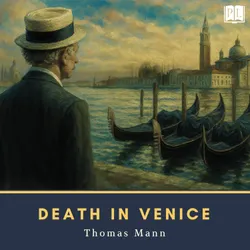
Thomas Mann's *Death in Venice* (1912) follows Gustav von Aschenbach, a celebrated, disciplined writer who travels to Venice seeking renewal and becomes enthralled by the beautiful adolescent Tadzio. Against the city's decaying splendor and concealed cholera epidemic, Mann examines artistic idealism, erotic obsession, mortality, and the instability of cultivated self-control. The novella's exquisitely controlled prose, symbolic imagery, ironic distance, and recurring opposition between Apollonian order and Dionysian impulse place it centrally within European literary modernism and the fin-de-siècle crisis of bourgeois culture. Born in Lübeck in 1875, Mann emerged from a prosperous mercantile family and made the conflicts between bourgeois respectability, artistic vocation, and forbidden desire central to his fiction. His engagement with Schopenhauer, Nietzsche, Goethe, and the cultural anxieties preceding the First World War helped shape this work's philosophical density. Aschenbach's collapse can be read both as a personal tragedy and as Mann's searching critique of artistic authority, repression, and the fantasy that aesthetic discipline can master human nature. Recommended for readers interested in psychological fiction, aesthetic theory, and the darker currents of modernism, *Death in Venice* rewards close, attentive reading. Its brevity belies its interpretive richness: every image of beauty, illness, water, and ritual contributes to a haunting meditation on the price of desire and the limits of artistic control.
Death in Venice : An Aesthetic Novella of Forbidden Desire, Decadence, and Moral Disintegration in Plague-Shadowed Venice
Skrevet af Thomas Mann