
Om denne bog

While it’s easily forgotten today, during the early 20th century, various European countries had vibrant film industries, and even though Hollywood had already staked its claim as the forerunner of the international cinematic landscape by the 1920s, national cinemas in Sweden, Germany, and elsewhere throughout Western Europe enjoyed great power during this period.

During that time, Germany's most renowned film directors were pioneering the genre known as Expressionism, and within it, Fritz Lang was known as the "Master of Darkness." Together with his eventual wife, Thea von Harbou, Lang wrote a number of acclaimed movies, including Dr. Mabuse the Gambler (1922), Die Nibelungen (1924), Metropolis (1927), and Woman in the Moon (1929).

Eventually, a number of Europe’s biggest movie stars and directors came to Hollywood, such as Greta Garbo, Ingrid Bergman, and Alfred Hitchcock, but Lang’s course to America came under far different circumstances. As Adolf Hitler rose to power and strengthened the Nazis’ grip over Germany, the party’s coarse antisemitism took root across all segments of society. As Jews were further persecuted, German Jews from all walks of life went into exile, and the loss of so many bright minds has led historians to the conclusion that the exodus could have made the difference in World War II.

Compelled to leave Germany, Lang made his way to Hollywood and quickly established himself there, leading to a career spanning 20 years. Continuing with the same themes as the ones he used in Germany, Lang helped establish noir as one of the most popular film genres of the 1950s in America, with influential works like Scarlett Street, and his most famous film, The Big Heat (1953).


Kom i gang med denne bog i dag for 0 kr.

  • Få fuld adgang til alle bøger i appen i prøveperioden
  • Ingen forpligtelser, opsiges når som helst
Prøv gratis nu
Mere end 52.000 mennesker har givet Nextory fem stjerner i App Store og Google Play.

  1. 4.0

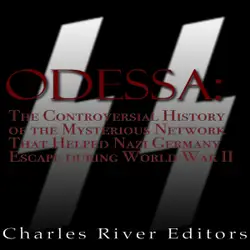
    ODESSA : The Controversial History of the Mysterious Network that Helped Nazis Escape Germany after World War II

    Charles River Editors

  2. 3.0

    The Ancient Egyptian City of Thebes : The History and Legacy of the Capital that Became Luxor

    Charles River Editors

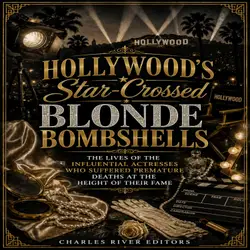
  3. Hollywood’s Star-Crossed Blonde Bombshells: The Lives of the Influential Actresses Who Suffered Premature Deaths at the Height of Their Fame

    Charles River Editors

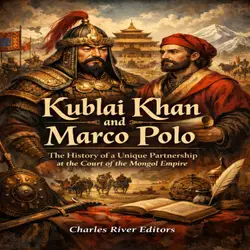
  4. Kublai Khan and Marco Polo: The History of a Unique Partnership at the Court of the Mongol Empire

    Charles River Editors

  5. 3.0

    The Anglo-Saxon Settlement of England: The History and Legacy of the Anglo-Saxons at the Start of the Middle Ages

    Charles River Editors

  6. 3.6

    Jack the Ripper and the Zodiac Killer: The History of the Most Famous Serial Killers Who Were Never Caught

    Charles River Editors

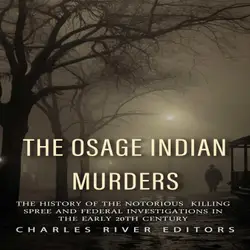
  7. The Osage Indian Murders: The History of the Notorious Killing Spree and the Federal Investigations in the Early 20th Century

    Charles River Editors

  8. 4.0

    The Voyager Program: The History and Legacy of NASA's First Probes that Traveled to the Outer Solar System

    Charles River Editors

  9. 5.0

    The Rise and Fall of the Third Reich: The History and Legacy of Nazi Germany under Adolf Hitler

    Charles River Editors

  10. 3.0

    The World’s Most Notorious Serial Killers: The Lives and Crimes of History’s Most Infamous Murderers

    Charles River Editors

  11. The Napoleonic Wars: The History of the Conflicts that Shaped Europe in the 19th Century

    Charles River Editors

  12. Uluru: The History and Legacy of the Australian Landmark Considered Sacred by the Local Aborigines

    Charles River Editors