Om denne bog

"We can know only that we know nothing. And that is the highest degree of human wisdom."

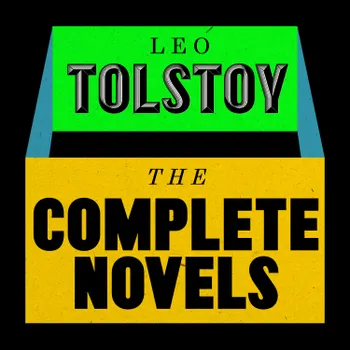
From the sweeping grandeur of War and Peace to the heartbreaking intricacies of Anna Karenina, and the powerful exploration of redemption and social justice of Resurrection, Leo Tolstoy: The Complete Novels contains unabridged recordings of the major novels by one of literature's greatest storytellers.

The titles included in this collection are:

War and Peace: This epic masterpiece intertwines the lives of several families against the backdrop of Napoleon's invasion of Russia in 1812. It follows Pierre Bezukhov, the illegitimate son of a count who is fighting for his inheritance and yearning for spiritual fulfilment; Prince Andrei Bolkonsky, who leaves his family behind to fight in the war against Napoleon; and Natasha Rostov, the beautiful young daughter of a nobleman who intrigues both men. Balls and soirées alternate with councils of war and the machinations of statesmen and generals, scenes of violent battles with everyday human passions in a work whose extraordinary imaginative power has never been surpassed.

Anna Karenina: Widely considered to be one of Tolstoy's finest works, Anna Karenina is both a tragic love story and an exploration of the complexities of love, infidelity, and societal expectations in 19th-century Russia.

Anna Karenina seems to have everything - beauty, wealth, popularity and an adored son. But she feels that her life is empty until the moment she encounters the impetuous officer Count Vronsky. Their subsequent affair scandalises her family and the hypercritical and unforgiving society in which she lives and soon brings jealously and bitterness in its wake.

Resurrection: one of Tolstoy's later works, Resurrection is a powerful exploration of personal morality, the possibility of redemption, and the profound impact of one's choices on others, following the journey of privileged nobleman Dmitri Nekhlyudov, as he embarks on a transformative journey that challenges his perceptions of morality and justice.

An intimate, psychological tale of guilt, anger, and forgiveness, Resurrection is at the same time a panoramic description of social life in Russia at the end of the nineteenth century, reflecting its author's outrage at the social injustices of the world in which he lived.

Leo Tolstoy (1828–1910) was a Russian novelist, philosopher, and social reformer, widely regarded as one of the greatest writers of all time. He is best known for his epic novels War and Peace and Anna Karenina, both celebrated for their intricate character development and profound exploration of moral dilemmas and human nature. In his later years, Tolstoy experienced a spiritual awakening which led him to reject materialism and embrace a life of simplicity, seeking to align his life with his beliefs about non-violence and compassion. Tolstoy's legacy endures not only through his literary masterpieces but also through his profound impact on literature and philosophy.

This audiobook is fully indexed. Once downloaded, each book and chapter will be listed so you can easily navigate to the individual section.
Kom i gang med denne bog i dag for 0 kr.

  • Få fuld adgang til alle bøger i appen i prøveperioden
  • Ingen forpligtelser, opsiges når som helst
Prøv gratis nu
Mere end 52.000 mennesker har givet Nextory fem stjerner i App Store og Google Play.

  1. 4.0

    War and Peace

    Leo Tolstoy

  2. Ny

    Harvard Classics : The Five-Foot Shelf of Books

    Aesop, Dante Alighieri, Hans Christian Andersen, Augustine of Hippo, Marcus Aurelius, Jane Austen, Francis Bacon, Honoré de Balzac, Francis Beaumont, Bjørnstjerne Bjørnson, Thomas Browne, Robert Browning, John Bunyan, EDMUND BURKE, Robert Burns, Lord Byron, Thomas Carlyle, Benvenuto Cellini, Miguel de Cervantes, Marcus Tullius Cicero, Richard Henry Jr., Charles Darwin, Alphonse Daudet, Thomas Dekker, Charles Dickens, Fyodor Dostoevsky, John Dryden, Charles W. Eliot, George Eliot, Ralph Waldo Emerson, Epictetus, John Fletcher, Theodor Fontane, Benjamin Franklin, Johann Wolfgang Goethe, Oliver Goldsmith, Jacob Grimm, Edward Everett Hale, Bret Harte, Nathaniel Hawthorne, Homer, Victor Hugo, Washington Irving, Henry James, Ben Jonson, Gottfried Keller, Thomas à Kempis, Alexander L. Kielland, Martin Luther, Niccolò Machiavelli, Alessandro Manzoni, Christopher Marlowe, Philip Massinger, Guy De Maupassant, John Stuart Mill, John Milton, Thomas More, William Morris, Alfred de Musset, William Allan Neilson, William Penn, Plato, Pliny the Younger, Plutarch, George Sand, Percy Bysshe Shelley, Richard Brinsley Sheridan, Adam Smith, Laurence Sterne, Theodor Storm, William Makepeace Thackeray, Leo Tolstoy, Ivan Turgenev, Mark Twain, Juan Valera, Virgil, Izaak Walton, John Webster, John Woolman

  3. #1

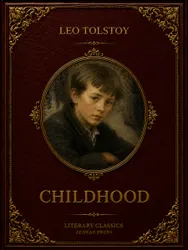
    Childhood : The Autobiographical Trilogy, Book 1

    Leo Tolstoy

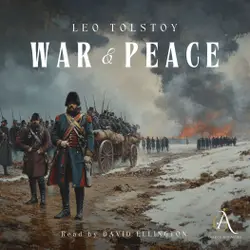
  4. War and Peace - Audiobook

    Leo Tolstoy, Classic Audiobooks

  5. 10 Masterpieces You Have to Read Before You Die, Vol.5 : The Odyssey, The Republic, Meditations, The Divine Comedy, Faust and others

    Homer, Plato, Aristotle, Marcus Aurelius, Niccolo Machiavelli, Dante Alighieri, Johann Wolfgang von Goethe, Leo Tolstoy

  6. 5.0

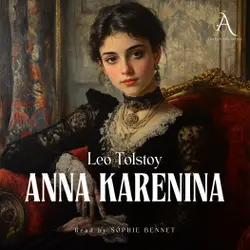
    Anna Karenina - Audiobook

    Leo Tolstoy, Classic Audiobooks

  7. War And Peace

    Leo Tolstoy

  8. #17

    War and Peace (Second Epilogue)

    Leo Tolstoy

  9. War and Peace

    Leo Tolstoy

  10. The Aftermath of Napoleonic Wars : Twenty Historical Novels of Exile, Restoration, Intrigue, and Post-Waterloo Europe

    Alexandre Dumas, Arthur Conan Doyle, Joseph Conrad, L. Mühlbach, Eleanor C. Price, Émile Erckmann, Alexandre Chatrian, Leo Tolstoy, Frederick Whishaw, Max Pemberton, Henry Seton Merriman, G. A Henty, James Grant, Charles Downer Hazen, Warwick Deeping

  11. War and Peace

    Leo Tolstoy

  12. 50 Masterpieces you have to read

    Louisa May Alcott, Jane Austen, Joseph Conrad, D. H. Lawrence, George Eliot, Leo Tolstoy, James Joyce, Charles Dickens, Bram Stoker, Oscar Wilde, Honoré de Balzac, Edgar Rice Burroughs, Anne Brontë, Charlotte Brontë, Emily Brontë, Lewis Carroll, Willa Cather, Miguel de Cervantes, E. Cummings, Fyodor Dostoyevsky, Daniel Defoe, Arthur Conan Doyle, Alexandre Dumas, Gustave Flaubert, Henry James, Victor Hugo