Om denne bog

Esta obra constituye la máxima expresión de la novela de formación o bildungsroman, en la que instrucción y peripecia se mantienen en posiciones equidistantes. La historia se centra en el intento de Wilhem de escapar de lo que él considera la vida vacía de un hombre burgués. Muestra el camino de un joven en su deambular y en el contacto con hombres sabios resuelve interrogantes y encuentra nuevos sentidos a su vida. El contacto con la naturaleza y el arte dan sustento a su propio quehacer, y descubre que la construcción de una individualidad se logra con la reflexión y el contacto con los otros. De esta manera, Goethe ofrece ofrece un diagnóstico del siglo XVIII al intentar responder una pregunta: ¿Cómo se puede ser llegar a ser feliz?

Johann Wolfgang von Goethe (1749 – 1832) nació en Frankfurt, Alemania, y fue un poeta, novelista, dramaturgo y científico distinguido por una extrema curiosidad e inteligencia superdotada. Es considerado uno de los padres del Romanticismo, exponentes principales del movimiento literario Sturm und Drang y un genio supremo de la literatura alemana moderna.

Kom i gang med denne bog i dag for 0 kr.

  • Få fuld adgang til alle bøger i appen i prøveperioden
  • Ingen forpligtelser, opsiges når som helst
Prøv gratis nu
Mere end 52.000 mennesker har givet Nextory fem stjerner i App Store og Google Play.

  1. Harvard Classics : The Five-Foot Shelf of Books

    Aesop, Dante Alighieri, Hans Christian Andersen, Augustine of Hippo, Marcus Aurelius, Jane Austen, Francis Bacon, Honoré de Balzac, Francis Beaumont, Bjørnstjerne Bjørnson, Thomas Browne, Robert Browning, John Bunyan, EDMUND BURKE, Robert Burns, Lord Byron, Thomas Carlyle, Benvenuto Cellini, Miguel de Cervantes, Marcus Tullius Cicero, Richard Henry Jr., Charles Darwin, Alphonse Daudet, Thomas Dekker, Charles Dickens, Fyodor Dostoevsky, John Dryden, Charles W. Eliot, George Eliot, Ralph Waldo Emerson, Epictetus, John Fletcher, Theodor Fontane, Benjamin Franklin, Johann Wolfgang Goethe, Oliver Goldsmith, Jacob Grimm, Edward Everett Hale, Bret Harte, Nathaniel Hawthorne, Homer, Victor Hugo, Washington Irving, Henry James, Ben Jonson, Gottfried Keller, Thomas à Kempis, Alexander L. Kielland, Martin Luther, Niccolò Machiavelli, Alessandro Manzoni, Christopher Marlowe, Philip Massinger, Guy De Maupassant, John Stuart Mill, John Milton, Thomas More, William Morris, Alfred de Musset, William Allan Neilson, William Penn, Plato, Pliny the Younger, Plutarch, George Sand, Percy Bysshe Shelley, Richard Brinsley Sheridan, Adam Smith, Laurence Sterne, Theodor Storm, William Makepeace Thackeray, Leo Tolstoy, Ivan Turgenev, Mark Twain, Juan Valera, Virgil, Izaak Walton, John Webster, John Woolman

  2. 4.0

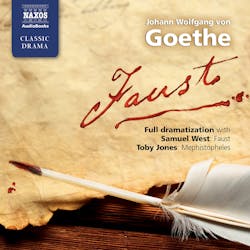
    Faust

    Johann Wolfgang Goethe

  3. 4.0

    Faust : A tragedy

    Johann Wolfgang Goethe

  4. Ny

    Faust

    Johann Wolfgang Goethe

  5. Ny

    50 Clásicos que debes leer antes de morir

    Dante Alighieri, - Aristoteles, Jane Austen, Charles Baudelaire, Giovanni Boccaccio, Anne Brontë, C. Collodi, James Fenimore Cooper, Fédor Mikhaïlovitch Dostoïevski, Arthur Conan Doyle, Alexandre Dumas, José de Espronceda, Gustave Flaubert, Sigmund Freud, Benito Pérez Galdós, Kahlil Gibran, Johann Wolfgang Goethe, Victor Hugo, Thomas Hardy, Nathaniel Hawthorne, Vicente Blasco Ibáñez, Washington Irving, James Joyce

  6. Faust : The First Part of the Tragedy

    Johann Wolfgang Goethe

  7. Faust : The First Part of the Tragedy

    Johann Wolfgang Goethe

  8. 4.0

    Faust

    Johann Wolfgang Goethe

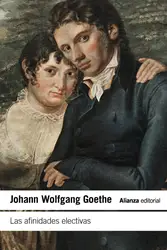
  9. Las afinidades electivas

    Johann Wolfgang Goethe

  10. German Fiction : Keller, Storm, Fontane and Goethe

    Johann Wolfgang Goethe, Gottfried Keller, Theodor Storm, Theodor Fontane

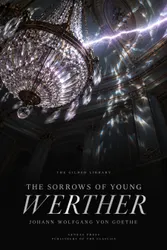
  11. The Sorrows of Young Werther : A Novel in Letters

    Johann Wolfgang Goethe

  12. 100 Clásicos de la Literatura Universal

    Francis Scott Fitzgerald, Mary Shelley, Lyman Frank Baum, Louisa May Alcott, Dante Alighieri, Jane Austen, Ambrose Bierce, Emily Brontë, Edgar Rice Burroughs, Lewis Carroll, Wilkie Collins, René Descartes, Charles Dickens, Emily Dickinson, Alexandre Dumas, Gustave Flaubert, Benito Pérez Galdós, Johann Wolfgang Goethe, Thomas Hardy, E. T. Hoffmann, Washington Irving, Henry James, James Joyce, Franz Kafka