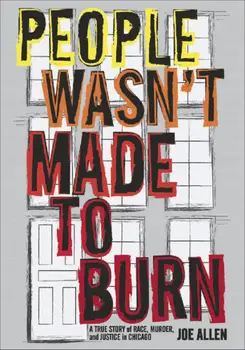
People Wasn't Made to Burn : A True Story of Housing, Race, and Murder in Chicago

This story of a grief-stricken man's murder of a landlord is "nothing less than a reinvention of the true crime genre" (The Nation).

In 1947, James Hickman shot and killed the landlord he believed was responsible for a tragic fire that took the lives of four of his children on Chicago's West Side. But a vibrant defense campaign, exposing the working poverty and racism that led to his crime, helped win Hickman's freedom.

With a true-crime writer's eye for suspense and a historian's depth of knowledge, Joe Allen unearths the compelling story of a campaign that stood up to Jim Crow well before the modern civil rights movement had even begun.

Those who witnessed the Great Recession's deteriorating housing conditions and accelerating foreclosure crisis will discover a hauntingly similar set of circumstances contributing to the Hickman case—giving this little-remembered story profound relevance in today's political atmosphere and the tension surrounding rampant wealth and racial inequality.

"[A] remarkable book . . . a horrific portrait of the inhumane conditions in which blacks were forced to live in post-WWII Chicago." —Chicago Tribune
Om denne bog

This story of a grief-stricken man's murder of a landlord is "nothing less than a reinvention of the true crime genre" (The Nation).

In 1947, James Hickman shot and killed the landlord he believed was responsible for a tragic fire that took the lives of four of his children on Chicago's West Side. But a vibrant defense campaign, exposing the working poverty and racism that led to his crime, helped win Hickman's freedom.

With a true-crime writer's eye for suspense and a historian's depth of knowledge, Joe Allen unearths the compelling story of a campaign that stood up to Jim Crow well before the modern civil rights movement had even begun.

Those who witnessed the Great Recession's deteriorating housing conditions and accelerating foreclosure crisis will discover a hauntingly similar set of circumstances contributing to the Hickman case—giving this little-remembered story profound relevance in today's political atmosphere and the tension surrounding rampant wealth and racial inequality.

"[A] remarkable book . . . a horrific portrait of the inhumane conditions in which blacks were forced to live in post-WWII Chicago." —Chicago Tribune

Kom i gang med denne bog i dag for 0 kr.

  • Få fuld adgang til alle bøger i appen i prøveperioden
  • Ingen forpligtelser, opsiges når som helst
Prøv gratis nu
Mere end 52.000 mennesker har givet Nextory fem stjerner i App Store og Google Play.