3.5(4)

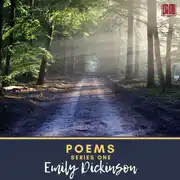
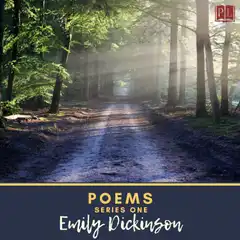
Poems: Series One

The collection Poems: Series One presents the first installment of the complete poetic works of Emily Dickinson. It is broken into the four parts Life, Love, Nature, and Time and Eternity and includes 115 poems.

Emily Elizabeth Dickinson (December 10, 1830 - May 15, 1886) was an American poet. Little-known during her life, she has since been regarded as one of the most important figures in American poetry. Dickinson was born in Amherst, Massachusetts, into a prominent family with strong ties to its community. After studying at the Amherst Academy for seven years in her youth, she briefly attended the Mount Holyoke Female Seminary before returning to her family's house in Amherst. Evidence suggests that Dickinson lived much of her life in isolation. Considered an eccentric by locals, she developed a penchant for white clothing and was known for her reluctance to greet guests or, later in life, to even leave her bedroom. Dickinson never married, and most friendships between her and others depended entirely upon correspondence. While Dickinson was a prolific writer, her only publications during her lifetime were 10 of her nearly 1,800 poems, and one letter. The poems published then were usually edited significantly to fit conventional poetic rules. Her poems were unique for her era. They contain short lines, typically lack titles, and often use slant rhyme as well as unconventional capitalization and punctuation. Many of her poems deal with themes of death and immortality, two recurring topics in letters to her friends, and also explore aesthetics, society, nature and spirituality. Although Dickinson's acquaintances were most likely aware of her writing, it was not until after her death in 1886 - when Lavinia, Dickinson's younger sister, discovered her cache of poems - that her work became public. Her first collection of poetry was published in 1890 by personal acquaintances Thomas Wentworth Higginson and Mabel Loomis Todd, though both heavily edited the content. A 1998 article in The New York Times revealed that of the many edits made to Dickinson's work, the name Susan was often deliberately removed. At least eleven of Dickinson's poems were dedicated to sister-in-law Susan Huntington Gilbert Dickinson, though all the dedications were obliterated, presumably by Todd. A complete, and mostly unaltered, collection of her poetry became available for the first time when scholar Thomas H. Johnson published The Poems of Emily Dickinson in 1955.
Om denne bog

The collection Poems: Series One presents the first installment of the complete poetic works of Emily Dickinson. It is broken into the four parts Life, Love, Nature, and Time and Eternity and includes 115 poems.

Emily Elizabeth Dickinson (December 10, 1830 - May 15, 1886) was an American poet. Little-known during her life, she has since been regarded as one of the most important figures in American poetry. Dickinson was born in Amherst, Massachusetts, into a prominent family with strong ties to its community. After studying at the Amherst Academy for seven years in her youth, she briefly attended the Mount Holyoke Female Seminary before returning to her family's house in Amherst. Evidence suggests that Dickinson lived much of her life in isolation. Considered an eccentric by locals, she developed a penchant for white clothing and was known for her reluctance to greet guests or, later in life, to even leave her bedroom. Dickinson never married, and most friendships between her and others depended entirely upon correspondence. While Dickinson was a prolific writer, her only publications during her lifetime were 10 of her nearly 1,800 poems, and one letter. The poems published then were usually edited significantly to fit conventional poetic rules. Her poems were unique for her era. They contain short lines, typically lack titles, and often use slant rhyme as well as unconventional capitalization and punctuation. Many of her poems deal with themes of death and immortality, two recurring topics in letters to her friends, and also explore aesthetics, society, nature and spirituality. Although Dickinson's acquaintances were most likely aware of her writing, it was not until after her death in 1886 - when Lavinia, Dickinson's younger sister, discovered her cache of poems - that her work became public. Her first collection of poetry was published in 1890 by personal acquaintances Thomas Wentworth Higginson and Mabel Loomis Todd, though both heavily edited the content. A 1998 article in The New York Times revealed that of the many edits made to Dickinson's work, the name Susan was often deliberately removed. At least eleven of Dickinson's poems were dedicated to sister-in-law Susan Huntington Gilbert Dickinson, though all the dedications were obliterated, presumably by Todd. A complete, and mostly unaltered, collection of her poetry became available for the first time when scholar Thomas H. Johnson published The Poems of Emily Dickinson in 1955.
Kom i gang med denne bog i dag for 0 kr.

  • Få fuld adgang til alle bøger i appen i prøveperioden
  • Ingen forpligtelser, opsiges når som helst
Prøv gratis nu
Mere end 52.000 mennesker har givet Nextory fem stjerner i App Store og Google Play.

  1. Hope Is the Thing with Feathers

    Emily Dickinson

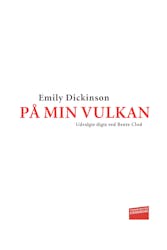
  2. På min vulkan

    Emily Dickinson

  3. 1.0

    Emily Dickinson

    Emily Dickinson

  4. Ny

    100 Clásicos de la Literatura Universal

    Francis Scott Fitzgerald, Mary Shelley, Lyman Frank Baum, Louisa May Alcott, Dante Alighieri, Jane Austen, Ambrose Bierce, Emily Brontë, Edgar Rice Burroughs, Lewis Carroll, Wilkie Collins, René Descartes, Charles Dickens, Emily Dickinson, Alexandre Dumas, Gustave Flaubert, Benito Pérez Galdós, Johann Wolfgang von Goethe, Thomas Hardy, E T A Hoffmann, Washington Irving, Henry James, James Joyce, Franz Kafka, Gaston Leroux, Federico García Lorca, H.P. Lovecraft, Publio Virgilio Marón, Lucy Maud Montgomery, John William Polidori, Marco Polo, Antoine de Saint-Exupéry, Emilio Salgari, Walter Scott, Mark Twain, Jules Verne, Julio Verne, H.G. Wells, Edith Wharton, Mary Wollstonecraft, Stefan Zweig, Sun Tzu, Bram Stoker, - Aristoteles, George Bernard Shaw, Henryk Sienkiewicz, Concepción Arenal, Charlotte Brontë, Miguel de Cervantes, G.K. Chesterton, Daniel Defoe, Fyodor Mikhailovich Dostoyevsky, Arthur Conan Doyle, Sigmund Freud, H. Rider Haggard, Homero, Immanuel Kant, Rudyard Kipling, Molière, Friedrich Nietzsche, Fernando de Rojas, Sófocles, William Makepeace Thackeray, León Tolstói, Voltaire, Ramón María del Valle-Inclán, Oscar Wilde, Virginia Woolf

  5. Ny

    100 Obras Maestras Que Debes Leer Antes De Morir

    Francis Scott Fitzgerald, Mary Shelley, Lyman Frank Baum, Edith Nesbit, Dante Alighieri, Jane Austen, Ambrose Bierce, Emily Brontë, Edgar Rice Burroughs, Lewis Carroll, Wilkie Collins, René Descartes, Charles Dickens, Emily Dickinson, Alexandre Dumas, Gustave Flaubert, Benito Pérez Galdós, Johann Wolfgang von Goethe, Thomas Hardy, E T A Hoffmann, Washington Irving, Henry James, James Joyce, Franz Kafka, Gaston Leroux, Federico García Lorca, H.P. Lovecraft, Publio Virgilio Marón, Lucy Maud Montgomery, John William Polidori, Marco Polo, Antoine de Saint-Exupéry, Emilio Salgari, Walter Scott, Mark Twain, Jules Verne, H.G. Wells, Edith Wharton, Mary Wollstonecraft, Fernando de Rojas

  6. Ny

    The Big Book of Christmas

    Louisa May Alcott, O.Henry, Mark Twain, Beatrix Potter, Charles Dickens, William Shakespeare, Harriet Beecher Stowe, Emily Dickinson, Robert Louis Stevenson, Rudyard Kipling

  7. Poems, Series One : Including a piano underscore for each poem

    Emily Dickinson, A. M. Bly, Mabel Loomis Todd, T. W Higginson

  8. The Soul Has Bandaged Moments and Other Poems : Including Analyses and Piano Underscore for each poem

    Emily Dickinson, A. M. Bly

  9. Dikter

    Emily Dickinson

  10. The Complete Poems of Emily Dickinson

    Emily Dickinson

  11. The Big Book of Christmas : A Treasure Trove of Holiday Magic

    Hans Christian Andersen, Charles Dickens, Louisa May Alcott, O.Henry, Mark Twain, Beatrix Potter, William Shakespeare, Harriet Beecher Stowe, Emily Dickinson, Robert Louis Stevenson, Rudyard Kipling, Selma Lagerlöf, Martin Luther, Walter Scott

  12. Hope Is the Thing with Feathers : Poems of Emily Dickinson

    Emily Dickinson