Om denne bog

From Gaelic, the words Sinn Féin translate loosely into English as “We Ourselves,” or “Ourselves Alone.” The implications of this are that Ireland, historically subject to the political domination of England, could look to none but itself for liberation.

By the 18th century, the Irish Parliament and all of the institutions of the state were dominated by Protestants, with Catholics almost entirely excluded. In 1798, a rebellion was launched by the “United Irishmen,” one of the first underground nationalist Republican organizations with the stated objective of overthrowing English rule and replacing it with an Irish republic based on the precepts of the recent French Revolution. The rebellion failed, but the English response was to dissolve the Irish Parliament and integrate Ireland directly into the United Kingdom. Ireland then became integral to the United Kingdom of Great Britain and Ireland which was ruled directly from Whitehall under the terms of the 1800 Act of Union. A certain number of Irish members were granted seats in the Parliament of Westminster, and, for all intents and purposes, Ireland existed as a province of the United Kingdom.

Thereafter, the tone of Irish political dialogue shifted somewhat, with the objective of moderate Irish nationalists no longer absolute independence from England, but the restoration of an Irish Parliament and a degree of self-government while remaining on some level a dependency of the British Empire. The two signature names in this process were Daniel O’Connell, Member of the Westminster Parliament who campaigned on a platform of repealing the Act of Union, and Charles Stewart Parnell, also a member of the British Parliament, who, between 1880 and 1891, called for “Home Rule.”
Kom i gang med denne bog i dag for 0 kr.

  • Få fuld adgang til alle bøger i appen i prøveperioden
  • Ingen forpligtelser, opsiges når som helst
Prøv gratis nu
Mere end 52.000 mennesker har givet Nextory fem stjerner i App Store og Google Play.

  1. 4.0

    ODESSA : The Controversial History of the Mysterious Network that Helped Nazis Escape Germany after World War II

    Charles River Editors

  2. 3.0

    The Ancient Egyptian City of Thebes : The History and Legacy of the Capital that Became Luxor

    Charles River Editors

  3. Hollywood’s Star-Crossed Blonde Bombshells: The Lives of the Influential Actresses Who Suffered Premature Deaths at the Height of Their Fame

    Charles River Editors

  4. Kublai Khan and Marco Polo: The History of a Unique Partnership at the Court of the Mongol Empire

    Charles River Editors

  5. 3.0

    The Anglo-Saxon Settlement of England: The History and Legacy of the Anglo-Saxons at the Start of the Middle Ages

    Charles River Editors

  6. 3.6

    Jack the Ripper and the Zodiac Killer: The History of the Most Famous Serial Killers Who Were Never Caught

    Charles River Editors

  7. The Osage Indian Murders: The History of the Notorious Killing Spree and the Federal Investigations in the Early 20th Century

    Charles River Editors

  8. 4.0

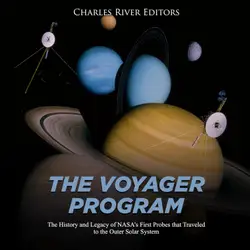
    The Voyager Program: The History and Legacy of NASA's First Probes that Traveled to the Outer Solar System

    Charles River Editors

  9. 5.0

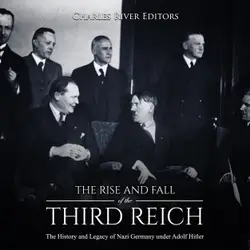
    The Rise and Fall of the Third Reich: The History and Legacy of Nazi Germany under Adolf Hitler

    Charles River Editors

  10. 3.0

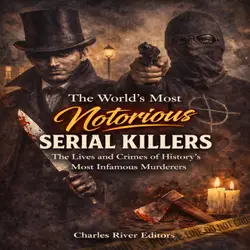
    The World’s Most Notorious Serial Killers: The Lives and Crimes of History’s Most Infamous Murderers

    Charles River Editors

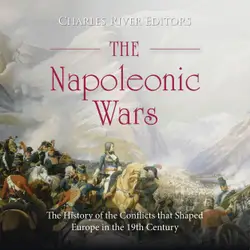
  11. The Napoleonic Wars: The History of the Conflicts that Shaped Europe in the 19th Century

    Charles River Editors

  12. Uluru: The History and Legacy of the Australian Landmark Considered Sacred by the Local Aborigines

    Charles River Editors