Om denne bog

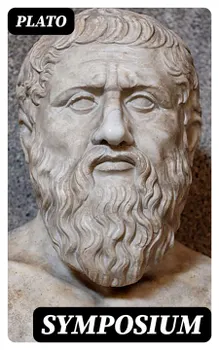
In the renowned work 'Symposium', Plato presents a series of philosophical dialogues centered around the theme of love, known as Eros. Set during a banquet, the text unfolds as various prominent figures, including Socrates, engage in a series of speeches that explore different dimensions of love—from the physical to the divine. This dialogue not only reflects Plato's characteristic blend of rhetorical skill and philosophical inquiry but also situates itself within the context of classical Greek thought, encapsulating the tensions and aspirations of Athenian society in the 4th century BC. The literary style is infused with irony and allegory, challenging readers to ponder the complexities of desire and the nature of beauty itself. Plato, a student of Socrates and a pivotal figure in Western philosophy, sought to understand the essence of human existence and the ideal forms of reality. His philosophical inquiries were deeply influenced by his experiences in the tumultuous political landscape of Athens and the Socratic method of questioning that shaped his intellectual pursuits. These influences are evident in 'Symposium', where he crafts a compelling narrative that invites listeners to reconsider the roles of love and intellect within their lives. 'ymposium' is essential for anyone seeking to delve into the philosophical foundations of Western thought. It presents a rich tapestry of ideas that challenge contemporary notions of love and relationships. The text is not only a cornerstone of philosophical literature but also an enduring masterpiece that resonates with the timeless quest for understanding the human condition.

Kom i gang med denne bog i dag for 0 kr.

  • Få fuld adgang til alle bøger i appen i prøveperioden
  • Ingen forpligtelser, opsiges når som helst
Prøv gratis nu
Mere end 52.000 mennesker har givet Nextory fem stjerner i App Store og Google Play.

  1. Plato - Theaetetus

    Plato

  2. The Republic of Plato

    Plato

  3. Yale Required Reading - Collected Works (Vol. 1) : Enriched edition. Exploring the Depths of Ancient Greek Thought

    Aristotle, Plato, Euripides, Gilbert Murray, Epictetus, Pindar, Theocritus, Homer, Plutarch, Aeschylus, Sophocles, - Aristophanes, Herodotus, Anacreon, Sappho -, Thucydides, Hesiod, Demosthenes, Lysias, Alcaeus, Archilochus, Theognis of Megara, Simonides of Ceos, Bacchylides, Apollonius, Callimachus

  4. 4.0

    3500 Final Quotes

    Marcus Aurelius, Jane Austen, Beaumarchais, Napoleon Bonaparte, Buddha, Winston Churchill, Cicero, Confucius, Nicolas de Chamfort, Charles de Gaulle, Antoine de Saint-Exupéry, Denis Diderot, Fyodor Dostoevsky, Albert Einstein, Ralph Waldo Emerson, Anne Frank, Mahatma Gandhi, Immanuel Kant, Søren Kierkegaard, Martin Luther King, Georg Christoph Lichtenberg, Abraham Lincoln, Montesquieu, Friedrich Nietzsche, Plato, Marcel Proust, Arthur Schopenhauer, William Shakespeare, Socrates, Baruch Spinoza, Henry David Thoreau, Leonardo da Vinci, Voltaire, Oscar Wilde, Laozi

  5. 4.3

    500 Quotes to Learn Wisdom from Classical Greek Philosophers

    Aristotle, Epictetus, – Heraclitus Of Ephesus, Plato, Socrates

  6. 3.3

    Plato's Meno

    Plato

  7. 3.0

    Classic Philosophical Works (Thus Spoke Zarathustra, The Apology of Socrates, Tao Te Ching...)

    Plato, Friedrich Nietzsche, Herman Hesse, Leo Tolstoy, Immanuel Kant, Sun Tzu

  8. The Republic

    Plato

  9. 4.5

    Plato's Gorgias :

    Plato

  10. 4.5

    The Republic

    Plato

  11. Ny

    The Essential Ancient Wisdom Library : 10 Classics of Philosophy, Strategy and Self-Mastery

    Marcus Aurelius, Seneca, Epictetus, Laozi, Plato, Sun Tzu, Miyamoto Musashi, Niccolò Machiavelli, Friedrich Nietzsche, James Allen

  12. Ny

    The Essential Ancient Wisdom Library : 10 Timeless Classics of Stoicism, Philosophy, Strategy and Self-Mastery

    Marcus Aurelius, Seneca, Epictetus, Laozi, Plato, Sun Tzu, Miyamoto Musashi, Niccolò Machiavelli, Friedrich Nietzsche, James Allen