Om denne bog

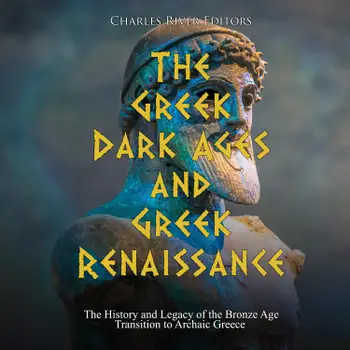
The Greek Dark Ages, sometimes referred to as the Homeric Age or the Geometric Period, spans the era of Greek history from the end of the Mycenaean civilization around 1100 BCE and the emergence of the Greek poleis in the 9th century BCE. It is an era that has provided little in terms of extant archaeological evidence, which in part explains the name “Dark Ages,” but this lack of evidence has led some archaeologists and historians to make the very great assumption that little of any real significance occurred during these 200 years. Instead, they view it as a sort of hiatus between the collapse of the Mycenaean culture and the emergence of Archaic Greece. As with other so-called “Dark Ages,” this assessment is simplified, and an absence of evidence should never be assumed as evidence of absence.

If anything, the collapse of the Mycenaeans was a drawn-out affair, and while the early centuries of the Dark Ages might beseen as a continuation of this trend, even in the worst years, there was a degree of continuity and even some innovations. These changes including the beginnings of the use of iron as an alternative to bronze and some religious practices that continued to be observed. Furthermore, enough remained to form the basis of a recovery in economic, cultural, and artistic aspects of life in the later stage of the era, and in the political sphere, changes necessitated by the collapse in the economic system certainly paved the way for the rise of the polis, which would prove so fundamental in Greece in the centuries that followed.

This laid the groundwork for the Greek Renaissance of the 8th century. During that time, the Greek alphabet developed and the earliest surviving Greek literature was composed, while in terms of art and architecture, sculptures and red-figure pottery began. Warfare changed significantly as well when the hoplite became the core infantry.

Kom i gang med denne bog i dag for 0 kr.

  • Få fuld adgang til alle bøger i appen i prøveperioden
  • Ingen forpligtelser, opsiges når som helst
Prøv gratis nu
Mere end 52.000 mennesker har givet Nextory fem stjerner i App Store og Google Play.

  1. 4.0

    ODESSA : The Controversial History of the Mysterious Network that Helped Nazis Escape Germany after World War II

    Charles River Editors

  2. 3.0

    The Ancient Egyptian City of Thebes : The History and Legacy of the Capital that Became Luxor

    Charles River Editors

  3. Hollywood’s Star-Crossed Blonde Bombshells: The Lives of the Influential Actresses Who Suffered Premature Deaths at the Height of Their Fame

    Charles River Editors

  4. Kublai Khan and Marco Polo: The History of a Unique Partnership at the Court of the Mongol Empire

    Charles River Editors

  5. 3.0

    The Anglo-Saxon Settlement of England: The History and Legacy of the Anglo-Saxons at the Start of the Middle Ages

    Charles River Editors

  6. 3.6

    Jack the Ripper and the Zodiac Killer: The History of the Most Famous Serial Killers Who Were Never Caught

    Charles River Editors

  7. The Osage Indian Murders: The History of the Notorious Killing Spree and the Federal Investigations in the Early 20th Century

    Charles River Editors

  8. 4.0

    The Voyager Program: The History and Legacy of NASA's First Probes that Traveled to the Outer Solar System

    Charles River Editors

  9. 5.0

    The Rise and Fall of the Third Reich: The History and Legacy of Nazi Germany under Adolf Hitler

    Charles River Editors

  10. 3.0

    The World’s Most Notorious Serial Killers: The Lives and Crimes of History’s Most Infamous Murderers

    Charles River Editors

  11. The Napoleonic Wars: The History of the Conflicts that Shaped Europe in the 19th Century

    Charles River Editors

  12. Uluru: The History and Legacy of the Australian Landmark Considered Sacred by the Local Aborigines

    Charles River Editors