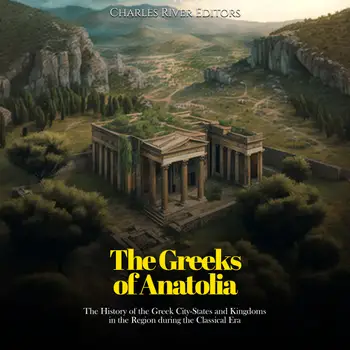
The Greeks of Anatolia: The History of the Greek City-States and Kingdoms in the Region during the Classical Era

After the Sea Peoples cast aside the old world order at the end of the Bronze Age, a number of kingdoms in Anatolia filled the power vacuum for at least a few centuries, including the Phrygians and Lydians, and the Achaemenid Persian Empire would forge the world’s largest empire with Anatolia as its heartland, but a number of Greek cities also began to pop up, and over the course of the region’s turbulent history, their fortunes would rise and fall.

Smyrna was one of the various cities that enjoyed brief yet important periods of influence in which they spawned important dynasties, were the scenes of history-changing battles, and were the sites of great advances in philosophy, science, and economics. However, despite the fact it endured in influence for more than 2,000 years, Smyrna never truly gained the reputation of better-known locales in the ancient world.

Likewise, Miletus was an ancient city located on the west coast of present-day Turkey, which allowed it to become one of the most important places in Anatolia, linking the Hellenistic world with the great civilizations of Babylon, Egypt, and eventually Persia. Over time, Miletus was ruled by the Minoans, Mycenaeans, Hittites, Ionians, Persians, Seleucids, Attalids, Romans, Byzantines, Seljuk Turks, and Ottomans. Perhaps not surprisingly, it had a massive influence on the Western world during the 6th and 5th centuries BCE, as a revolution in human thinking took place there.

Although it is no longer quite as well remembered as it was thousands of years ago, one of the most important cities in the ancient world was Ephesus, a city that dates back nearly 3,000 years and can lay claim to the Temple of Artemis, one of the Seven Wonders of the Ancient World.

All of these cities had to deal cautiously with the Achaemenid Persians, but the Greco-Persian Wars also set the Achaemenids on a path with Alexander the Great.
Om denne bog

After the Sea Peoples cast aside the old world order at the end of the Bronze Age, a number of kingdoms in Anatolia filled the power vacuum for at least a few centuries, including the Phrygians and Lydians, and the Achaemenid Persian Empire would forge the world’s largest empire with Anatolia as its heartland, but a number of Greek cities also began to pop up, and over the course of the region’s turbulent history, their fortunes would rise and fall.

Smyrna was one of the various cities that enjoyed brief yet important periods of influence in which they spawned important dynasties, were the scenes of history-changing battles, and were the sites of great advances in philosophy, science, and economics. However, despite the fact it endured in influence for more than 2,000 years, Smyrna never truly gained the reputation of better-known locales in the ancient world.

Likewise, Miletus was an ancient city located on the west coast of present-day Turkey, which allowed it to become one of the most important places in Anatolia, linking the Hellenistic world with the great civilizations of Babylon, Egypt, and eventually Persia. Over time, Miletus was ruled by the Minoans, Mycenaeans, Hittites, Ionians, Persians, Seleucids, Attalids, Romans, Byzantines, Seljuk Turks, and Ottomans. Perhaps not surprisingly, it had a massive influence on the Western world during the 6th and 5th centuries BCE, as a revolution in human thinking took place there.

Although it is no longer quite as well remembered as it was thousands of years ago, one of the most important cities in the ancient world was Ephesus, a city that dates back nearly 3,000 years and can lay claim to the Temple of Artemis, one of the Seven Wonders of the Ancient World.

All of these cities had to deal cautiously with the Achaemenid Persians, but the Greco-Persian Wars also set the Achaemenids on a path with Alexander the Great.
Kom i gang med denne bog i dag for 0 kr.

  • Få fuld adgang til alle bøger i appen i prøveperioden
  • Ingen forpligtelser, opsiges når som helst
Prøv gratis nu
Mere end 52.000 mennesker har givet Nextory fem stjerner i App Store og Google Play.

  1. 3.0

    Conquistadors: The Lives and Legacies of Hernán Cortés and Francisco Pizarro

    Charles River Editors

  2. 3.0

    Hinduism and Buddhism: The History of Ancient India’s Most Influential Religions

    Charles River Editors

  3. Caesar’s Civil War: The History of the Conflict against Pompey the Great that Ended the Roman Republic

    Charles River Editors

  4. The Biggest Tank Battles of the World Wars: Tank Warfare in History’s Deadliest Conflicts

    Charles River Editors

  5. 5.0

    Fighting in World War I: The History and Legacy of Warfare during the Great War

    Charles River Editors

  6. Napoleon’s Worst Defeats: The History and Legacy of the Battles that Stalled France’s Expansion and Forced the Emperor’s Abdication

    Charles River Editors

  7. Ancient Rome’s Most Important Civil Wars: The History of the Conflicts that Destroyed the Roman Republic and Split the Roman Empire

    Charles River Editors

  8. American Monsters: The History of America’s Most Persistent Urban Tales about Strange Birds, Serpents and Wolfmen

    Charles River Editors

  9. The Megalodon: The History and Legacy of the World’s Largest Prehistoric Predator

    Charles River Editors

  10. The French Invasion of Russia and the Battle of Leipzig: The History and Legacy of the Defeats that Forced Napoleon into Exile at Elba

    Charles River Editors

  11. 5.0

    The Rise and Fall of the Third Reich: The History and Legacy of Nazi Germany under Adolf Hitler

    Charles River Editors

  12. 4.4

    Northern Rhodesia and Southern Rhodesia: The Controversial History and Legacy of the British Colonies in the 20th Century

    Charles River Editors