3.0(1)

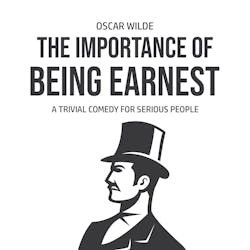
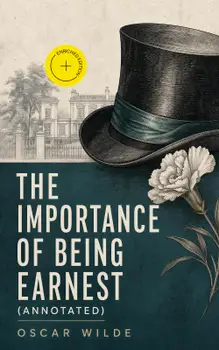
The Importance of Being Earnest (Annotated) : Enriched Edition. A Victorian Comedy of Manners with Mistaken Identities, Bunburying, Marriage Satire, and Witty Epigrams

Oscar Wilde's The Importance of Being Earnest is a dazzling comedy of manners that transforms courtship, mistaken identity, and social ritual into instruments of satire. Set within the polished surfaces of late Victorian drawing rooms and country estates, the play exposes the absurdity of moral seriousness, class pretension, and linguistic convention. Its epigrammatic style—brilliantly balanced, paradoxical, and musical—places it among the masterpieces of English dramatic wit, while its farcical structure recalls earlier comedies of intrigue even as it anticipates modernist suspicion of stable identity. Wilde, an Irish-born writer educated at Trinity College Dublin and Oxford, became one of the leading figures of aestheticism, arguing for art's independence from utilitarian morality. His fascination with masks, performance, and social codes informs the play's central conceit of "Bunburying," through which characters invent alternate selves to escape respectability. Written at the height of Wilde's fame in 1895, the work reflects both his supreme command of theatrical artifice and his acute awareness of Victorian hypocrisy. This play is essential reading for anyone interested in comedy, satire, or the relationship between language and social power. It rewards casual readers with sparkling humor and scholars with inexhaustible irony, making it one of the most perfectly crafted works for the modern stage.

This enriched edition has been carefully crafted to add value to your reading experience.

- A succinct Introduction situates the work's timeless appeal and themes.

- The Synopsis outlines the central plot, highlighting key developments without spoiling critical twists.

- A detailed Historical Context immerses you in the era's events and influences that shaped the writing.

- An Author Biography reveals milestones in the author's life, illuminating the personal insights behind the text.

- A thorough Analysis dissects symbols, motifs, and character arcs to unearth underlying meanings.

- Reflection questions prompt you to engage personally with the work's messages, connecting them to modern life.

- Hand‐picked Memorable Quotes shine a spotlight on moments of literary brilliance.

- Interactive footnotes clarify unusual references, historical allusions, and archaic phrases for an effortless, more informed read.

Om denne bog

Oscar Wilde's The Importance of Being Earnest is a dazzling comedy of manners that transforms courtship, mistaken identity, and social ritual into instruments of satire. Set within the polished surfaces of late Victorian drawing rooms and country estates, the play exposes the absurdity of moral seriousness, class pretension, and linguistic convention. Its epigrammatic style—brilliantly balanced, paradoxical, and musical—places it among the masterpieces of English dramatic wit, while its farcical structure recalls earlier comedies of intrigue even as it anticipates modernist suspicion of stable identity. Wilde, an Irish-born writer educated at Trinity College Dublin and Oxford, became one of the leading figures of aestheticism, arguing for art's independence from utilitarian morality. His fascination with masks, performance, and social codes informs the play's central conceit of "Bunburying," through which characters invent alternate selves to escape respectability. Written at the height of Wilde's fame in 1895, the work reflects both his supreme command of theatrical artifice and his acute awareness of Victorian hypocrisy. This play is essential reading for anyone interested in comedy, satire, or the relationship between language and social power. It rewards casual readers with sparkling humor and scholars with inexhaustible irony, making it one of the most perfectly crafted works for the modern stage.

This enriched edition has been carefully crafted to add value to your reading experience.

- A succinct Introduction situates the work's timeless appeal and themes.

- The Synopsis outlines the central plot, highlighting key developments without spoiling critical twists.

- A detailed Historical Context immerses you in the era's events and influences that shaped the writing.

- An Author Biography reveals milestones in the author's life, illuminating the personal insights behind the text.

- A thorough Analysis dissects symbols, motifs, and character arcs to unearth underlying meanings.

- Reflection questions prompt you to engage personally with the work's messages, connecting them to modern life.

- Hand‐picked Memorable Quotes shine a spotlight on moments of literary brilliance.

- Interactive footnotes clarify unusual references, historical allusions, and archaic phrases for an effortless, more informed read.

Kom i gang med denne bog i dag for 0 kr.

  • Få fuld adgang til alle bøger i appen i prøveperioden
  • Ingen forpligtelser, opsiges når som helst
Prøv gratis nu
Mere end 52.000 mennesker har givet Nextory fem stjerner i App Store og Google Play.

  1. 3.0

    The Star Child :

    Oscar Wilde

  2. 4.2

    100 Quotes That Will Change Your life

    Napoleon Hill, Steve Jobs, Lao Tzu, Sam Levenson, Winston Churchill, George Eliot, Franklin D. Roosevelt, Theodore Roosevelt, Henry Ford, Buddha, Norman Vincent Peale, John D. Rockefeller, Oscar Wilde, Elon Musk, Mahatma Gandhi, Stephen King, Vincent van Gogh, Andrew Carnegie, Paulo Coelho, Muhammad Ali

  3. 5.0

    50 Masterpieces you have to read before you die vol: 2 : Timeless Classics to Enrich Your Mind and Soul

    Louisa, Jane Austen, Joseph Conrad, D. H. Lawrence, George Eliot, Leo Tolstoy, James Joyce, Charles Dickens, Bram Stoker, Oscar Wilde, Honoré de Balzac, Edgar Rice Burroughs, Anne Brontë, Charlotte Brontë, Emily Brontë, Lewis Carroll, Willa Cather, Miguel de Cervantes, E. E. Cummings, Fyodor Dostoyevsky, Daniel Defoe, Arthur Conan Doyle, Alexandre Dumas, Gustave Flaubert, Henry James, Victor Hugo, HB Classics

  4. 5.0

    The Power of Darkness : The Legend of Sleepy Hollow, Sweeney Todd, Frankenstein, Dracula, The Haunted House, Dead Souls…

    Wilhelm Hauff, Charles Dickens, Mark Twain, Harriet Beecher Stowe, Adelbert von Chamisso, Oscar Wilde, Robert Louis Stevenson, Edgar Allan Poe, William Hope Hodgson, Joseph Sheridan Fanu, John Buchan, Louis Tracy, Bram Stoker, Anatole France, Charlotte Brontë, Emily Brontë, Jack London, Henry James, Théophile Gautier, Arthur Conan Doyle, Richard Le Gallienne, Jane Austen, Ralph Adams Cram, Thomas De Quincey, John Meade Falkner, Guy De Maupassant, Thomas Hardy, William Archer, Daniel Defoe, John Kendrick Bangs, Cleveland Moffett, Brander Matthews, Marie Belloc Lowndes, Horace Walpole, Rudyard Kipling, Lafcadio Hearn, Hugh Walpole, Ambrose Bierce, Frederick Marryat, Ellis Parker Butler, Washington Irving, Leonid Andreyev, David Lindsay, Nathaniel Hawthorne, Grant Allen, Arthur Machen, Wilkie Collins, William Makepeace Thackeray, Thomas Peckett Prest, James Malcolm Rymer, Fergus Hume, Edward Bellamy, Walter Hubbell, Charlotte Perkins Gilman, Leopold Kompert, Richard Marsh, Florence Marryat, Catherine Crowe, John William Polidori, Vincent O'Sullivan, H.G. Wells, Robert W. Chambers, W. W. Jacobs, M.P. Shiel, E F Benson, Jerome K Jerome, M. R. James, E. T. Hoffmann, Stanley G. Weinbaum, George W. Reynolds, H.P. Lovecraft, Robert E. Howard, Edith Nesbit, Sabine Baring-Gould, William Thomas Beckford, Francis Marion Crawford, Lucy Maud Montgomery, Mary Elizabeth Braddon, Mary Louisa Molesworth, Mary E. Freeman, Nikolai Gogol, Mary Shelley, Elizabeth Gaskell, Edward Bulwer-Lytton, Frank R. Stockton, A. T. Quiller-Couch, Ann Radcliffe, Louisa M. Alcott, Amelia B. Edwards, Leonard Kip, Matthew Gregory Lewis, Fitz-James O’Brien, Katherine Rickford, Bithia Mary Croker, Catherine L. Pirkis, Émile Erckmann, Alexandre Chatrian, Pedro De Alarçon, H. H. (Saki), Pliny the Younger, Helena Blavatsky, Villiers de Adam, William F. Harvey, Fiona Macleod, William T. Stead, Gambier Bolton, Andrew Jackson Davis, Nizida, Walter F. Prince, Chester Bailey Fernando

  5. 4.0

    3500 Final Quotes

    Marcus Aurelius, Jane Austen, Beaumarchais, Napoleon Bonaparte, Buddha, Winston Churchill, Cicero, Confucius, Nicolas de Chamfort, Charles de Gaulle, Antoine de Saint-Exupéry, Denis Diderot, Fyodor Dostoevsky, Albert Einstein, Ralph Waldo Emerson, Anne Frank, Mahatma Gandhi, Immanuel Kant, Søren Kierkegaard, Martin Luther King, Georg Christoph Lichtenberg, Abraham Lincoln, Montesquieu, Friedrich Nietzsche, Plato, Marcel Proust, Arthur Schopenhauer, William Shakespeare, Socrates, Baruch Spinoza, Henry David Thoreau, Leonardo da Vinci, Voltaire, Oscar Wilde, Laozi

  6. 2.5

    600 Quotations from the Great Writers of the 20th Century

    Winston Churchill, Antoine de Saint-Exupéry, Anne Frank, Khalil Gibran, Oscar Wilde, Stefan Zweig

  7. 50 Masterpieces you have to read

    Louisa May Alcott, Jane Austen, Joseph Conrad, D. H. Lawrence, George Eliot, Leo Tolstoy, James Joyce, Charles Dickens, Bram Stoker, Oscar Wilde, Honoré de Balzac, Edgar Rice Burroughs, Anne Brontë, Charlotte Brontë, Emily Brontë, Lewis Carroll, Willa Cather, Miguel de Cervantes, E. Cummings, Fyodor Dostoyevsky, Daniel Defoe, Arthur Conan Doyle, Alexandre Dumas, Gustave Flaubert, Henry James, Victor Hugo

  8. The Picture of Dorian Gray (Legend Classics)

    Oscar Wilde

  9. 4.5

    B. J. Harrison Reads The Importance of Being Earnest

    Oscar Wilde

  10. 4.3

    B. J. Harrison Reads The Picture of Dorian Gray

    Oscar Wilde

  11. 2.7

    The Picture of Dorian Gray

    Oscar Wilde

  12. 3.7

    The Picture of Dorian Gray

    Oscar Wilde