Om denne bog

In terms of geopolitics, perhaps the most seminal event of the Middle Ages was the successful Ottoman siege of Constantinople in 1453. The city had been an imperial capital as far back as the 4th century, when Constantine the Great shifted the power center of the Roman Empire there, effectively establishing two almost equally powerful halves of antiquity’s greatest empire. Constantinople would continue to serve as the capital of the Byzantine Empire even after the Western half of the Roman Empire collapsed in the late 5th century. Naturally, the Ottoman Empire would also use Constantinople as the capital of its empire after their conquest effectively ended the Byzantine Empire, and thanks to its strategic location, it has been a trading center for years and remains one today under the Turkish name of Istanbul.

In the wake of taking Constantinople, the Ottoman Empire would spend the next few centuries expanding its size, power, and influence, bumping up against Eastern Europe and becoming one of the world’s most important geopolitical players. It was a rise that would not truly start to wane until the 19th century.

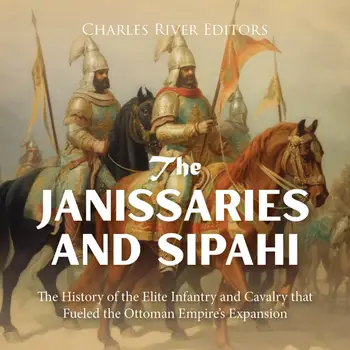
Among those who were responsible for the projection of Ottoman power, few deserve as much credit as the Janissaries. Established by Murad I, the Janissaries became an elite infantry force that was loyal only to the sultan. Their mission was to protect only him and in battles they were always the closest to him, forming a human shield.

Civilizations across the steppes and the Middle East relied heavily on cavalry, and the Sipahi were elite cavalry units during medieval times for a couple of powers. That said, they were a massive contributor to the success of Ottoman warfare, and during good times for the empire, the Sipahi were rewarded, to the extent that they became their own social class, much like the Janissaries.
Kom i gang med denne bog i dag for 0 kr.

  • Få fuld adgang til alle bøger i appen i prøveperioden
  • Ingen forpligtelser, opsiges når som helst
Prøv gratis nu
Mere end 52.000 mennesker har givet Nextory fem stjerner i App Store og Google Play.

Lignende bøger

  1. The Ottoman Empire’s Worst Defeats: The History and Legacy of the Decisive Battles that Checked the Ottomans’ Expansion into Europe

    Charles River Editors

  2. The Ottoman Empire’s Greatest Victories: The History and Legacy of the Most Important Battles Won by the Ottomans

    Charles River Editors

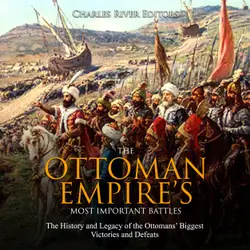
  3. The Ottoman Empire’s Most Important Battles: The History and Legacy of the Ottomans’ Biggest Victories and Defeats

    Charles River Editors

  4. The Ottoman Empire’s Greatest Sultans: The Lives and Legacies of Osman I, Mehmed II, and Suleiman the Magnificent

    Charles River Editors

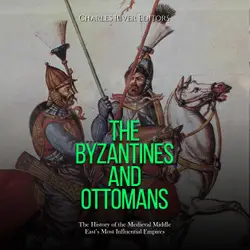
  5. The Byzantines and Ottomans: The History of the Medieval Middle East’s Most Influential Empires

    Charles River Editors

  6. The Ottomans and Christians: The History and Legacy of the Ottomans’ Conflicts with Catholic and Orthodox Nations

    Charles River Editors

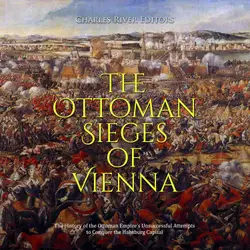
  7. The Ottoman Sieges of Vienna: The History of the Ottoman Empire’s Unsuccessful Attempts to Conquer the Habsburg Capital

    Charles River Editors

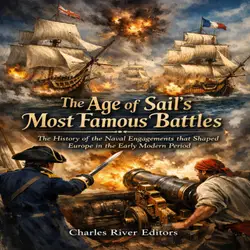
  8. The Age of Sail’s Most Famous Battles: The History of the Naval Engagements that Shaped Europe in the Early Modern Period

    Charles River Editors

  9. The Byzantine-Seljuk Wars: The History and Legacy of the Battles for Asia Minor in the 11th Century

    Charles River Editors

  10. Ancient and Medieval Warfare in the West: The History of Western Europe’s Changing Military Tactics in Antiquity and the Middle Ages

    Charles River Editors

  11. The Islamic Invasions of Europe: The History of the Ottoman and Moorish Campaigns across the Continent

    Charles River Editors

  12. Manzikert and Myriokephalon: The History of the Battles for Anatolia between the Byzantines and Seljuks

    Charles River Editors