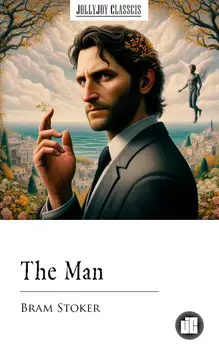
Om denne bog

Squire Stephen Norman is lord of the manor in Normanstead. He marries Margaret Rowly, younger sister of his friend Rowly (squire of the neighboring town). Desirous of an heir, Norman and Margaret have a baby girl and Margaret dies shortly after the birth. Norman promises her that he will love their daughter as much as he would have loved a son, and Margaret asks him to name the girl Stephen. Squire Norman raises his daughter Stephen as a tomboy. Margaret's spinster aunt Laetitia Rowly moves in to help care for Stephen, who is dominant, assertive and freethinking. When Stephen is six, Norman's visiting college friend Dr. Wolf tells her about his 11yearold son Harold. The girl asks Wolf to bring Harold on a future visit, and the children become friends. Two years later, Dr. Wolf dies of pneumonia and Squire Norman promises to raise Harold as if he were his own son. Stephen and Harold visit the graveyard of the Church of St. Stephen in Normanstead (where all her ancestors are buried), and find the crypt unlocked. Stephen and another young boy, Leonard Everard, explore the crypt. Harold finds Leonard running out of the crypt and Stephen unconscious on the floor in front of a coffin. Leonard tells her that he carried her out of the crypt, and she begins to admire him.
Kom i gang med denne bog i dag for 0 kr.

  • Få fuld adgang til alle bøger i appen i prøveperioden
  • Ingen forpligtelser, opsiges når som helst
Prøv gratis nu
Mere end 52.000 mennesker har givet Nextory fem stjerner i App Store og Google Play.

Mere af Bram Stoker

  1. 4.3

    Dommerens hus

    Bram Stoker

  2. 4.4

    Dracula

    Bram Stoker

  3. 4.3

    Dracula

    Bram Stoker

  4. 4.2

    Dracula

    Bram Stoker

  5. 4.3

    Dracula

    Bram Stoker

  6. 50 Masterpieces You Have to Read : Volume Two - A Second Library of World Literature

    Joseph Sheridan Fanu, Madame de Fayette, Jerome K Jerome, James Joyce, Charles Kingsley, Rudyard Kipling, Pierre Choderlos Laclos, D. H. Lawrence, Matthew Gregory Lewis, Sinclair Lewis, Jack London, H.P. Lovecraft, Thomas Mann, W. Somerset Maugham, Guy De Maupassant, Herman Melville, Edgar Allan Poe, Marcel Proust, Ann Radcliffe, Samuel Richardson, George Sand, Walter Scott, Mary Shelley, Henryk Sienkiewicz, May Sinclair, Upton Sinclair, Stendhal, Laurence Sterne, Robert Louis Stevenson, Bram Stoker, Harriet Beecher Stowe, Jonathan Swift, Rabindranath Tagore, William Makepeace Thackeray, Leo Tolstoy, Anthony Trollope, Ivan Turgenev, Mark Twain, Jules Verne, Lew Wallace, H.G. Wells, Rebecca West, Edith Wharton, Oscar Wilde, Cao Xueqin, Émile Zola

  7. Draculas gæst

    Jean-Baptiste de Boyer, Lord Byron, John Polidori, Bram Stoker

  8. 4.2

    Dracula : Enriched edition.

    Bram Stoker

  9. Ny

    Classic Gothic Fusion Dracula & Frankenstein

    Bram Stoker, Mary Shelley

  10. Ny

    50 Masterpieces you have to read before you die vol: 2

    Joseph Sheridan Fanu, Madame de Fayette, Jerome K Jerome, James Joyce, Charles Kingsley, Rudyard Kipling, Pierre Choderlos Laclos, D. H. Lawrence, Matthew Gregory Lewis, Sinclair Lewis, Jack London, H.P. Lovecraft, Thomas Mann, W. Somerset Maugham, Guy De Maupassant, Herman Melville, Edgar Allan Poe, Marcel Proust, Ann Radcliffe, Samuel Richardson, George Sand, Walter Scott, Mary Shelley, Henryk Sienkiewicz, May Sinclair, Upton Sinclair, Stendhal, Laurence Sterne, Robert Louis Stevenson, Bram Stoker, Harriet Beecher Stowe, Jonathan Swift, Rabindranath Tagore, William Makepeace Thackeray, Leo Tolstoy, Anthony Troloppe, Ivan Turgenev, Mark Twain, Jules Verne, Lew Wallace, H.G. Wells, Rebecca West, Edith Wharton, Oscar Wilde, Cao Xueqin, Émile Zola

  11. The Complete Novels of Bram Stoker

    Bram Stoker

  12. 50 Masterpieces you have to read before you die vol 1

    Louisa May Alcott, Jane Austen, Joseph Conrad, Edwin Abbott, George Eliot, Leo Tolstoy, James Joyce, Charles Dickens, Bram Stoker, Oscar Wilde, Honoré de Balzac, Edgar Rice Burroughs, Anne Brontë, Charlotte Brontë, Emily Brontë, Lewis Carroll, Willa Cather, Miguel de Cervantes, E. Cummings, Fyodor Dostoyevsky, Daniel Defoe, Arthur Conan Doyle, Alexandre Dumas, Gustave Flaubert, Henry James, Victor Hugo