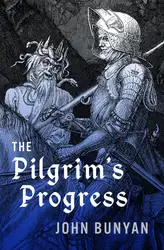
Om denne bog

What if the journey through life could be understood as a difficult road toward faith, truth, and spiritual transformation?

Enter John Bunyan's The Pilgrim's Progress, one of the most influential allegorical works in English literature.

The story follows Christian, an ordinary man who leaves his home after discovering the burden of sin and begins a difficult journey toward the Celestial City. Along the way, he encounters temptation, danger, doubt, friendship, persecution, and numerous symbolic characters and places.

Through Christian's journey, Bunyan explores faith, perseverance, spiritual struggle, temptation, redemption, and the challenges faced by those seeking a righteous life.

First published in 1678, The Pilgrim's Progress became one of the most widely read Christian allegories in the English language.

Join Christian on his unforgettable journey through danger, doubt, and discovery toward the Celestial City.

Kom i gang med denne bog i dag for 0 kr.

  • Få fuld adgang til alle bøger i appen i prøveperioden
  • Ingen forpligtelser, opsiges når som helst
Prøv gratis nu
Mere end 52.000 mennesker har givet Nextory fem stjerner i App Store og Google Play.

Mere af John Bunyan

  1. Harvard Classics : The Five-Foot Shelf of Books

    Aesop, Dante Alighieri, Hans Christian Andersen, Augustine of Hippo, Marcus Aurelius, Jane Austen, Francis Bacon, Honoré de Balzac, Francis Beaumont, Bjørnstjerne Bjørnson, Thomas Browne, Robert Browning, John Bunyan, EDMUND BURKE, Robert Burns, Lord Byron, Thomas Carlyle, Benvenuto Cellini, Miguel de Cervantes, Marcus Tullius Cicero, Richard Henry Jr., Charles Darwin, Alphonse Daudet, Thomas Dekker, Charles Dickens, Fyodor Dostoevsky, John Dryden, Charles W. Eliot, George Eliot, Ralph Waldo Emerson, Epictetus, John Fletcher, Theodor Fontane, Benjamin Franklin, Johann Wolfgang Goethe, Oliver Goldsmith, Jacob Grimm, Edward Everett Hale, Bret Harte, Nathaniel Hawthorne, Homer, Victor Hugo, Washington Irving, Henry James, Ben Jonson, Gottfried Keller, Thomas à Kempis, Alexander L. Kielland, Martin Luther, Niccolò Machiavelli, Alessandro Manzoni, Christopher Marlowe, Philip Massinger, Guy De Maupassant, John Stuart Mill, John Milton, Thomas More, William Morris, Alfred de Musset, William Allan Neilson, William Penn, Plato, Pliny the Younger, Plutarch, George Sand, Percy Bysshe Shelley, Richard Brinsley Sheridan, Adam Smith, Laurence Sterne, Theodor Storm, William Makepeace Thackeray, Leo Tolstoy, Ivan Turgenev, Mark Twain, Juan Valera, Virgil, Izaak Walton, John Webster, John Woolman

  2. 50 Masterpieces you have to read before you die

    Frances Hodgson Burnett, Homer, Charles Dickens, Lyman Frank Baum, Nathaniel Hawthorne, Thomas Hardy, Robert Louis Stevenson, Henry Haggard, Wilkie Collins, H.G. Wells, Sir Walter Scott, Lucy Maud Montgomery, Louisa May Alcott, Henry Fielding, Mary Shelley, Arthur Conan Doyle, Leo Tolstoy, Euripides, Fyodor Dostoevsky, Alexander Pushkin, James Fenimore Cooper, Daniel Defoe, Joseph Conrad, Jonathan Swift, William Shakespeare, Oscar Wilde, John Bunyan, Charles Darwin, Alfred Tennyson, Bram Stoker, James Joyce, Dante Alighieri, Howard Pyle, Jane Austen, Emily Bronte, Giovanni Boccaccio, Rudyard Kipling

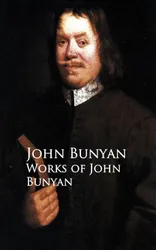
  3. Works of John Bunyan

    John Bunyan

  4. 15. jun.

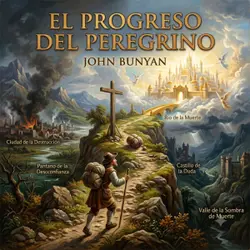
    El Progreso del Peregrino

    John Bunyan

  5. Ny
    5.0

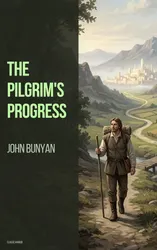
    The Pilgrim's Progress

    John Bunyan

  6. 5.0

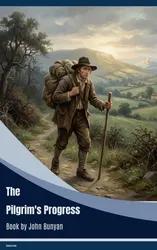
    The Pilgrim's Progress

    John Bunyan

  7. The Pilgrim's Progress : From This World to That Which Is to Come

    John Bunyan

  8. The Pilgrim's Progress : John Bunyan's classic allegory of the Christian journey

    John Bunyan

  9. Le voyage du pèlerin

    John Bunyan

  10. The Pilgrim's Progress : From This World to That Which Is to Come

    John Bunyan

  11. El Progreso del Peregrino

    John Bunyan