Om denne bog

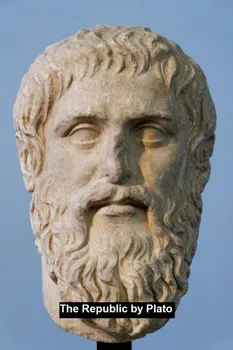
Plato's best-known dialogue. According to Wikipedia: "The Republic is a Socratic dialogue written by Plato around 380 BC concerning the definition of justice and the order and character of the just city-state and the just man. The dramatic date of the dialogue has been much debated and though it must take place some time during the Peloponnesian War, "there would be jarring anachronisms if any of the candidate specific dates between 432 and 404 were assigned".[2] It is Plato's best-known work and has proven to be one of the most intellectually and historically influential works of philosophy and political theory. In it, Socrates along with various Athenians and foreigners discuss the meaning of justice and examine whether or not the just man is happier than the unjust man by considering a series of different cities coming into existence "in speech", culminating in a city (Kallipolis) ruled by philosopher-kings; and by examining the nature of existing regimes. The participants also discuss the theory of forms, the immortality of the soul, and the roles of the philosopher and of poetry in society."
Kom i gang med denne bog i dag for 0 kr.

  • Få fuld adgang til alle bøger i appen i prøveperioden
  • Ingen forpligtelser, opsiges når som helst
Prøv gratis nu
Mere end 52.000 mennesker har givet Nextory fem stjerner i App Store og Google Play.

Mere af Plato

  1. Harvard Classics : The Five-Foot Shelf of Books

    Aesop, Dante Alighieri, Hans Christian Andersen, Augustine of Hippo, Marcus Aurelius, Jane Austen, Francis Bacon, Honoré de Balzac, Francis Beaumont, Bjørnstjerne Bjørnson, Thomas Browne, Robert Browning, John Bunyan, EDMUND BURKE, Robert Burns, Lord Byron, Thomas Carlyle, Benvenuto Cellini, Miguel de Cervantes, Marcus Tullius Cicero, Richard Henry Jr., Charles Darwin, Alphonse Daudet, Thomas Dekker, Charles Dickens, Fyodor Dostoevsky, John Dryden, Charles W. Eliot, George Eliot, Ralph Waldo Emerson, Epictetus, John Fletcher, Theodor Fontane, Benjamin Franklin, Johann Wolfgang Goethe, Oliver Goldsmith, Jacob Grimm, Edward Everett Hale, Bret Harte, Nathaniel Hawthorne, Homer, Victor Hugo, Washington Irving, Henry James, Ben Jonson, Gottfried Keller, Thomas à Kempis, Alexander L. Kielland, Martin Luther, Niccolò Machiavelli, Alessandro Manzoni, Christopher Marlowe, Philip Massinger, Guy De Maupassant, John Stuart Mill, John Milton, Thomas More, William Morris, Alfred de Musset, William Allan Neilson, William Penn, Plato, Pliny the Younger, Plutarch, George Sand, Percy Bysshe Shelley, Richard Brinsley Sheridan, Adam Smith, Laurence Sterne, Theodor Storm, William Makepeace Thackeray, Leo Tolstoy, Ivan Turgenev, Mark Twain, Juan Valera, Virgil, Izaak Walton, John Webster, John Woolman

  2. 4.5

    The Republic :

    Plato

  3. The Republic of Plato

    Plato

  4. Plato - Theaetetus

    Plato

  5. 4.3

    The Trial and Death of Socrates

    Plato

  6. Plato's Atlantis : The Complete Audio Presentation of Plato’s Account

    Plato, Benjamin Jowett

  7. 4.0

    Apology

    Plato

  8. Phaedo : Socrates on the Immortality of the Soul – A Profound Meditation on Death and the Afterlife

    Plato, Tim Zengerink

  9. Protagoras : A Dialogue on Virtue, Sophistry, and Education – Wisdom Versus Reputation in Ancient Greece

    Plato, Tim Zengerink

  10. Second Alcibiades : Self-Knowledge and Prayer – Plato’s Dialogue on Piety, Deliberation, and the Limits of Political Ambition

    Plato, Tim Zengerink

  11. Timaeus : Plato’s Vision of the Cosmos – A Dialogue on Creation, Nature, and the Divine Mind

    Plato, Tim Zengerink

  12. Lysis : A Philosophical Inquiry into Friendship – What Does It Mean to Truly Love Another?

    Plato, Tim Zengerink