4.0(1)

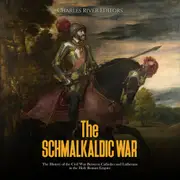
The Schmalkaldic War: The History of the Civil War Between Catholics and Lutherans in the Holy Roman Empire

It has been famously pointed out that the Holy Roman Empire was neither holy, nor Roman, but it was also not an empire in the sense people expect when hearing the term. In theory, the emperor was the highest prince in Christendom, and his dominion extended the length and breadth of Western Europe. The empire had been created by the papacy in 801 when Pope Leo III famously crowned the supposedly unwitting Charlemagne in Saint Peter’s Basilica, intending to recreate the Western Roman Empire. In truth, the imperial power did not extend beyond central Europe, which by the beginning of the 16th century included Germany, northern Italy and the Netherlands. Even in these lands, however, the emperor struggled to command obedience. His dominion over northern Italy was theoretical only, the cities of the Netherlands were deeply conscious of their ancient rights and privileges, and Germany had long ceased to be compliant. The latter had become a collection of principalities, dukedoms and bishoprics which vied with each other and pursued their own agendas. They were, however, united in only one sense: denying the emperor power and resisting attempts to centralize the government.

At the same time, major religious changes were happening within Germany in the early 16th century. Born shortly after the invention of the printing press, Martin Luther became one of Europe’s best selling authors, along with others like Erasmus, and his theology was mass produced across Europe. He strongly disputed the claim that freedom from God's punishment of sin could be purchased with money, known as indulgences, and he confronted indulgence salesman Johann Tetzel with his Ninety-Five Theses in 1517, one of the most important religious writings of all time. His refusal to retract all of his writings at the demand of Pope Leo X in 1520 and the Holy Roman Emperor Charles V at the Diet of Worms in 1521 resulted in his excommunication by the Pope and condemnation as an outlaw.
global.banner_device.title.dynamic

  • Få fuld adgang til alle bøger i appen i prøveperioden
  • Ingen forpligtelser, opsiges når som helst
Prøv gratis nu
Mere end 52.000 mennesker har givet Nextory fem stjerner i App Store og Google Play.

  1. Ny

    The Most Influential Rock Stars of the 1960s

    Charles River Editors

  2. Ny
    3.0

    Mysterious Polynesia: The Myths, Legends, and Mysteries of the Polynesians

    Charles River Editors

  3. Ny
    3.7

    The Battle of Chaldiran: The History and Legacy of the Ottoman Empire’s Decisive Victory Over the Safavid Dynasty in Anatolia

    Charles River Editors

  4. Ny

    The Guelphs and Ghibellines: The History of the Rival Political Factions in Medieval Italy

    Charles River Editors

  5. Ny

    The Empires of Persia: The History and Legacy of the Dynasties that Ruled Persia from Antiquity to Today

    Charles River Editors

  6. Ny

    The Cretaceous Period: The History and Legacy of the Geologic Era that Ended with the Extinction of Dinosaurs

    Charles River Editors

  7. Ny
    3.7

    The First Italian War: The History and Legacy of the Italian Wars’ Initial Conflict at the Height of the Renaissance

    Charles River Editors

  8. Ny

    Animals and the Greco-Roman World: The History of the Ways the Ancient Greeks and Romans Used Animals in Religion and Daily Life

    Charles River Editors

  9. Ny

    Steve McQueen & Charles Bronson: The Lives and Careers of the Top Action Stars of the 1970s

    Charles River Editors

  10. Ny
    4.0

    The War of the Spanish Succession: The History of the Conflict Between the Bourbons and Habsburgs that Engulfed Europe

    Charles River Editors

  11. Ny

    Richard Sorge: The Life and Legacy of the German Journalist Who Became the Soviet Union’s Most Effective Spy during World War II

    Charles River Editors

  12. Ny

    J.R.R. Tolkien and C.S. Lewis: The Lives and Works of the World’s Most Famous Fantasy Authors

    Charles River Editors