Om denne bog

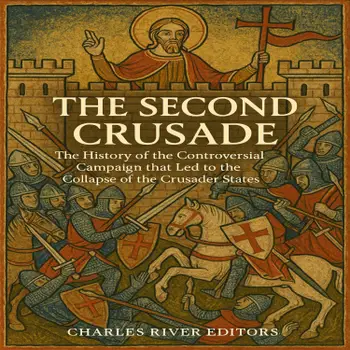
In the 50 years following the First Crusade, the Latin states in the East were consolidated, but there were also growing tensions and new challenges. Against this backdrop, the fall of the County of Edessa in December 1144 at the hands of Zengi, the atabeg of Aleppo and Mosul, was a catastrophic event. Founded in 1098 by the future King Baldwin of Boulogne, Edessa was the first Crusader state, as well as the northernmost, weakest, and least populated. It was constantly exposed to Muslim attacks, and news of its fall reached Europe at the beginning of 1145, and the fall was the catalyst for the Second Crusade. Furthermore, the Crusader states were also concerned about their relationship with the Byzantine Empire. Relations with the Empire were often tense. As early as 1105, Bohemond of Antioch travelled to the West in search of troops to fight the Muslims while concealing his intention to attack parts of the Byzantine Empire. He reportedly obtained papal acquiescence, though not an explicit bull.

Historically, writers have given little prominence to the Second Crusade because of its failure, and it is understandably overshadowed by the triumphant First Crusade and the more captivating Third Crusade. For a long time, historiography attributed a central role to Bernard of Clairvaux, sometimes portraying him as the sole architect of the enterprise due to the political difficulties experienced by Pope Eugene III in Rome. However, more recent studies have re-evaluated the Pope's role, emphasizing his commitment to planning and coordinating the crusade through a network of legates and advisors. Contrary to the portrayal of him as a naïve monk, Eugene III had a profound grasp of the dynamics of crusading and the boundaries of Christendom, which informed his bull and overall strategy. Another historiographical issue concerns the scope of the crusade itself:
Kom i gang med denne bog i dag for 0 kr.

  • Få fuld adgang til alle bøger i appen i prøveperioden
  • Ingen forpligtelser, opsiges når som helst
Prøv gratis nu
Mere end 52.000 mennesker har givet Nextory fem stjerner i App Store og Google Play.

  1. 4.0

    ODESSA : The Controversial History of the Mysterious Network that Helped Nazis Escape Germany after World War II

    Charles River Editors

  2. Hollywood’s Star-Crossed Blonde Bombshells: The Lives of the Influential Actresses Who Suffered Premature Deaths at the Height of Their Fame

    Charles River Editors

  3. Kublai Khan and Marco Polo: The History of a Unique Partnership at the Court of the Mongol Empire

    Charles River Editors

  4. The Battle of Cannae and the Battle of Zama: The History and Legacy of the Second Punic War’s Most Important Battles

    Charles River Editors

  5. Cave Paintings: The History and Legacy of Prehistoric Man-made Art

    Charles River Editors

  6. Uluru: The History and Legacy of the Australian Landmark Considered Sacred by the Local Aborigines

    Charles River Editors

  7. 3.0

    The World’s Most Notorious Serial Killers: The Lives and Crimes of History’s Most Infamous Murderers

    Charles River Editors

  8. The Napoleonic Wars: The History of the Conflicts that Shaped Europe in the 19th Century

    Charles River Editors

  9. 3.6

    Jack the Ripper and the Zodiac Killer: The History of the Most Famous Serial Killers Who Were Never Caught

    Charles River Editors

  10. 3.0

    The Anglo-Saxon Settlement of England: The History and Legacy of the Anglo-Saxons at the Start of the Middle Ages

    Charles River Editors

  11. 5.0

    The Rise and Fall of the Third Reich: The History and Legacy of Nazi Germany under Adolf Hitler

    Charles River Editors

  12. 4.0

    The Voyager Program: The History and Legacy of NASA's First Probes that Traveled to the Outer Solar System

    Charles River Editors