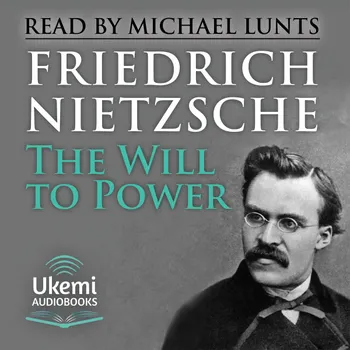
The Will to Power : An Attempted Transvaluation of All Values

Nietzsche never recovered from his mental breakdown in 1889 and therefore was unable to further any plans he had for the ‘magnum opus’ he had once intended, bringing together in a coherent whole his mature philosophy.

It was left to his close friend Heinrich Köselitz and his sister Elizabeth Förster-Nietzsche to go through the remaining notebooks and unpublished writings, choosing sections of particular interest to produce The Will to Power, giving it the subtitle An Attempted Transvaluation of All Values. It was published in 1901, was expanded in subsequent years and was translated into English in its expanded form in 1910 by Anthony M Ludovici, who had done so much to bring Nietzsche’s work to the English-speaking public.

Ludovici explains that for Nietzsche, the Will to Power was the fundamental principle of all life, a view that could be found in many of his earlier texts, including Thus Spoke Zarathustra: ‘Where there is life, there is also will: not, however, Will to Life, but - so teach I thee - Will to Power!’ (In this, Nietzsche was concerned to overtake Schopenhauer’s concept of the ‘Will to Live’.)

This posthumous compilation is arranged in four books (divided into 1,067 sections):

European Nihilism

A Criticism of the Highest Values That Have Prevailed Hitherto

The Principles of a New Valuation

Discipline and Breeding

Among the themes given prominence by this compilation - and it is, it must be remembered, basically an anthology - are nihilism, metaphysics and the future of Europe.

Nietzsche identified Christianity (and its claim to be ‘higher and better’) and its ‘meek/weak’ attitude as one cause of the nihilism that so concerned him. Another side of the coin was the ineluctable basic human nature of ’the will to power’. Deny that, and nihilism results. But passive nihilism (following the breakdown of social conventions, including conventional religion) can be counteracted by active nihilism and the role of the ‘ubermensch’, the self-reliant.

In aphorism after aphorism he argued for the creation of new values based on acceptance that there is nothing beyond ourselves. It remains his conviction that it is the men who are the masters of themselves - a dominating elite - who must lead. But a deeply human initiative, not the creation of a master race!

Aphorism 22 posits, ‘Nihilism. It may be two things: A. Nihilism as a sign of enhanced spiritual strength: active Nihilism. B. Nihilism as a sign of the collapse and decline of spiritual strength: passive Nihilism.’ Nietzsche’s powerful, uncompromising language continues right to the closing moments, where he concludes, ‘And even you yourselves are this will to power - and nothing besides!’

Translation by Anthony M Ludovici.

Om denne bog

Nietzsche never recovered from his mental breakdown in 1889 and therefore was unable to further any plans he had for the ‘magnum opus’ he had once intended, bringing together in a coherent whole his mature philosophy.

It was left to his close friend Heinrich Köselitz and his sister Elizabeth Förster-Nietzsche to go through the remaining notebooks and unpublished writings, choosing sections of particular interest to produce The Will to Power, giving it the subtitle An Attempted Transvaluation of All Values. It was published in 1901, was expanded in subsequent years and was translated into English in its expanded form in 1910 by Anthony M Ludovici, who had done so much to bring Nietzsche’s work to the English-speaking public.

Ludovici explains that for Nietzsche, the Will to Power was the fundamental principle of all life, a view that could be found in many of his earlier texts, including Thus Spoke Zarathustra: ‘Where there is life, there is also will: not, however, Will to Life, but - so teach I thee - Will to Power!’ (In this, Nietzsche was concerned to overtake Schopenhauer’s concept of the ‘Will to Live’.)

This posthumous compilation is arranged in four books (divided into 1,067 sections):

European Nihilism

A Criticism of the Highest Values That Have Prevailed Hitherto

The Principles of a New Valuation

Discipline and Breeding

Among the themes given prominence by this compilation - and it is, it must be remembered, basically an anthology - are nihilism, metaphysics and the future of Europe.

Nietzsche identified Christianity (and its claim to be ‘higher and better’) and its ‘meek/weak’ attitude as one cause of the nihilism that so concerned him. Another side of the coin was the ineluctable basic human nature of ’the will to power’. Deny that, and nihilism results. But passive nihilism (following the breakdown of social conventions, including conventional religion) can be counteracted by active nihilism and the role of the ‘ubermensch’, the self-reliant.

In aphorism after aphorism he argued for the creation of new values based on acceptance that there is nothing beyond ourselves. It remains his conviction that it is the men who are the masters of themselves - a dominating elite - who must lead. But a deeply human initiative, not the creation of a master race!

Aphorism 22 posits, ‘Nihilism. It may be two things: A. Nihilism as a sign of enhanced spiritual strength: active Nihilism. B. Nihilism as a sign of the collapse and decline of spiritual strength: passive Nihilism.’ Nietzsche’s powerful, uncompromising language continues right to the closing moments, where he concludes, ‘And even you yourselves are this will to power - and nothing besides!’

Translation by Anthony M Ludovici.
Kom i gang med denne bog i dag for 0 kr.

  • Få fuld adgang til alle bøger i appen i prøveperioden
  • Ingen forpligtelser, opsiges når som helst
Prøv gratis nu
Mere end 52.000 mennesker har givet Nextory fem stjerner i App Store og Google Play.

  1. Thus Spoke Zarathustra : A Book for All and None

    Friedrich Nietzsche

  2. Beyond Good and Evil : Prelude to a Philosophy of the Future

    Friedrich Nietzsche

  3. 4.0

    Således talte Zarathustra

    Friedrich Nietzsche

  4. 4.0

    3500 Final Quotes

    Marcus Aurelius, Jane Austen, Beaumarchais, Napoleon Bonaparte, Buddha, Winston Churchill, Cicero, Confucius, Nicolas de Chamfort, Charles de Gaulle, Antoine de Saint-Exupéry, Denis Diderot, Fyodor Dostoevsky, Albert Einstein, Ralph Waldo Emerson, Anne Frank, Mahatma Gandhi, Immanuel Kant, Søren Kierkegaard, Martin Luther King, Georg Christoph Lichtenberg, Abraham Lincoln, Montesquieu, Friedrich Nietzsche, Plato, Marcel Proust, Arthur Schopenhauer, William Shakespeare, Socrates, Baruch Spinoza, Henry David Thoreau, Leonardo da Vinci, Voltaire, Oscar Wilde, Laozi

  5. The Joyful Wisdom

    Friedrich Nietzsche

  6. 5.0

    Thus Spoke Zarathustra

    Friedrich Nietzsche

  7. Ny

    The Birth of Tragedy

    Friedrich Nietzsche

  8. 3.3

    Beyond Good and Evil

    Friedrich Nietzsche

  9. 50 Clásicos que Debes Leer Antes de Morir : Un viaje literario por los tesoros de la literatura universal

    Dante Alighieri, Aristóteles, Jane Austen, Charles Baudelaire, Giovanni Boccaccio, Anne Brontë, C. Collodi, James Fenimore Cooper, Fedor Mikhaïlovitch Dostoïevski, Arthur Conan Doyle, Alexandre Dumas, José de Espronceda, Gustave Flaubert, Sigmund Freud, Benito Pérez Galdós, Kahlil Gibran, Johann Wolfgang Goethe, Johann Wolfgang von Goethe, Victor Hugo, Thomas Hardy, Nathaniel Hawthorne, Vicente Blasco Ibáñez, Washington Irving, James Joyce, Mariano José de Larra, Jack London, Federico García Lorca, H.P. Lovecraft, Antonio Machado, Gustav Meyrink, John Stuart Mill, Amado Nervo, Friedrich Nietzsche, Solomon Northup, Alexander Sergeyevich Pushkin, Francisco de Quevedo, Walter Scott, William Shakespeare, Robert Louis Stevenson, Harriet Beecher Stowe, Jonathan Swift, Mark Twain, Miguel De Unamuno, Ramón María del Valle-Inclán, Julio Verne, Virginia Woolf

  10. 100 Clásicos de la Literatura Universal

    Francis Scott Fitzgerald, Mary Shelley, Lyman Frank Baum, Louisa May Alcott, Dante Alighieri, Jane Austen, Ambrose Bierce, Emily Brontë, Edgar Rice Burroughs, Lewis Carroll, Wilkie Collins, René Descartes, Charles Dickens, Emily Dickinson, Alexandre Dumas, Gustave Flaubert, Benito Pérez Galdós, Johann Wolfgang von Goethe, Thomas Hardy, E T A Hoffmann, Washington Irving, Henry James, James Joyce, Franz Kafka, Gaston Leroux, Federico García Lorca, H.P. Lovecraft, Publio Virgilio Marón, Lucy Maud Montgomery, John William Polidori, Marco Polo, Antoine de Saint-Exupéry, Emilio Salgari, Walter Scott, Mark Twain, Jules Verne, Julio Verne, H.G. Wells, Edith Wharton, Mary Wollstonecraft, Stefan Zweig, Sun Tzu, Bram Stoker, - Aristoteles, George Bernard Shaw, Henryk Sienkiewicz, Concepción Arenal, Charlotte Brontë, Miguel de Cervantes, G.K. Chesterton, Daniel Defoe, Fyodor Mikhailovich Dostoyevsky, Arthur Conan Doyle, Sigmund Freud, H. Rider Haggard, Homero, Immanuel Kant, Rudyard Kipling, Molière, Friedrich Nietzsche, Fernando de Rojas, Sófocles, William Makepeace Thackeray, León Tolstói, Voltaire, Ramón María del Valle-Inclán, Oscar Wilde, Virginia Woolf

  11. 4.0

    Thus Spoke Zarathustra :

    Friedrich Nietzsche

  12. El nacimiento de la tragedia : El origen de la rebeldía moderna: el diagnóstico profético de Nietzsche sobre la crisis de nuestra cultura

    Friedrich Nietzsche