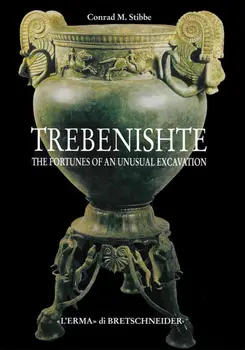
An examination of the complex archival and archaeological record of the archaic necropolis at Trebenishte (Republic of North Macedonia) reveals a multifaceted history marked by interrupted excavations, political shifts, and multinational investigations. First uncovered in 1918 by Bulgarian soldiers, the site yielded exceptional elite graves containing elaborate imported Greek bronzes, gold masks, and prestige goods dating to the late sixth century B.C. Subsequent campaigns by Yugoslav and Macedonian teams expanded the site's scope, identifying additional "princely" tombs alongside extensive, lower-status "poor" graves spanning several centuries. Analysis of the material culture suggests that the elite burials represent a prosperous local Illyrian tribal aristocracy rather than Greek mercenaries. Furthermore, spatial and stylistic reassessments indicate that these high-status bronze vessels—originating from centers such as Laconia and Corinth—reached the region via specific inland and coastal trade routes. Ultimately, the volume synthesizes the site's fragmented excavation history while clarifying the socio-political and economic dynamics of the ancient Balkans.