Om denne bog

"Utilitarianism" by John Stuart Mill is a seminal work in ethical philosophy that explores the principles of utilitarianism—a consequentialist ethical theory that assesses actions based on their ability to maximize overall happiness or pleasure. Published in 1861, "Utilitarianism" builds upon the ideas of Jeremy Bentham, but Mill adds nuances to the theory, emphasizing the qualitative aspects of pleasure and introducing the concept of higher and lower pleasures. In this foundational text, Mill argues that actions are right in proportion as they tend to promote happiness and wrong as they tend to produce the reverse of happiness. Mill's eloquent defence of utilitarianism addresses objections, refines the theory, and underscores the importance of individual rights within the framework of utility. "Utilitarianism" remains a cornerstone in moral philosophy, offering insights into the ethical calculus that continues to shape debates on morality and public policy. With clarity and rigour, Mill's work remains a fundamental reference for those interested in the foundations of ethical reasoning.

Kom i gang med denne bog i dag for 0 kr.

  • Få fuld adgang til alle bøger i appen i prøveperioden
  • Ingen forpligtelser, opsiges når som helst
Prøv gratis nu
Mere end 52.000 mennesker har givet Nextory fem stjerner i App Store og Google Play.

Mere af John Stuart Mill

  1. Harvard Classics : The Five-Foot Shelf of Books

    Aesop, Dante Alighieri, Hans Christian Andersen, Augustine of Hippo, Marcus Aurelius, Jane Austen, Francis Bacon, Honoré de Balzac, Francis Beaumont, Bjørnstjerne Bjørnson, Thomas Browne, Robert Browning, John Bunyan, EDMUND BURKE, Robert Burns, Lord Byron, Thomas Carlyle, Benvenuto Cellini, Miguel de Cervantes, Marcus Tullius Cicero, Richard Henry Jr., Charles Darwin, Alphonse Daudet, Thomas Dekker, Charles Dickens, Fyodor Dostoevsky, John Dryden, Charles W. Eliot, George Eliot, Ralph Waldo Emerson, Epictetus, John Fletcher, Theodor Fontane, Benjamin Franklin, Johann Wolfgang Goethe, Oliver Goldsmith, Jacob Grimm, Edward Everett Hale, Bret Harte, Nathaniel Hawthorne, Homer, Victor Hugo, Washington Irving, Henry James, Ben Jonson, Gottfried Keller, Thomas à Kempis, Alexander L. Kielland, Martin Luther, Niccolò Machiavelli, Alessandro Manzoni, Christopher Marlowe, Philip Massinger, Guy De Maupassant, John Stuart Mill, John Milton, Thomas More, William Morris, Alfred de Musset, William Allan Neilson, William Penn, Plato, Pliny the Younger, Plutarch, George Sand, Percy Bysshe Shelley, Richard Brinsley Sheridan, Adam Smith, Laurence Sterne, Theodor Storm, William Makepeace Thackeray, Leo Tolstoy, Ivan Turgenev, Mark Twain, Juan Valera, Virgil, Izaak Walton, John Webster, John Woolman

  2. Ny

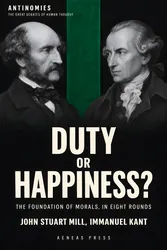
    Duty or Happiness? : The foundation of morals, in eight rounds

    John Stuart Mill, Immanuel Kant

  3. 4.0

    On Liberty

    John Stuart Mill

  4. Ny

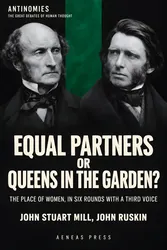
    Equal Partners or Queens in the Garden? : The place of women, in six rounds with a third voice

    John Stuart Mill, John Ruskin

  5. Ny

    The Subjection of Women

    John Stuart Mill

  6. Ny

    On Liberty

    John Stuart Mill

  7. Ny

    The Contest in America

    John Stuart Mill

  8. Ny

    Autobiography

    John Stuart Mill

  9. On Liberty : The Limits of the Power of Society Over the Individual

    John Stuart Mill

  10. On Liberty : The Limits of the Power of Society Over the Individual

    John Stuart Mill

  11. On liberty

    John Stuart Mill