War and Peace

"Well, Prince, so Genoa and Lucca are now just family estates of the Buonapartes. But I warn you, if you don't tell me that this means war, if you still try to defend the infamies and horrors perpetrated by that Antichrist—I really believe he is Antichrist—I will have nothing more to do with you and you are no longer my friend, no longer my 'faithful slave,' as you call yourself! But how do you do? I see I have frightened you—sit down and tell me all the news."

It was in July, 1805, and the speaker was the well-known Anna Pavlovna Scherer, maid of honor and favorite of the Empress Marya Fedorovna. With these words she greeted Prince Vasili Kuragin, a man of high rank and importance, who was the first to arrive at her reception. Anna Pavlovna had had a cough for some days. She was, as she said, suffering from la grippe; grippe being then a new word in St. Petersburg, used only by the elite.

All her invitations without exception, written in French, and delivered by a scarlet-liveried footman that morning, ran as follows:

"If you have nothing better to do, Count (or Prince), and if the prospect of spending an evening with a poor invalid is not too terrible, I shall be very charmed to see you tonight between 7 and 10—Annette Scherer."

"Heavens! what a virulent attack!" replied the prince, not in the least disconcerted by this reception. He had just entered, wearing an embroidered court uniform, knee breeches, and shoes, and had stars on his breast and a serene expression on his flat face.

He spoke in that refined French in which our grandfathers not only spoke but thought, and with the gentle, patronizing intonation natural to a man of importance who had grown old in society and at court. He went up to Anna Pavlovna, kissed her hand, presenting to her his bald, scented, and shining head, and complacently seated himself on the sofa.

"First of all, dear friend, tell me how you are. Set your friend's mind at rest," said he without altering his tone, beneath the politeness and affected sympathy of which indifference and even irony could be discerned.

"Can one be well while suffering morally? Can one be calm in times like these if one has any feeling?" said Anna Pavlovna. "You are staying the whole evening, I hope?"

"And the fete at the English ambassador's? Today is Wednesday. I must put in an appearance there," said the prince. "My daughter is coming for me to take me there."

Om denne bog

"Well, Prince, so Genoa and Lucca are now just family estates of the Buonapartes. But I warn you, if you don't tell me that this means war, if you still try to defend the infamies and horrors perpetrated by that Antichrist—I really believe he is Antichrist—I will have nothing more to do with you and you are no longer my friend, no longer my 'faithful slave,' as you call yourself! But how do you do? I see I have frightened you—sit down and tell me all the news."

It was in July, 1805, and the speaker was the well-known Anna Pavlovna Scherer, maid of honor and favorite of the Empress Marya Fedorovna. With these words she greeted Prince Vasili Kuragin, a man of high rank and importance, who was the first to arrive at her reception. Anna Pavlovna had had a cough for some days. She was, as she said, suffering from la grippe; grippe being then a new word in St. Petersburg, used only by the elite.

All her invitations without exception, written in French, and delivered by a scarlet-liveried footman that morning, ran as follows:

"If you have nothing better to do, Count (or Prince), and if the prospect of spending an evening with a poor invalid is not too terrible, I shall be very charmed to see you tonight between 7 and 10—Annette Scherer."

"Heavens! what a virulent attack!" replied the prince, not in the least disconcerted by this reception. He had just entered, wearing an embroidered court uniform, knee breeches, and shoes, and had stars on his breast and a serene expression on his flat face.

He spoke in that refined French in which our grandfathers not only spoke but thought, and with the gentle, patronizing intonation natural to a man of importance who had grown old in society and at court. He went up to Anna Pavlovna, kissed her hand, presenting to her his bald, scented, and shining head, and complacently seated himself on the sofa.

"First of all, dear friend, tell me how you are. Set your friend's mind at rest," said he without altering his tone, beneath the politeness and affected sympathy of which indifference and even irony could be discerned.

"Can one be well while suffering morally? Can one be calm in times like these if one has any feeling?" said Anna Pavlovna. "You are staying the whole evening, I hope?"

"And the fete at the English ambassador's? Today is Wednesday. I must put in an appearance there," said the prince. "My daughter is coming for me to take me there."
Kom i gang med denne bog i dag for 0 kr.

  • Få fuld adgang til alle bøger i appen i prøveperioden
  • Ingen forpligtelser, opsiges når som helst
Prøv gratis nu
Mere end 52.000 mennesker har givet Nextory fem stjerner i App Store og Google Play.

  1. 3.7

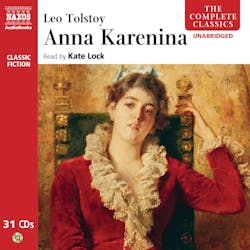
    Anna Karenina

    Leo Tolstoy

  2. 50 Great Russian Short Stories : Notes From The Underground, The Death Of Ivan Ilyich, The Lady With The Dog, First Love, The Mantle, The Queen Of Spades, The Embroidered Towel And Others Stories

    Leo Tolstoy, Anton Chekhov, Ivan Turgenev, Nikolay Gogol, Alexsandr Pushkin, Maxim Gorky, Leonid Andreyev, Aleksandr Kuprin, Mikhail Bulgakov, Ivan Bunin, Mikhail Saltykov-Shchedrin

  3. 5.0

    Anna Karenina - Audiobook

    Leo Tolstoy, Classic Audiobooks

  4. War And Peace

    Leo Tolstoy

  5. 4.0

    25+ The World's Greatest Short Stories. Vol. 1 : The Legend of Sleepy Hollow, The Gold Bug, Daisy Miller, The Yellow Wallpaper, The Call of Cthulhu and other

    Washington Irving, Edgar Allan Poe, Herman Melville, Bret Harte, Leo Tolstoy, Fyodor Dostoevsky, Rudyard Kipling, Charlotte Perkins Gilman, Anton Chekhov, David Herbert Lawrence, James Joyce, Ivan Turgenev, Nikolai Gogol, Mikhail Bulgakov, Ivan Bunin, Joseph Sheridan Le Fanu, O.Henry, Ambrose Gwinnett Bierce, Robert Louis Stevenson, Herbert George Wells, William Wymark Jacobs, Arthur Conan Doyle, Henry James, Howard Phillips Lovecraft, Alexander Pushkin, Gilbert Keith Chesterton

  6. 5.0

    50 Masterpieces you have to read before you die vol: 2 : Timeless Classics to Enrich Your Mind and Soul

    Louisa, Jane Austen, Joseph Conrad, D. H. Lawrence, George Eliot, Leo Tolstoy, James Joyce, Charles Dickens, Bram Stoker, Oscar Wilde, Honoré de Balzac, Edgar Rice Burroughs, Anne Brontë, Charlotte Brontë, Emily Brontë, Lewis Carroll, Willa Cather, Miguel de Cervantes, E. E. Cummings, Fyodor Dostoyevsky, Daniel Defoe, Arthur Conan Doyle, Alexandre Dumas, Gustave Flaubert, Henry James, Victor Hugo, HB Classics

  7. 3.7

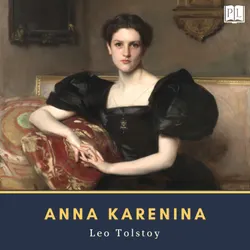
    Anna Karenina

    Leo Tolstoy

  8. 5.0

    Three Questions (Unabridged)

    Leo Tolstoy

  9. 3.0

    50 Masterpieces you have to read before you die vol: 1 (2020 Edition) : Included: Little Women, The Richest Man in Babylon Emma, The Call Of The Wild ....

    Louisa May Alcott, Dante Alighieri, Marcus Aurelius, Jane Austen, L. Frank Baum, Charlotte Brontë, Emily Brontë, Anne Brontë, Miguel de Cervantes, Agatha Christie, George S. Clason, Arthur Conan Doyle, Joseph Conrad, Charles Dickens, Fyodor Dostoyevsky, Alexandre Dumas, George Eliot, G.K. Chesterton, G.K. Chesterton, Zane Grey, Nathaniel Hawthorne, Napoleon Hill, Homer, Victor Hugo, Frances Hodgson Burnett, Washington Irving, Henry James, Franz Kafka, Rudyard Kipling, Jack London, Leo Tolstoy, H.P. Lovecraft, Lucy Maud Montgomery, Joseph Murphy, Robert Louis Stevenson, Edgar Allan Poe, Marcel Proust, Publius, Mary Shelley, Bram Stoker, Mark Twain, Sun Tzu, Lew Wallace, Wallace D. Wattles, H.G. Wells

  10. 4.5

    The Death of Ivan Ilyitch

    Leo Tolstoy

  11. 4.3

    War & Peace - Volume II

    Leo Tolstoy

  12. 3.0

    Classic Philosophical Works (Thus Spoke Zarathustra, The Apology of Socrates, Tao Te Ching...)

    Plato, Friedrich Nietzsche, Herman Hesse, Leo Tolstoy, Immanuel Kant, Sun Tzu