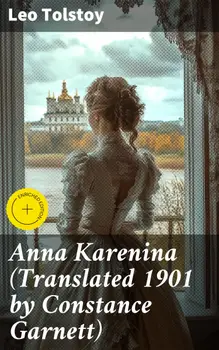
Anna Karenina (Translated 1901 by Constance Garnett) : Enriched edition. Love, Society, and Morality in 19th Century Russia: A Timeless Classic of Tragic Romance and Family Relationships

Leo Tolstoy's "Anna Karenina," in Constance Garnett's masterful 1901 translation, transcends the boundaries of its 19th-century Russian setting to explore timeless themes of love, fidelity, and societal expectation. The novel's intricate narrative weaves together the lives of several characters, most notably the tragic heroine Anna and her passionate affair with Count Vronsky, against a backdrop of Russian aristocracy. Tolstoy's realism and attention to psychological depth illuminate the complexities of human relationships, while his symbolic use of contrasting rural and urban settings amplifies the moral dilemmas faced by his characters. Tolstoy, a prominent figure in world literature, was deeply influenced by his experiences in the Russian gentry and his philosophical explorations of ethics and morality. His own struggles with faith, love, and societal norms undoubtedly informed the creation of Anna's poignant journey, revealing the profound anguish at the intersection of desire and duty. These personal reflections, combined with his acute observations of Russian life, position Tolstoy as a critical voice of his era, deeply invested in the moral fabric of society. "Anna Karenina" is an essential read for anyone seeking a profound exploration of human emotion and societal constraints. Tolstoy's rich character development and deep philosophical inquiries welcome readers into a world where love and despair collide, making this novel not only a literary masterpiece but also a significant commentary on the human condition.

In this enriched edition, we have carefully created added value for your reading experience:

- A succinct Introduction situates the work's timeless appeal and themes.

- The Synopsis outlines the central plot, highlighting key developments without spoiling critical twists.

- A detailed Historical Context immerses you in the era's events and influences that shaped the writing.

- An Author Biography reveals milestones in the author's life, illuminating the personal insights behind the text.

- A thorough Analysis dissects symbols, motifs, and character arcs to unearth underlying meanings.

- Reflection questions prompt you to engage personally with the work's messages, connecting them to modern life.

- Hand‐picked Memorable Quotes shine a spotlight on moments of literary brilliance.

- Interactive footnotes clarify unusual references, historical allusions, and archaic phrases for an effortless, more informed read.
Om den här boken

Leo Tolstoy's "Anna Karenina," in Constance Garnett's masterful 1901 translation, transcends the boundaries of its 19th-century Russian setting to explore timeless themes of love, fidelity, and societal expectation. The novel's intricate narrative weaves together the lives of several characters, most notably the tragic heroine Anna and her passionate affair with Count Vronsky, against a backdrop of Russian aristocracy. Tolstoy's realism and attention to psychological depth illuminate the complexities of human relationships, while his symbolic use of contrasting rural and urban settings amplifies the moral dilemmas faced by his characters. Tolstoy, a prominent figure in world literature, was deeply influenced by his experiences in the Russian gentry and his philosophical explorations of ethics and morality. His own struggles with faith, love, and societal norms undoubtedly informed the creation of Anna's poignant journey, revealing the profound anguish at the intersection of desire and duty. These personal reflections, combined with his acute observations of Russian life, position Tolstoy as a critical voice of his era, deeply invested in the moral fabric of society. "Anna Karenina" is an essential read for anyone seeking a profound exploration of human emotion and societal constraints. Tolstoy's rich character development and deep philosophical inquiries welcome readers into a world where love and despair collide, making this novel not only a literary masterpiece but also a significant commentary on the human condition.

In this enriched edition, we have carefully created added value for your reading experience:

- A succinct Introduction situates the work's timeless appeal and themes.

- The Synopsis outlines the central plot, highlighting key developments without spoiling critical twists.

- A detailed Historical Context immerses you in the era's events and influences that shaped the writing.

- An Author Biography reveals milestones in the author's life, illuminating the personal insights behind the text.

- A thorough Analysis dissects symbols, motifs, and character arcs to unearth underlying meanings.

- Reflection questions prompt you to engage personally with the work's messages, connecting them to modern life.

- Hand‐picked Memorable Quotes shine a spotlight on moments of literary brilliance.

- Interactive footnotes clarify unusual references, historical allusions, and archaic phrases for an effortless, more informed read.

Kom igång med den här boken idag för 0 kr

  • Få full tillgång till alla böcker i appen under provperioden
  • Ingen bindningstid, avsluta när du vill
Prova gratis nu
Mer än 52 000 personer har gett Nextory 5 stjärnor i App Store och på Google Play.

  1. 5.0

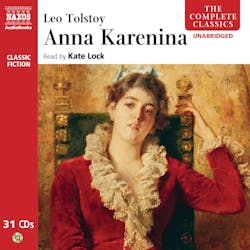
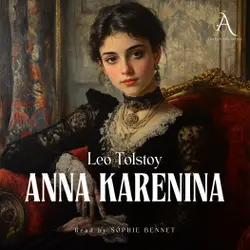
    Anna Karenina - Audiobook

    Leo Tolstoy, Classic Audiobooks

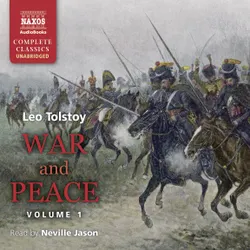
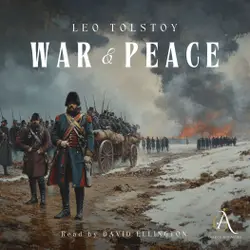
  2. War and Peace - Audiobook

    Leo Tolstoy, Classic Audiobooks

  3. #1

    50 Classics you have to read before you die Vol: 1 (Gold Edition) (Golden Deer Classics) [Included audiobooks link + Active toc]

    Joseph Conrad, D. H. Lawrence, George Eliot, Leo Tolstoy, James Joyce, Charles Dickens, Jane Austen, Bram Stoker, Oscar Wilde, Golden Deer

  4. 4.4

    War & Peace - Volume I

    Leo Tolstoy

  5. 3.0

    50 Masterpieces you have to read before you die vol: 1 (2020 Edition) : Included: Little Women, The Richest Man in Babylon Emma, The Call Of The Wild ....

    Louisa May Alcott, Dante Alighieri, Marcus Aurelius, Jane Austen, L. Frank Baum, Charlotte Brontë, Emily Brontë, Anne Brontë, Miguel de Cervantes, Agatha Christie, George S. Clason, Arthur Conan Doyle, Joseph Conrad, Charles Dickens, Fyodor Dostoyevsky, Alexandre Dumas, George Eliot, G.K. Chesterton, G.K. Chesterton, Zane Grey, Nathaniel Hawthorne, Napoleon Hill, Homer, Victor Hugo, Frances Hodgson Burnett, Washington Irving, Henry James, Franz Kafka, Rudyard Kipling, Jack London, Leo Tolstoy, H.P. Lovecraft, Lucy Maud Montgomery, Joseph Murphy, Robert Louis Stevenson, Edgar Allan Poe, Marcel Proust, Publius, Mary Shelley, Bram Stoker, Mark Twain, Sun Tzu, Lew Wallace, Wallace D. Wattles, H.G. Wells

  6. 4.0

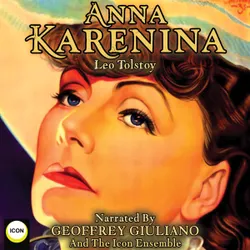
    Anna Karenina

    Leo Tolstoy

  7. The Essential Feminist Classics : Including Biographies & Memoirs of the Most Influential Women in History

    Henrik Ibsen, Charlotte Brontë, Marietta Holley, Henry James, Louisa May Alcott, John Stuart Mill, Zona Gale, Jane Austen, Thomas Hardy, Edith Wharton, Gene Stratton-Porter, Rebecca Harding Davis, Margaret Fuller, Elizabeth Cady Stanton, Elia Wilkinson Peattie, Virginia Woolf, Mary Wollstonecraft, Willa Cather, Nathaniel Hawthorne, Mary Johnston, Grant Allen, Theodore Dreiser, Kate Chopin, Sojourner Truth, Charlotte Perkins Gilman, Harriet Martineau, Fanny Burney, Mary Ware Dennett, Julia Ward Howe, Ada Cambridge, H.G. Wells, Sarah H. Bradford, D. H. Lawrence, Nikolai Leskov, Lucy Maud Montgomery, Leo Tolstoy, Margaret Deland, Elizabeth Gaskell, Margaret Oliphant, Margaret Mitchell, Elizabeth von Arnim, Elizabeth Burgoyne Corbett

  8. The Kingdom of God Is Within You :

    Leo Tolstoy

  9. 4.7

    How Much Land Does a Man Need : The Deadly Price of Greed and the Illusion of More

    Leo Tolstoy, Tim Zengerink

  10. 3.6

    War and Peace

    Leo Tolstoy

  11. 4.3

    Anna Karenina

    Leo Tolstoy

  12. 50 Masterpieces you need to read

    Louisa May Alcott, Jane Austen, Joseph Conrad, D. H. Lawrence, George Eliot, Leo Tolstoy, James Joyce, Charles Dickens, Bram Stoker, Oscar Wilde, Honoré de Balzac, Edgar Rice Burroughs, Anne Brontë, Charlotte Brontë, Emily Brontë, Lewis Carroll, Willa Cather, Miguel de Cervantes, E. Cummings, Fyodor Dostoyevsky, Daniel Defoe, Arthur Conan Doyle, Alexandre Dumas, Gustave Flaubert, Henry James, Victor Hugo