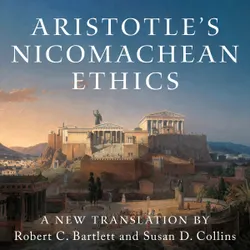
Aristotle: Nicomachean Ethics : Enriched edition. Complete Edition

Aristotle's "Nicomachean Ethics" serves as a foundational text in moral philosophy, delving into the nature of the good life and the cultivation of virtue. Written in a clear, dialectical style that intertwines argumentation with practical examples, Aristotle explores the concepts of happiness (eudaimonia) and moral character through a lens of virtue ethics. The text is not only a reflection of the philosophical milieu of Hellenistic thought but also a response to Socratic ideals, offering a systematic approach to ethical behavior that emphasizes the importance of habit and rationality in achieving moral excellence. Aristotle, one of the most influential philosophers in Western thought, wrote this seminal work as a guide for his son, Nicomachus, blending personal insight with philosophical inquiry. His extensive studies in various fields, including biology, politics, and metaphysics, inform his ethical considerations, imbuing them with a comprehensive view of human nature. This intimate correspondence captures Aristotle's intention to merge theoretical knowledge with practical application, making the work a vital resource for ethical reflection. "Nicomachean Ethics" is highly recommended for anyone interested in understanding the roots of ethical thought and the complexities of human motivation. Its relevance persists in contemporary discussions of morality, virtue, and the quest for a meaningful life, making it an essential reading for students, philosophers, and anyone seeking to navigate the intricacies of ethical living.

In this enriched edition, we have carefully created added value for your reading experience:

- A succinct Introduction situates the work's timeless appeal and themes.

- The Synopsis outlines the central plot, highlighting key developments without spoiling critical twists.

- A detailed Historical Context immerses you in the era's events and influences that shaped the writing.

- An Author Biography reveals milestones in the author's life, illuminating the personal insights behind the text.

- A thorough Analysis dissects symbols, motifs, and character arcs to unearth underlying meanings.

- Reflection questions prompt you to engage personally with the work's messages, connecting them to modern life.

- Hand‐picked Memorable Quotes shine a spotlight on moments of literary brilliance.

- Interactive footnotes clarify unusual references, historical allusions, and archaic phrases for an effortless, more informed read.
Om den här boken

Aristotle's "Nicomachean Ethics" serves as a foundational text in moral philosophy, delving into the nature of the good life and the cultivation of virtue. Written in a clear, dialectical style that intertwines argumentation with practical examples, Aristotle explores the concepts of happiness (eudaimonia) and moral character through a lens of virtue ethics. The text is not only a reflection of the philosophical milieu of Hellenistic thought but also a response to Socratic ideals, offering a systematic approach to ethical behavior that emphasizes the importance of habit and rationality in achieving moral excellence. Aristotle, one of the most influential philosophers in Western thought, wrote this seminal work as a guide for his son, Nicomachus, blending personal insight with philosophical inquiry. His extensive studies in various fields, including biology, politics, and metaphysics, inform his ethical considerations, imbuing them with a comprehensive view of human nature. This intimate correspondence captures Aristotle's intention to merge theoretical knowledge with practical application, making the work a vital resource for ethical reflection. "Nicomachean Ethics" is highly recommended for anyone interested in understanding the roots of ethical thought and the complexities of human motivation. Its relevance persists in contemporary discussions of morality, virtue, and the quest for a meaningful life, making it an essential reading for students, philosophers, and anyone seeking to navigate the intricacies of ethical living.

In this enriched edition, we have carefully created added value for your reading experience:

- A succinct Introduction situates the work's timeless appeal and themes.

- The Synopsis outlines the central plot, highlighting key developments without spoiling critical twists.

- A detailed Historical Context immerses you in the era's events and influences that shaped the writing.

- An Author Biography reveals milestones in the author's life, illuminating the personal insights behind the text.

- A thorough Analysis dissects symbols, motifs, and character arcs to unearth underlying meanings.

- Reflection questions prompt you to engage personally with the work's messages, connecting them to modern life.

- Hand‐picked Memorable Quotes shine a spotlight on moments of literary brilliance.

- Interactive footnotes clarify unusual references, historical allusions, and archaic phrases for an effortless, more informed read.
Kom igång med den här boken idag för 0 kr

  • Få full tillgång till alla böcker i appen under provperioden
  • Ingen bindningstid, avsluta när du vill
Prova gratis nu
Mer än 52 000 personer har gett Nextory 5 stjärnor i App Store och på Google Play.

  1. Aristotle's Nicomachean Ethics

    Aristotle

  2. The Aristotle Collection : 29 Classic Works

    Aristotle

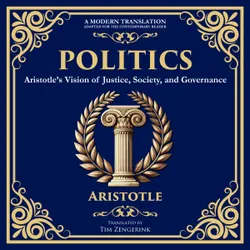
  3. Politics : Aristotle’s Vision of Justice, Society, and Governance - A Modern Translation - Adapted for the Contemporary Reader

    Aristotle, Tim Zengerink

  4. 10 Masterpieces You Have to Read Before You Die, Vol.5 : The Odyssey, The Republic, Meditations, The Divine Comedy, Faust and others

    Homer, Plato, Aristotle, Marcus Aurelius, Niccolo Machiavelli, Dante Alighieri, Johann Wolfgang von Goethe, Leo Tolstoy

  5. The Complete Aristotle : "Logic (Organon), Universal Physics, Human Physics, Animal Physics, Metaphysics, Ethics and Politics"

    Aristotle, E. M. Edghill, R. P. Hardie, R. K. Gaye, J. A. Smith, D'Arcy Wentworth Thompson, W. D. Ross, W. Rhys Roberts

  6. The Parva Naturalia. Sense and Sensibilia

    Aristotle

  7. The Parva Naturalia. On Sleep

    Aristotle

  8. Yale Required Reading - Collected Works (Vol. 1) : Enriched edition. Exploring the Depths of Ancient Greek Thought

    Aristotle, Plato, Euripides, Gilbert Murray, Epictetus, Pindar, Theocritus, Homer, Plutarch, Aeschylus, Sophocles, - Aristophanes, Herodotus, Anacreon, Sappho -, Thucydides, Hesiod, Demosthenes, Lysias, Alcaeus, Archilochus, Theognis of Megara, Simonides of Ceos, Bacchylides, Apollonius, Callimachus

  9. Yale Classics (Vol. 1) : Enriched edition. Exploring the Essence of Ancient Wisdom and Literary Brilliance in Western Thought

    Aristotle, Plato, Euripides, Gilbert Murray, Epictetus, Pindar, Theocritus, Homer, Plutarch, Aeschylus, Sophocles, - Aristophanes, Herodotus, Anacreon, Sappho -, Thucydides, Hesiod, Demosthenes, Lysias, Alcaeus, Archilochus, Theognis of Megara, Simonides of Ceos, Bacchylides, Apollonius, Callimachus

  10. Yale Classics (Vol. 1)

    Aristotle, Plato, Euripides, Gilbert Murray, Epictetus, Pindar, Theocritus, Homer, Plutarch, Aeschylus, Sophocles, - Aristophanes, Herodotus, Anacreon, Sappho -, Thucydides, Hesiod, Demosthenes, Lysias, Alcaeus, Archilochus, Theognis of Megara, Simonides of Ceos, Bacchylides, Apollonius, Callimachus

  11. Yale Required Reading - Collected Works (Vol. 1)

    Aristotle, Plato, Euripides, Gilbert Murray, Epictetus, Pindar, Theocritus, Homer, Plutarch, Aeschylus, Sophocles, - Aristophanes, Herodotus, Anacreon, Sappho -, Thucydides, Hesiod, Demosthenes, Lysias, Alcaeus, Archilochus, Theognis of Megara, Simonides of Ceos, Bacchylides, Apollonius, Callimachus

  12. Yale Classics (Vol. 1) : Enriched edition. A Journey Through Greek Thought and Drama: The Origins of Western Literary Tradition

    Aristotle, Plato, Euripides, Gilbert Murray, Epictetus, Pindar, Theocritus, Homer, Plutarch, Aeschylus, Sophocles, - Aristophanes, Herodotus, Anacreon, Sappho -, Thucydides, Hesiod, Demosthenes, Lysias, Alcaeus, Archilochus, Theognis of Megara, Simonides of Ceos, Bacchylides, Apollonius, Callimachus