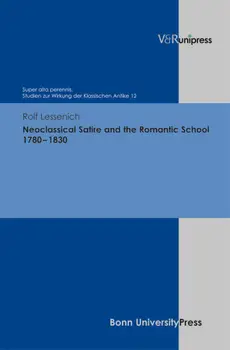
Romanticism was not only heterogeneous and disunited. It also had to face the counter-movements of the Enlightenment and Augustan Neoclassicism, which were still gaining momentum in the decades around the French Revolution. Neoclassicists regarded Romanticism as a heretical amalgam of dissenting "new schools" threatening the monopoly of the Classical Tradition. Acrimonious debates in aesthetics and politics were conducted with the traditional strategies of the classical "ars disputandi" on both sides. Under the duress of the heaviest satirical attacks, Romanticism began to gradually see itself as one movement, giving rise to the problematic opposition of "Classical" with "Romantic". This construction, however, was indispensable for the clarification of different positions among the hubbub of conflicting voices. It has also proved critical in literary and cultural studies. The Classical Tradition emerges as an ongoing event from Greek and Latin antiquity via Neoclassicism and Romanticism to our time.
Kom igång med den här boken idag för 0 kr
- Få full tillgång till alla böcker i appen under provperioden
- Ingen bindningstid, avsluta när du vill
Författare:
Serie:
Volym 12 i Super alta perennisSpråk:
Engelska
Format:
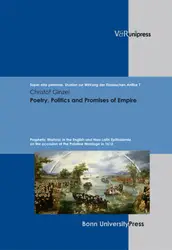
Poetry, Politics and Promises of Empire : Prophetic Rhetoric in the English and Neo-Latin Epithalamia on the occasion of the Palatine Marriage in 1613. E-BOOK
Christof Ginzel
book
Forms of Conflict and Rivalries in Renaissance Europe
book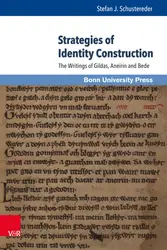
Strategies of Identity Construction : The Writings of Gildas, Aneirin and Bede
Stefan J. Schustereder
book
Romantic Disillusionism and the Sceptical Tradition
Rolf P. Lessenich
book
Spheres of Conflict and Rivalries in Renaissance Europe
book
Management and Resolution of Conflict and Rivalries in Renaissance Europe
book