3.5(2)

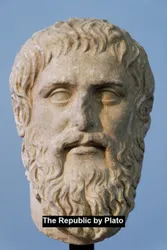
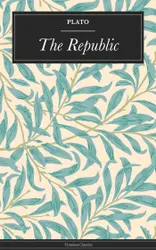
Plato’s Republic

The "Republic" poses questions that endure: What is justice? What form of community fosters the best possible life for human beings? What is the nature and destiny of the soul? What form of education provides the best leaders for a good republic? What are the various forms of poetry and the other arts, which ones should be fostered, and which ones should be discouraged? How does knowing differ from believing? Several characters in the dialogue present a variety of tempting answers to those questions. Cephalus, Polemarchus, Thrasymachus, and Glaucon all offer definitions of justice. Socrates, Glaucon, and Adeimantus explore five different forms of republic and evaluate the merit of each from the standpoint of goodness. Two contrasting models of education are proposed and examined. Three different forms of poetry are identified and analyzed. The difference between knowing and believing is discussed in relation to the objects of each kind of thinking.

Plato lived in Athens, Greece. He wrote approximately two-dozen dialogues that explore core topics that are essential to all human beings. Although the historical Socrates was a strong influence on Plato, the character by that name that appears in many of his dialogues is a product of Plato’s fertile imagination. All of Plato’s dialogues are written in a poetic form that his student Aristotle called "Socratic dialogue." In the twentieth century, the British philosopher and logician Alfred North Whitehead characterized the entire European philosophical tradition as "a series of footnotes to Plato." Philosophy for Plato was not a set of doctrines but a goal — not the possession of wisdom but the love of wisdom. Agora Publications offers these performances based on the assumption that Plato wrote these works to be performed by actors in order to stimulate additional dialogue among those who listen to them.

Kom igång med den här boken idag för 0 kr

  • Få full tillgång till alla böcker i appen under provperioden
  • Ingen bindningstid, avsluta när du vill
Prova gratis nu
Mer än 52 000 personer har gett Nextory 5 stjärnor i App Store och på Google Play.

  1. Förkortad
    2.5

    10 Masterpieces You Have To Listen To Before You Die: Vol. 1

    Lewis Carroll, Joseph Conrad, Miguel de Cervantes, F. Scott Fitzgerald, Edgar Allan Poe, Franz Kafka, Jack London, Sun Tzu, H.G. Wells, Plato

  2. 33 Human Science Masterpieces You Must Read Before You Die. Illustrated : The Art of Public Speaking, The Meditations, The Kama Sutra and other masterpieces

    Edwin A. Abbott, Aristotle, Dale Carnegie, Gilbert Chesterton, René Descartes, Epictetus, Marcus Aurelius Antoninus, Sigmund Freud, Hermann Hesse, David Hume, Lao Tzu, Confucius, Swami Abhedananda, Anonimous, David Herbert Lawrence, Niccolò Machiavelli, Benedictus de Spinoza, John Mill, Prentice Mulford, Thomas More, Friedrich Nietzsche, J. Allanson Picton, Plato, Sun Tzu, Vatsyayana, Voltaire, H.G. Wells, Frances Bacon

  3. Yale Required Reading - Collected Works (Vol. 1) : Enriched edition. Exploring the Depths of Ancient Greek Thought

    Aristotle, Plato, Euripides, Gilbert Murray, Epictetus, Pindar, Theocritus, Homer, Plutarch, Aeschylus, Sophocles, - Aristophanes, Herodotus, Anacreon, Sappho -, Thucydides, Hesiod, Demosthenes, Lysias, Alcaeus, Archilochus, Theognis of Megara, Simonides of Ceos, Bacchylides, Apollonius, Callimachus

  4. Parmenides : A Complex Exploration of Being, Unity, and the Theory of Forms – One of Plato’s Most Challenging Dialogues

    Plato, Tim Zengerink

  5. Hippias Major : What Is Beauty? – Plato’s Dialogue on Aesthetics and the Search for Universal Truth

    Plato, Tim Zengerink

  6. 10 Masterpieces You Have to Read Before You Die, Vol.5 : The Odyssey, The Republic, Meditations, The Divine Comedy, Faust and others

    Homer, Plato, Aristotle, Marcus Aurelius, Niccolo Machiavelli, Dante Alighieri, Johann Wolfgang von Goethe, Leo Tolstoy

  7. Plato: Five Dialogues: Apology, Phaedo, Euthyphro, Crito, Meno

    Plato

  8. 15+ Political Science. Classics Collection : The Art of War, Tao Te Ching, The Republic, Meditations, The Prince, Utopia, Utilitarianism, Anarchism and others

    Sun Tzu, Lao Tzu, Plato, Marcus Aurelius, Niccolo Machiavelli, Thomas More, Tommaso Campanella, Francis Bacon, Thomas Paine, John Stuart Mill, Karl Marx, Friedrich Engels, Vladimir Lenin, Rosa Luxemburg, Peter Kropotkin, Emma Goldman, Leon Trotsky

  9. The Philosophy Collection

    Marcus Aurelius, Miyamoto Musashi, Ralph Waldo Emerson, Friedrich Nietzsche, Søren Kierkegaard, Sun Tzu, Epictetus, Confucius, Plato, Lucretius, Seneca

  10. 5.0

    The Apology of Socrates

    Plato

  11. The Socratic Dialogues : Alcibiades and Other Attributed Dialogues

    Plato

  12. The Ultimate Atlantis Collection (Six-Book Edition)

    Plato, Francis Bacon, Ignatius Donnelly, C. J. Cutcliffe Hyne, William Scott-Elliot