The Gambler & The Idiot (Unabridged) : From roulette tables to a Swiss sanatorium: psychological and Christian themes in 19th-century Russia

This carefully crafted ebook: "The Gambler & The Idiot (Unabridged)" is formatted for your eReader with a functional and detailed table of contents. The Gambler is a novel by Fyodor Dostoyevsky about a young tutor in the employment of a formerly wealthy Russian general. The novella reflects Dostoyevsky's own addiction to roulette, which was in more ways than one the inspiration for the book: Dostoyevsky completed the novella under a strict deadline to pay off gambling debts. The Idiot is, alongside some of Dostoyevsky's other works, often considered one of the most brilliant literary achievements of the "Golden Age" of Russian literature. The 26-year-old Prince Lev Nikolayevich Myshkin returns to Russia after spending several years in a Swiss sanatorium. Scorned by the society of St. Petersburg for his trusting nature and naiveté, he finds himself at the center of a struggle between a beautiful kept woman and a virtuous and pretty young girl, both of whom win his affection. Fyodor Dostoyevsky (1821–1881) was a Russian novelist, short story writer, essayist, journalist and philosopher. His literary works explore human psychology in the troubled political, social, and spiritual atmosphere of 19th-century Russia. Many of his works contain a strong emphasis on Christianity, and its message of absolute love, forgiveness and charity, explored within the realm of the individual, confronted with all of life's hardships and beauty. His major works include Crime and Punishment, The Idiot, Demons and The Brothers Karamazov. His novella Notes from Underground is considered to be one of the first works of existentialist literature.

Om den här boken

This carefully crafted ebook: "The Gambler & The Idiot (Unabridged)" is formatted for your eReader with a functional and detailed table of contents. The Gambler is a novel by Fyodor Dostoyevsky about a young tutor in the employment of a formerly wealthy Russian general. The novella reflects Dostoyevsky's own addiction to roulette, which was in more ways than one the inspiration for the book: Dostoyevsky completed the novella under a strict deadline to pay off gambling debts. The Idiot is, alongside some of Dostoyevsky's other works, often considered one of the most brilliant literary achievements of the "Golden Age" of Russian literature. The 26-year-old Prince Lev Nikolayevich Myshkin returns to Russia after spending several years in a Swiss sanatorium. Scorned by the society of St. Petersburg for his trusting nature and naiveté, he finds himself at the center of a struggle between a beautiful kept woman and a virtuous and pretty young girl, both of whom win his affection. Fyodor Dostoyevsky (1821–1881) was a Russian novelist, short story writer, essayist, journalist and philosopher. His literary works explore human psychology in the troubled political, social, and spiritual atmosphere of 19th-century Russia. Many of his works contain a strong emphasis on Christianity, and its message of absolute love, forgiveness and charity, explored within the realm of the individual, confronted with all of life's hardships and beauty. His major works include Crime and Punishment, The Idiot, Demons and The Brothers Karamazov. His novella Notes from Underground is considered to be one of the first works of existentialist literature.

Kom igång med den här boken idag för 0 kr

  • Få full tillgång till alla böcker i appen under provperioden
  • Ingen bindningstid, avsluta när du vill
Prova gratis nu
Mer än 52 000 personer har gett Nextory 5 stjärnor i App Store och på Google Play.

  1. 4.4

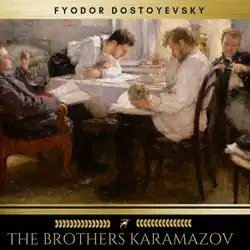
    The Brothers Karamazov

    Fyodor Dostoyevsky
  2. 4.0

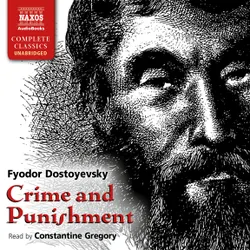
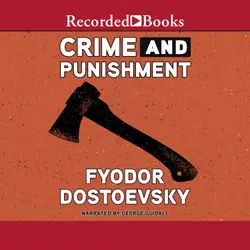
    Crime and Punishment

    Fyodor Dostoyevsky
  3. 4.1

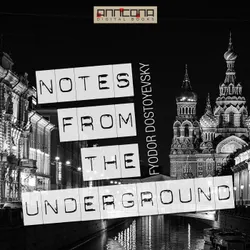
    Notes From The Underground

    Fyodor Dostoyevsky
  4. The Brothers Karamazov

    Fyodor Dostoyevsky
  5. 3.0

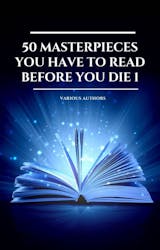
    50 Masterpieces you have to read before you die vol: 1 (2020 Edition) : Included: Little Women, The Richest Man in Babylon Emma, The Call Of The Wild ....

    Louisa May Alcott, Dante Alighieri, Marcus Aurelius, Jane Austen, L. Frank Baum, Charlotte Brontë, Emily Brontë, Anne Brontë, Miguel de Cervantes, Agatha Christie, George S. Clason, Arthur Conan Doyle, Joseph Conrad, Charles Dickens, Fyodor Dostoyevsky, Alexandre Dumas, George Eliot, G.K. Chesterton, G.K. Chesterton, Zane Grey, Nathaniel Hawthorne, Napoleon Hill, Homer, Victor Hugo, Frances Hodgson Burnett, Washington Irving, Henry James, Franz Kafka, Rudyard Kipling, Jack London, Leo Tolstoy, H.P. Lovecraft, Lucy Maud Montgomery, Joseph Murphy, Robert Louis Stevenson, Edgar Allan Poe, Marcel Proust, Publius, Mary Shelley, Bram Stoker, Mark Twain, Sun Tzu, Lew Wallace, Wallace D. Wattles, H.G. Wells

  6. 5.0

    Crime and Punishment

    Fyodor Dostoyevsky
  7. 3.4

    The Idiot

    Fyodor Dostoyevsky

  8. 50 Masterpieces you need to read

    Louisa May Alcott, Jane Austen, Joseph Conrad, D. H. Lawrence, George Eliot, Leo Tolstoy, James Joyce, Charles Dickens, Bram Stoker, Oscar Wilde, Honoré de Balzac, Edgar Rice Burroughs, Anne Brontë, Charlotte Brontë, Emily Brontë, Lewis Carroll, Willa Cather, Miguel de Cervantes, E. Cummings, Fyodor Dostoyevsky, Daniel Defoe, Arthur Conan Doyle, Alexandre Dumas, Gustave Flaubert, Henry James, Victor Hugo

  9. Notes from the Underground

    Fyodor Dostoyevsky

  10. 4.1

    Crime and Punishment

    Fyodor Dostoyevsky

  11. 4.1

    Crime and Punishment

    Fyodor Dostoyevsky

  12. 3.4

    The Idiot

    Fyodor Dostoyevsky