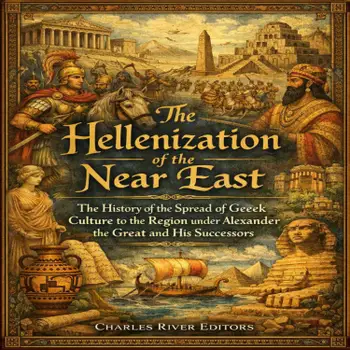

On his deathbed, some historians claim that when he was pressed to name a successor, Alexander the Great muttered that his empire should go “to the strongest”. Other sources claim that he passed his signet ring to his general Perdiccas, thereby naming him successor, but whatever his choices were or may have been, they were ignored. Alexander’s generals, all of them with the loyalty of their own corps at their backs, would tear each other apart in a vicious internal struggle that lasted almost half a century before four factions emerged victorious: Macedonia, the Seleucid Empire in the east, the Kingdom of Pergamon in Asia Minor, and the Ptolemaic dynasty in Egypt. During the course of these wars, Alexander’s only heir, the posthumously born Alexander IV, was murdered, extinguishing his bloodline forever.
For a time, the Seleucids commanded the largest empire in the world as it stretched from the high plains and deserts of what is now Afghanistan in the east to parts of the Levant and Asia Minor in the west. The empire’s early kings were strong and shrewd and committed to the ideas of Hellenism as much as holding power and expanding the realm of their empire. By establishing notable Greek cities like Antioch, the empire tried with partial success to create a sense of cultural harmony among a giant melting pot, which spanned thousands of miles and incorporated a countless number of ethnicities.
Most famously, Ptolemy’s line firmly established the Hellenistic culture of the Greeks while ruling over Egypt, and by marrying within their family line, the Ptolemaic pharaohs kept their Hellenistic heritage until the very end of Ptolemy’s line, which died with Cleopatra in 30 BCE. The Ptolemies gave ancient Egypt an injection of vitality that had not been seen in the Nile Valley for centuries, preserving many aspects of native Egyptian culture while adding their own layer of Hellenic culture.